The Treatment That Gets Your Skin Glowing in Time for Summer
When good skincare stops quite delivering, this under-the-radar injectable is what quietly takes skin from fine to genuinely fresh.

It’s never a big moment. More the quick glance in a mirror you weren’t really paying attention to — hallway, car visor, the bathroom one you catch out of the corner of your eye. And for a split second you think, oh… I look a bit tired. Not dramatically so. Just slightly flatter than usual. Like your skin hasn’t quite caught up yet.
It tends to happen around this time of year. The light improves, everything else starts to feel fresher — and your skin… doesn’t quite follow suit. A long winter has a way of lingering there, even when the rest of life has moved on.
And then, of course, there’s life itself — work, family, the middle-of-the-night cuddles from your child that are undeniably lovely, just not quite so sweet at 3am… it all adds up eventually.
You try again the next day, in better light. Same thing. Not bad, exactly — just not particularly alive. A little dull, a touch less bouncy, as though everything’s working… just not brilliantly.
“It’s less about looking like you’ve had something done, and more about looking like you’ve been getting better sleep than you actually have.”
So you do what you always do. You tweak your skincare. Add something promising brightness, something else for hydration. Maybe go back to a vitamin C you trust. And it helps — of course it does. But there’s often a quiet point where you realise you’ve taken it as far as it will go. Skin looks good, but not quite fresh. Not that easy, rested version of itself you were hoping for.
Part of it is seasonal. Part of it is life. And, for many of us, part of it is that subtle hormonal shift — the kind that doesn’t feel dramatic, but shows up quietly in skin that suddenly feels a little drier, a little less responsive than it used to.
Which is where treatments like polynucleotides have started to slip into the conversation — not as a big, obvious step, but as something more subtle. A way of giving skin a bit of extra help when it’s not quite responding in the way it usually does. The kind of tweak that doesn’t announce itself, but gradually makes everything look a little better.
When Skincare Stops Quite Delivering
That was exactly where I found myself earlier this year. Skin that looked fine — good, even — but not quite as fresh as I knew it could be.
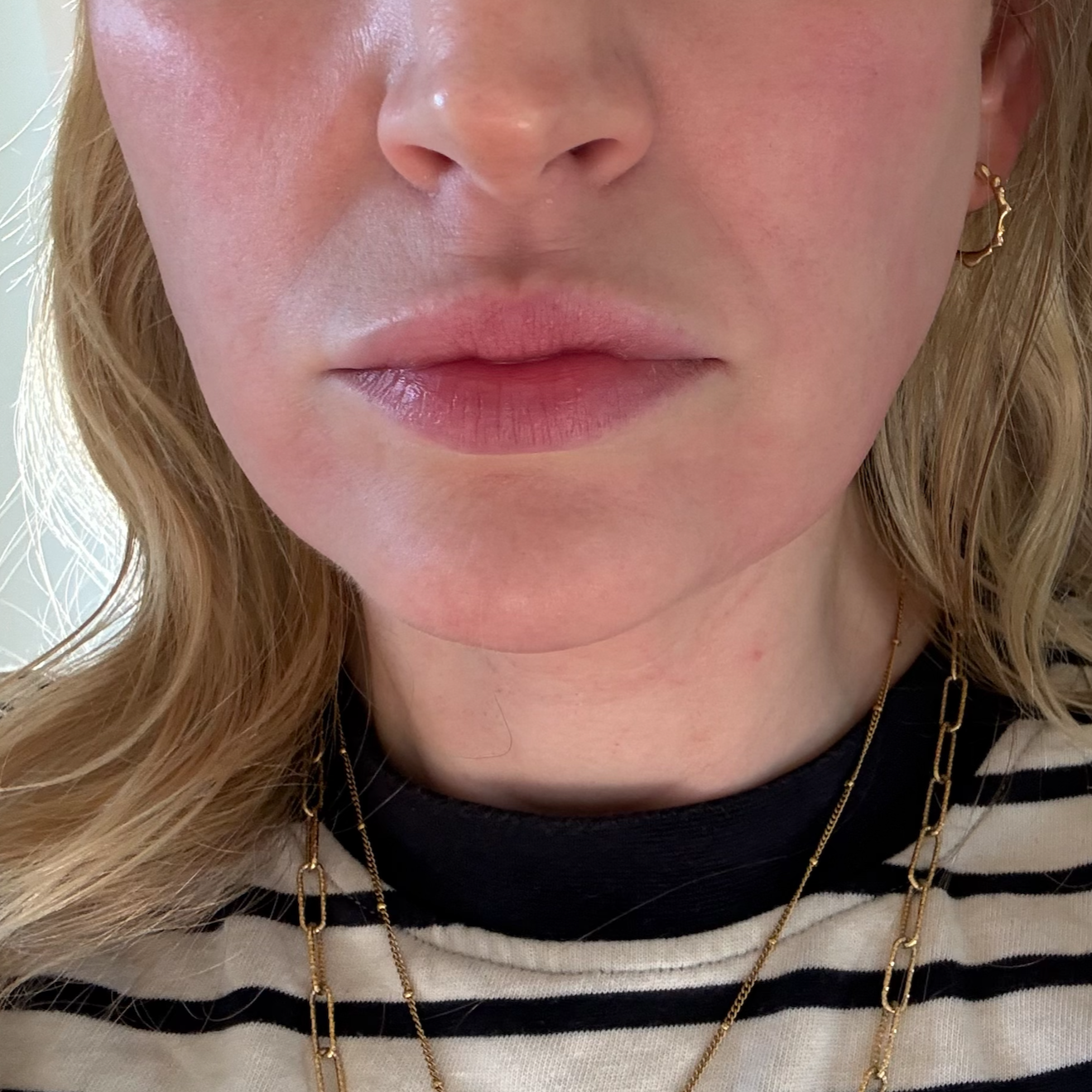
I’d had a course of polynucleotides under my eyes a few months earlier, so I knew what they could do. But this time it wasn’t my under-eyes catching my attention. It was lower down — around the mouth, the chin — that slightly harder-to-pinpoint area that only really gives itself away when your face is at rest.
The kind of thing you don’t necessarily notice straight on. Just in passing. A reflection that feels a touch flatter than you expected.
Polynucleotides sit slightly outside the usual injectable category. Rather than adding volume or changing structure, they work more quietly — acting as signalling molecules that encourage the skin to repair and regenerate itself. Over time, that translates into better hydration, improved elasticity and a subtle strengthening of the skin overall — less about altering how you look, more about how your skin behaves.
You don’t walk out looking different. It builds — gradually, almost imperceptibly — until one day someone comments on how good your skin looks without quite knowing why.
It’s less about looking like you’ve had something done, and more about looking like you’ve been getting better sleep than you actually have.
I booked in at sk:n on London’s Harley Street, which has that particular kind of calm efficiency you want from a clinic — discreet, professional, quietly reassuring without feeling overdone. No hard sell, no sense of being rushed through a process — just everything working as it should.
My practitioner, Dr Toni Phillips, approached it in a way that felt thoughtful rather than formulaic. There was no sense of “we’ll just treat everything” — instead, it was about looking at how the skin was behaving and where it needed support. The focus stayed firmly on quality, not change.
Before starting, Dr Toni explained that she’d be using a cannula rather than traditional injection points — a technique she often chooses for areas like the lower face, where a more even distribution and a softer, more blended effect tends to work well.
The treatment itself was surprisingly quick. Each session took only a few minutes — far less involved than I’d expected — and, somewhat unbelievably, I didn’t need any numbing. Using a cannula means there’s more of a sense of pressure rather than sharp discomfort, so it feels very manageable.
What struck me most was how different it felt from the last time I had polynucleotides, only a few months earlier. That was done using the more traditional method — around 45 minutes of numbing beforehand, followed by multiple small injections across the area. Effective, but undeniably more involved.
This, in comparison, felt far more straightforward.
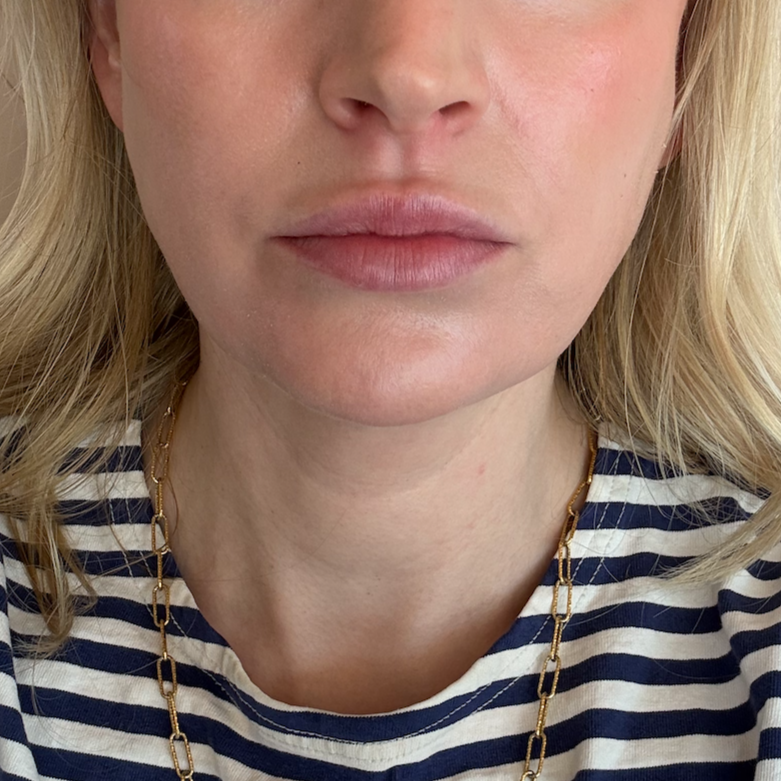
The difference comes down to technique. Traditional injection points allow for very precise placement, which can be particularly useful in smaller or more delicate areas, like under the eyes. A cannula works differently — placing the product beneath the skin through fewer entry points and allowing it to be distributed more evenly across a wider area. That tends to suit areas like the lower face, where movement is constant and a more blended, supportive effect is often the goal.
It’s not a question of one being better, but of what suits the area and the kind of result you’re looking for.
In my case, it meant very little bruising and almost no real downtime. There was a slight swelling for a few days — nothing dramatic, just enough to notice — but it settled quickly and didn’t get in the way of anything.
I had two sessions, spaced six weeks apart, which is typically recommended. And what I liked most is that the results never felt obvious or forced. There wasn’t a moment where I suddenly looked “done”. It was subtler than that — the kind of change you don’t quite register at first.
Skin that looked a little fresher, a little more even. A touch more hydrated, in a way that felt like it was coming from within rather than sitting on the surface. The sort of improvement you notice in passing — a reflection that feels slightly more forgiving, without you quite knowing why.
Not a transformation — just skin behaving exactly as you hoped it would.
For further infomation or to book your polynucleotides consultation visit sknclinics.co.uk .