The new era of aesthetics isn’t about faking youth — it’s about retraining your skin to remember it.

There’s a special kind of fatigue that arrives somewhere in your 30s or 40s — the slow, cellular kind that even sleep can’t fix. Your face still looks familiar, but a little muted, as if someone’s turned down the saturation. The glow that once rebounded overnight now takes a small miracle (or an Instagram filter) to find its way back.
It’s the moment many of us — especially those navigating the sleepless choreography of work, motherhood, and self-maintenance — start craving something smarter. Not filler. Not freeze. Just a gentle reminder to our skin of how it used to function before stress, hormones, and daily life reprogrammed it otherwise.
That, in essence, is the promise of regenerative aesthetics — the shift from cosmetic to cellular. Where the goal isn’t to inflate or immobilise, but to teach the skin to heal itself. And the treatment leading that quiet revolution? Polyneucleotides — the kind of science that sounds faintly intimidating but behaves like skincare with a PhD.
The science of self-renewal
Polyneucleotides are strands of DNA, often derived from purified salmon, that act as biological signals — tiny messengers telling your skin cells to regenerate, repair, and restore. They don’t fill hollows or paralyse muscles; they coax your fibroblasts (the collagen-making, elasticity-defining workhorses of your skin) back into action.
“Polyneucleotides don’t give you a new face; they give you back the best version of your own.”
It’s an approach rooted in biology, not illusion. Rather than covering up fatigue, polyneucleotides address the underlying function — improving structure, density, and hydration from within. In short, they make your skin behave as if it remembers what it’s doing.
Clinically, they’re shown to stimulate fibroblast proliferation, increase collagen synthesis, and strengthen the extracellular matrix — the skin’s internal scaffolding. In reality, they leave you looking fresher, calmer, and just inexplicably better — like you’ve had a long holiday or a personal truce with time.
Of course, I didn’t go in purely for the science. Vanity played its part — as it usually does in beauty journalism. But after years of testing almost everything — lasers, peels, exosomes, radiofrequency — I was genuinely curious whether this particular buzzword could live up to its quiet legend. (If I’m honest, I suspected not.)
My under-eyes were starting to betray my schedule, and my neck — dry, crepey, and unreasonably high-maintenance — had become a daily reminder that skincare has limits. I wasn’t chasing transformation; I just wanted to look like myself, but better lit.
So I went to Thérapie Clinic on Wigmore Street, where I was treated by Dr Jaisyn Patel — a surgeon whose approach immediately dissolves any trace of cynicism. A Manchester Medical School graduate with a Master’s in Surgical Innovation from Imperial College London, Dr Jaisyn’s background spans Plastic Surgery, General Surgery and Trauma & Orthopaedics. He’s one of those rare doctors who speaks about tissue regeneration with the same ease most people discuss moisturiser — his language calm, precise, unhurried. His ethos: natural enhancement through cellular repair, not camouflage.
After a detailed consultation, we mapped out a bespoke plan: a full under-eye treatment, dapplings along the jawline and nasolabial folds, and a neck protocol designed to restore hydration and texture. For an extra layer of luminosity, he recommended adding Profhilo to the neck — a hyaluronic-acid-based bioremodeller that would work in harmony with the polyneucleotides, amplifying both treatments’ regenerative potential.
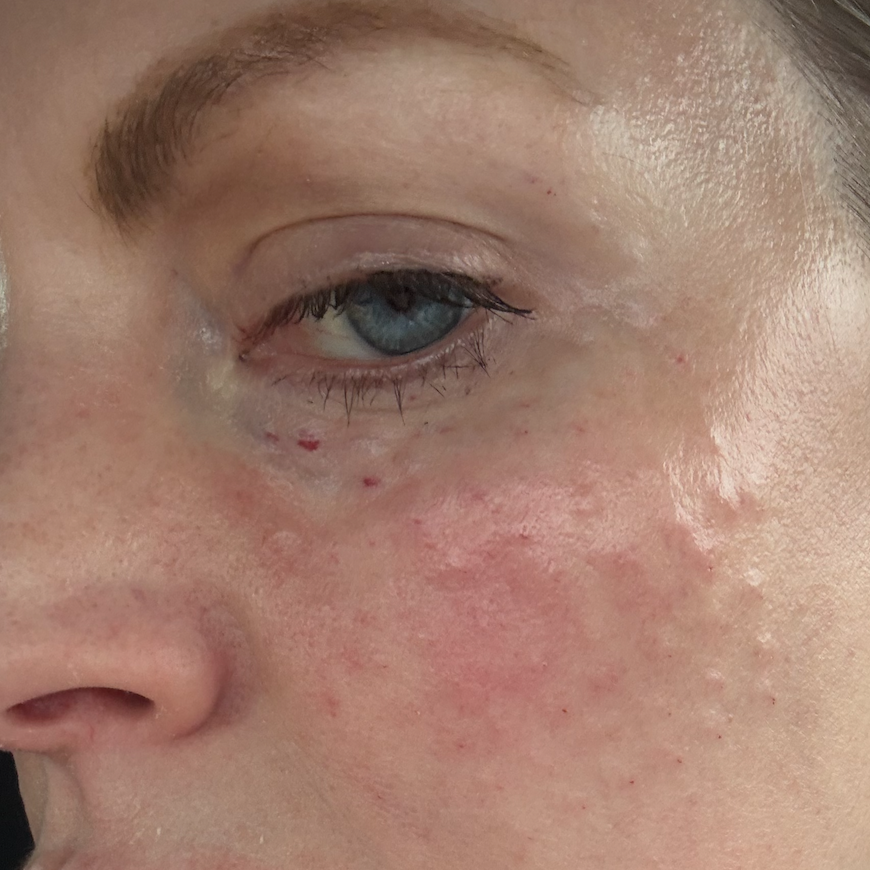
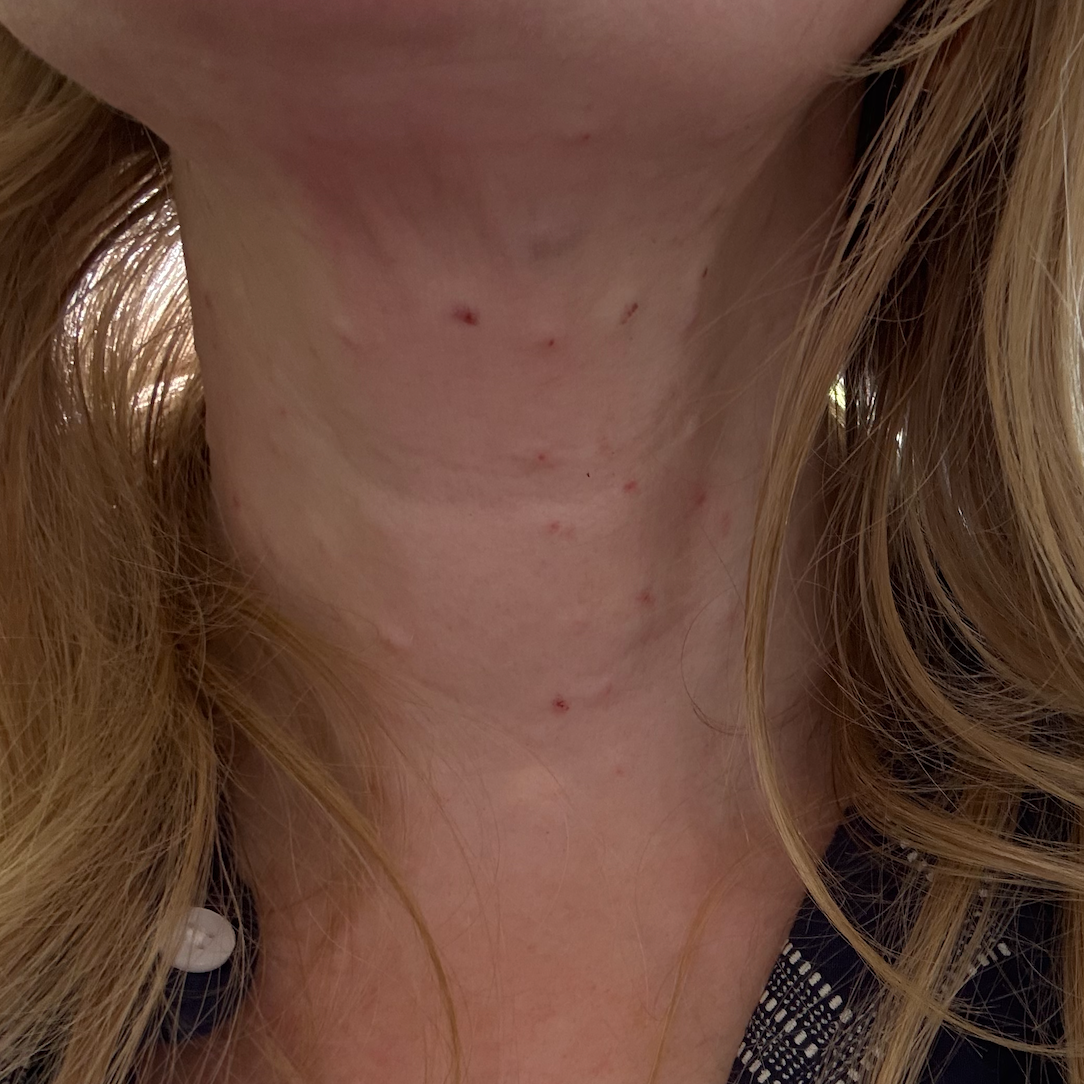
Once numbed, the process began — a rhythm of tiny, deliberate injections across the face and neck, each one leaving a pearly bump beneath the surface. It’s not painful, more peculiar — like a microscopic Morse code tapping out the promise of better skin.
Afterwards, the reflection is startling: a grid of neat little dots that make you look faintly reptilian, as though mid-metamorphosis. These tiny blebs flatten within 24 to 72 hours as the product disperses. The under-eye area, predictably fragile, takes the longest to recover and may bruise; the neck and jawline tend to calm faster.
By day four, the visible traces were gone — though the true results take patience. Polyneucleotides work slowly, with collagen and elastin production building gradually over the following weeks; most people, myself included, begin to see real improvement from around the six-week mark.
The pairing with Profhilo proved quietly brilliant. Polyneucleotides retrain the skin’s cells to function more efficiently, while Profhilo floods them with stabilised hyaluronic acid, locking in hydration and supporting that regeneration. Together, they create a loop — hydration fuelling repair, repair deepening hydration. The result isn’t the flash of instant glow, but the kind of improvement that feels earned.
The downtime
Let’s not pretend this is a “lunchtime lift.” For a day or two, you’ll look a little odd — like your skin has taken up modern art. The under-eye dots are particularly noticeable, though strangely satisfying in their symmetry. Concealer won’t help, and nor should it. This is regenerative medicine, not cover-up artistry.
“Two months after my final treatment, strangers started commenting on my skin — it wasn’t just hydration; it was regeneration.”
Bruising for me was minimal but visible for three days; the under-eye puffiness lingered longest. Still, there’s something oddly comforting about this phase — the visible evidence that something meaningful is happening beneath the surface.
Polyneucleotides are the ultimate slow burn. You don’t leave the clinic radiant; you leave slightly pink, mildly bumpy, and wondering whether you’ve been duped. But then, somewhere between the second and third session, the shift happens.
My skin began to look brighter, calmer, more even. The under-eyes were softer, less hollow; the jawline subtly more defined. My neck, once thirsty and dull, looked healthier — less papery, more pliant.
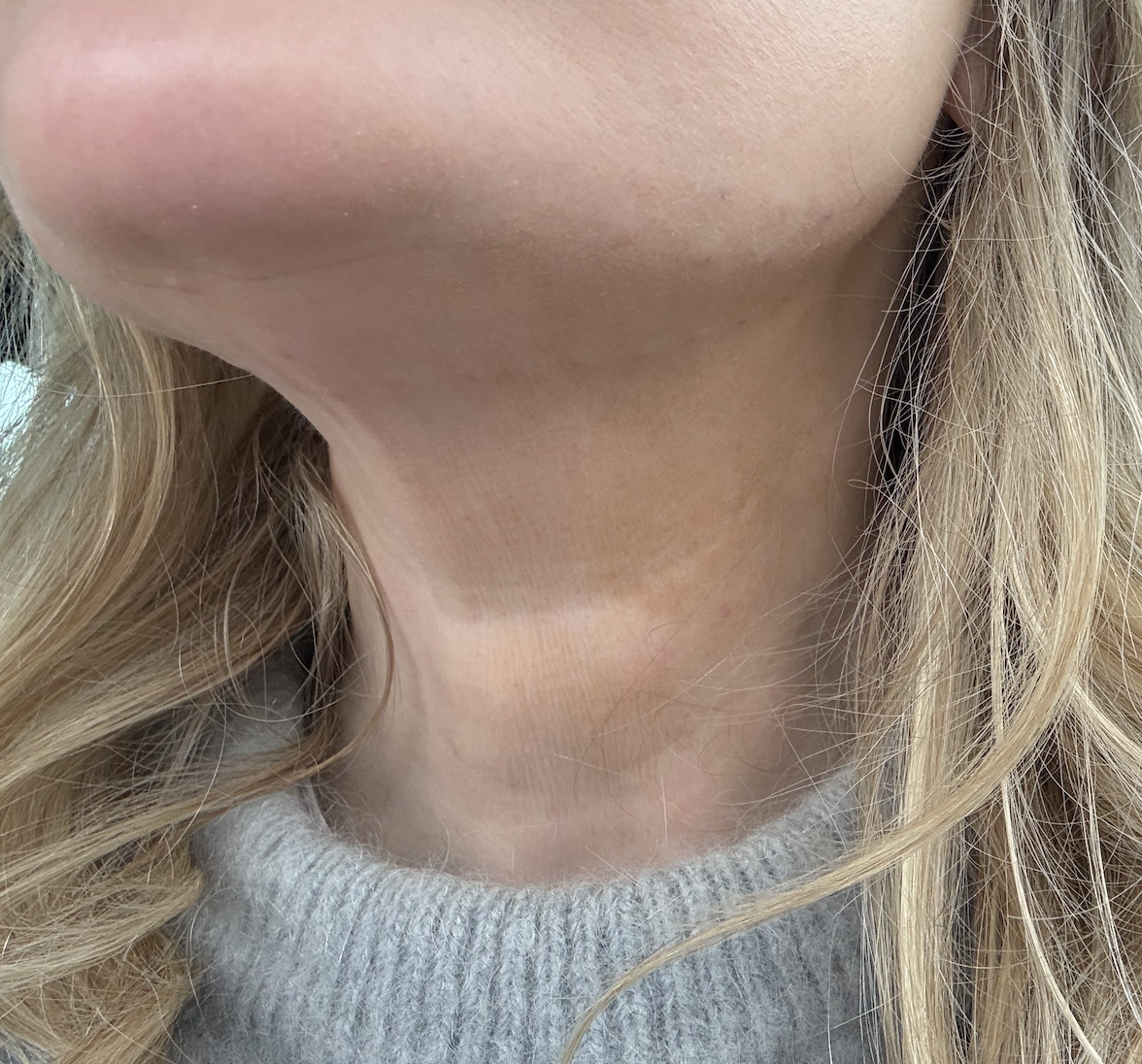
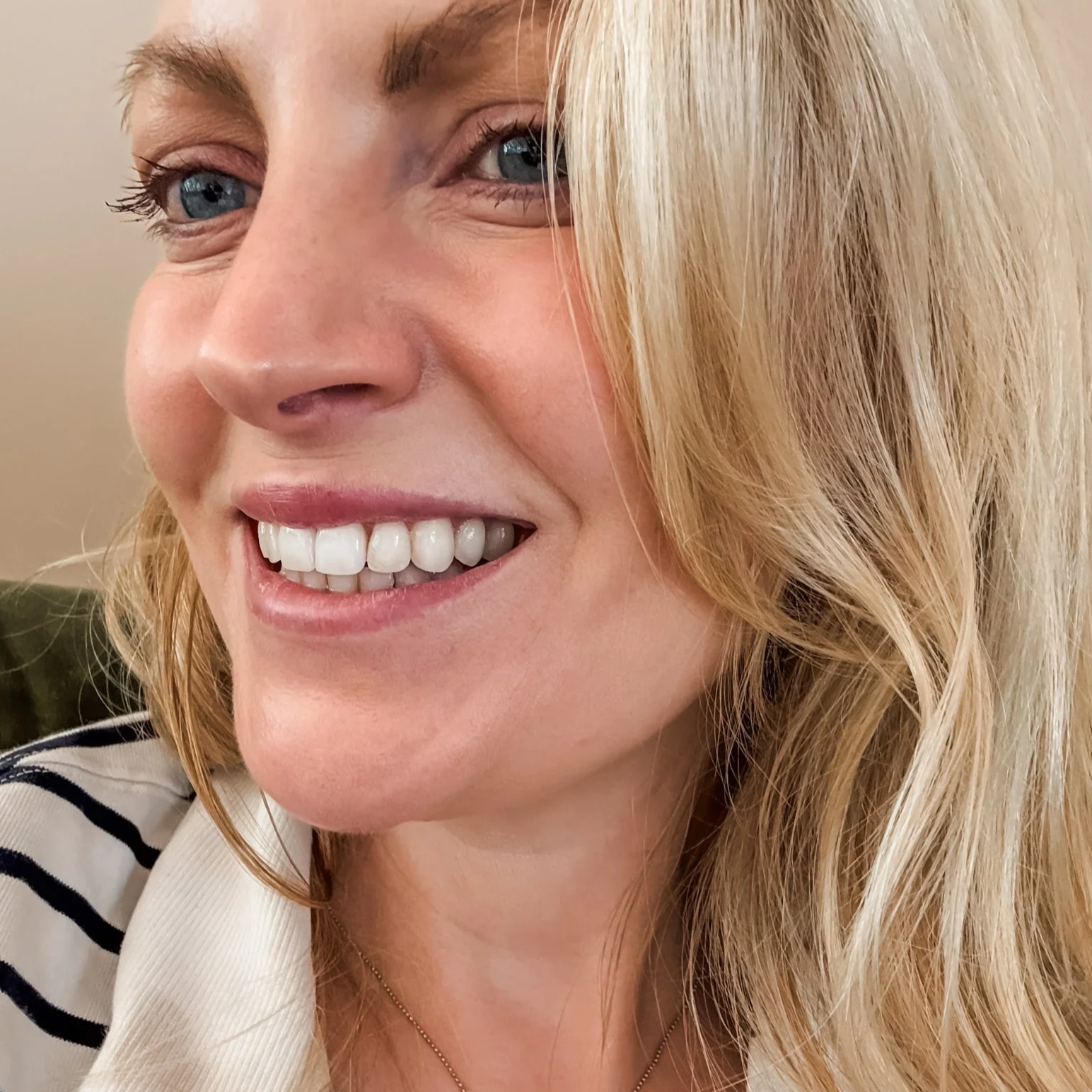
And then, two months after my final treatment, people — actual strangers — started commenting on my skin. That’s when I realised this wasn’t just hydration; it was regeneration. My complexion looked calmer, my pores finer, the crepey dryness on my neck gone. The overall effect was one of health — as though my skin had remembered how to be itself again.
The verdict
Polyneucleotides don’t give you a new face; they give you back the best version of your own. When combined with Profhilo, the result is not a glow but a renaissance — gradual, grounded, and quietly game-changing.
It’s not for the impatient. It’s for those who understand that real transformation doesn’t come from overcorrection, but from biology brought back into balance.
I went in half curious, half sceptical. I came out with skin that looked — and felt — alive again.
To book your polyneucleotide consultation, visit Thérapie Clinic.