Bleach, Vinegar or Something in Between?
The cleanest homes aren’t the most aggressive — just the most intelligent.

Cleaning was never meant to be aesthetic. Long before pastel spray bottles and countertop-worthy labels, it was public health. Soap, bleach and disinfectant quietly transformed how families lived — lowering the spread of disease and making homes safer long before anyone cared what the bottle looked like on a marble counter.
Which is why the modern conversation around cleaning products often feels slightly confused. Somewhere between the rise of antibacterial everything and the backlash that followed, domestic hygiene split into two tribes: the spray-first, disinfect-everything camp and the vinegar-and-bicarbonate purists convinced the answer to most household problems is already hiding in the baking cupboard.
Both instincts come from the same place: protection. But health rarely lives at the edges.
Anyone running a family home knows that context is everything. If a stomach bug is ripping through the house at 2am, this is not the moment to experiment with botanical restraint. That’s when bleach and proper disinfectant earn their place — windows open, surfaces wiped, job done.
But most of domestic life is far less dramatic.
Most of it is counters after breakfast. The slow creep of crumbs. The endless loop of laundry. The quiet reset of a kitchen after dinner.
“In homes with children, cleaning isn’t a philosophy — it’s a balancing act.”
And those are maintenance problems, not public health emergencies.
The nuance sits somewhere in between.
Because the products used every day — the counter spray, the washing-up liquid, the laundry detergent — become part of the home’s background environment. They’re the scent in the kitchen, the residue on surfaces, the faint atmosphere left behind after the spray has settled and the cloth has been put away.
Which is why balance makes far more sense than ideology.
Bleach when illness hits.
Antibac when something genuinely unpleasant has happened on the kitchen floor.
Something calmer for the other 95% of life.
A healthy home isn’t the one that smells the strongest. It’s the one cleaned with a little common sense — knowing when to escalate, and when not to.
Because most cleaning isn’t crisis management.
It’s simply the quiet maintenance of a life being lived.
The Problem With Extremes
Modern motherhood seems particularly prone to them.
On one end, there’s the antibacterial-everything brigade — toys wiped daily, counters sprayed after every crumb, a faint air of hospital corridor drifting through the kitchen. On the other, the vinegar-and-bicarbonate enthusiasts, convinced a combination of pantry staples can solve almost every domestic problem.
Both approaches miss something important.
Our immune systems are not designed to live in sterile boxes. Everyday microbial exposure — the ordinary bacteria found in homes, gardens and outdoor environments — plays a role in immune development and regulation. Constantly sanitising already-clean spaces doesn’t necessarily make children healthier; if anything, researchers increasingly talk about the importance of microbial diversity in early life.
But the pendulum can swing too far the other way. Vinegar and bicarbonate do have useful cleaning properties. They can loosen grease, neutralise odours and help lift mild stains. What they don’t reliably do is disinfect.
They won’t neutralise the pathogens responsible for a stomach bug. They won’t properly sanitise surfaces contaminated with bodily fluids. And if the dog has had an unfortunate incident on the kitchen floor, this is not the moment for homemade cleaning experiments.
Cleaning products, in other words, are tools.
Some are designed for everyday maintenance — surfactants that lift grease and dirt so they can be wiped away. Others are engineered for specific situations, like antimicrobial formulas designed to interrupt pathogen spread.
The mistake is turning the specialist tools into the everyday default.
Because when strong disinfectants and heavily fragranced cleaners become routine, they stop being targeted solutions and start becoming atmosphere. And atmosphere is what lingers.
Most homes don’t need to smell like a disinfected hospital ward.
They just need to be clean.
The Everyday Cleaners Worth Switching To
Once you step away from the extremes, the interesting question becomes much simpler: what does a sensible everyday cleaner actually look like?
Usually it’s not about aggressive disinfectants at all. It’s about good surfactants — the ingredients that lift grease and dirt so they can be wiped away — combined with formulas that avoid unnecessary extras like synthetic dyes, optical brighteners or overpowering fragrance.
In other words: products designed for everyday maintenance rather than microbial warfare.
These are a few worth considering for that quieter, everyday rhythm of cleaning.
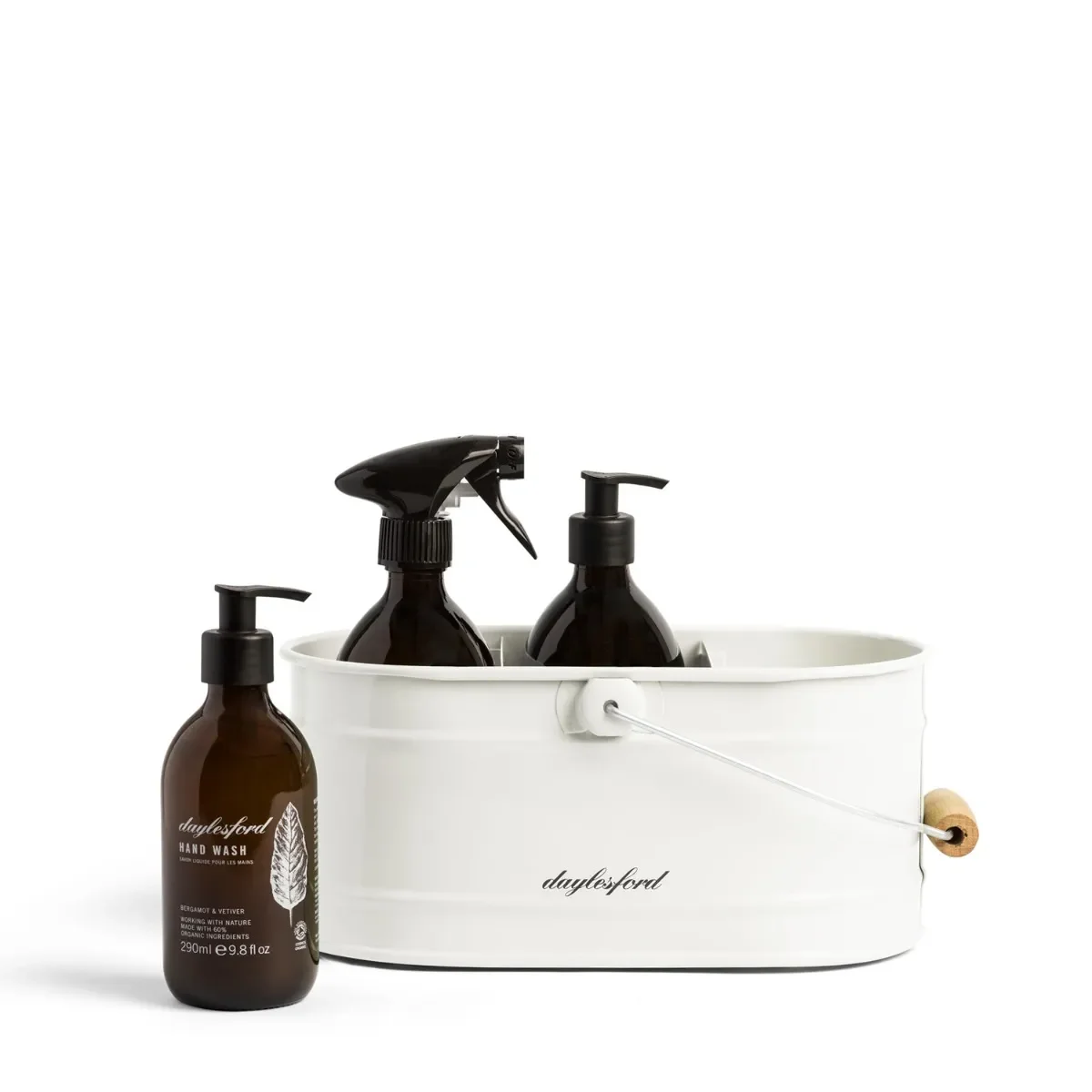
Daylesford approaches household cleaning in much the same way it approaches food: ingredient-conscious, thoughtfully sourced and quietly effective. Their natural kitchen set — typically including washing-up liquid, surface cleaner and kitchen spray — is built around plant-derived surfactants that lift grease without relying on aggressive disinfectants.
Formulas avoid chlorine, phosphates and synthetic dyes, while the scents lean botanical rather than artificially “lemony”. The result is cleaning that feels calm rather than clinical — ideal for the everyday reset of a busy kitchen rather than an emergency biohazard response.
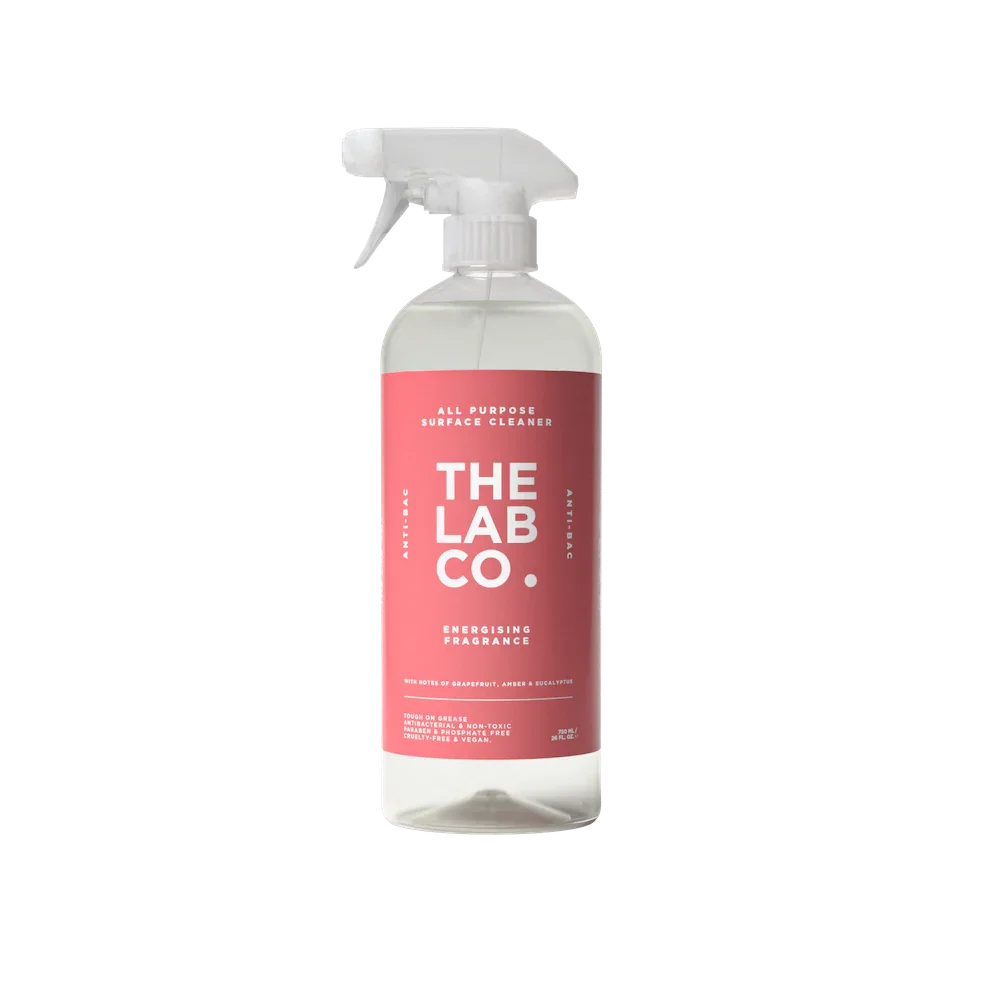
For the constant rhythm of wiping counters, refreshing worktops and clearing the slow creep of everyday mess, a well-balanced surface cleaner does most of the heavy lifting in a home.
The Lab Co focuses on plant-derived surfactants that break down grease and dirt so they can simply be wiped away, while avoiding unnecessary extras like synthetic dyes and heavy artificial fragrance blends. The brand is also one of the few fragranced home-care ranges approved by Breast Cancer UK and formulated without known endocrine-disrupting chemicals listed on their Chemicals of Concern register.
In practice, that means a cleaner that feels effective without filling the kitchen with the sharp chemical scent that often signals “something strong just happened.”
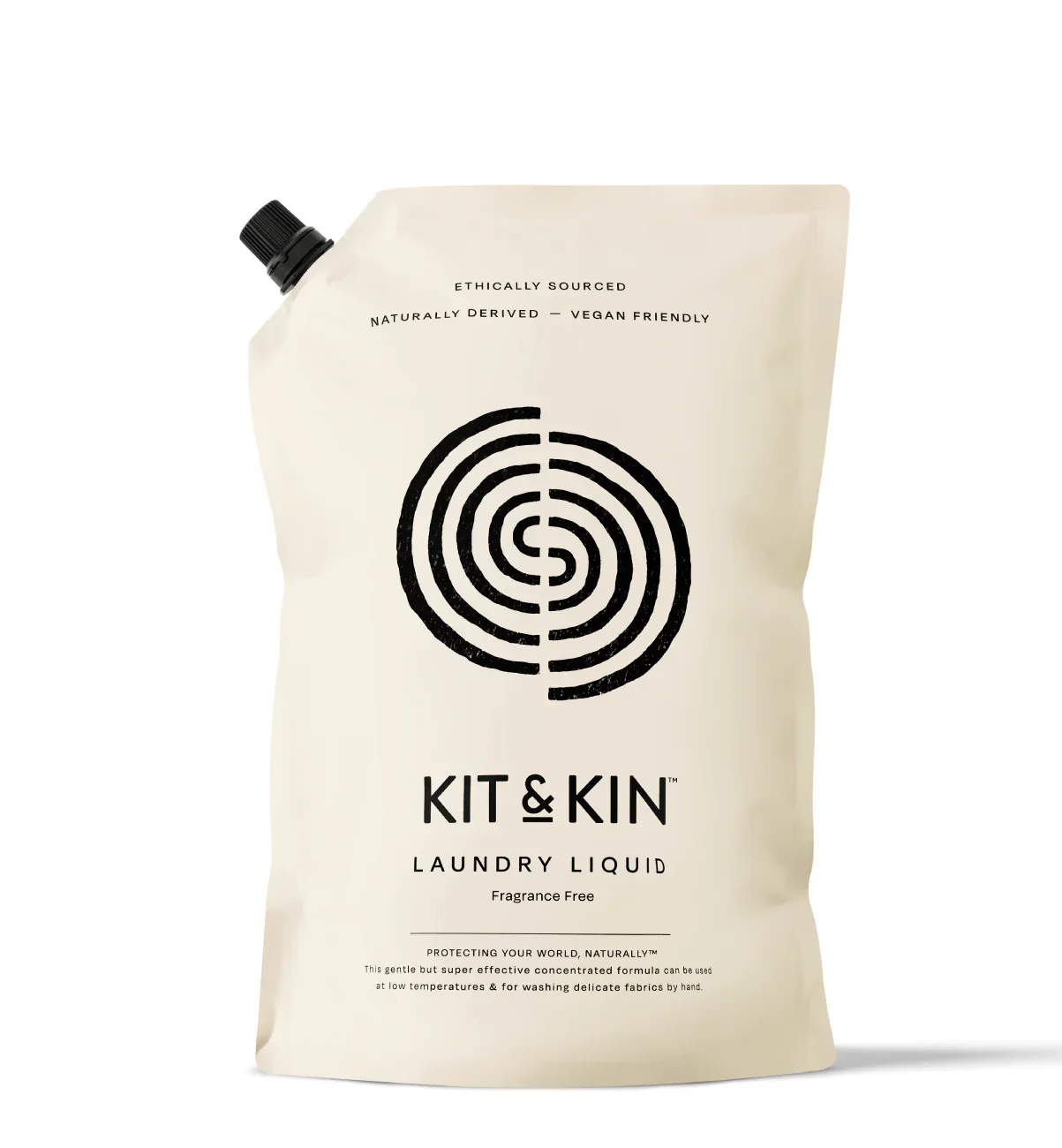
Laundry is one of the most constant cleaning cycles in any household — particularly in family homes where the washing machine rarely sits still for long.
Kit & Kin’s non-bio liquid skips optical brighteners, chlorine bleach and synthetic dyes, relying instead on plant-based cleaning agents that break down stains while remaining gentle on fabrics and skin. The result is a detergent that handles the everyday realities of family washing — muddy trousers, school uniforms and the mysterious stains children seem able to generate from thin air — without leaving heavy chemical residue behind.
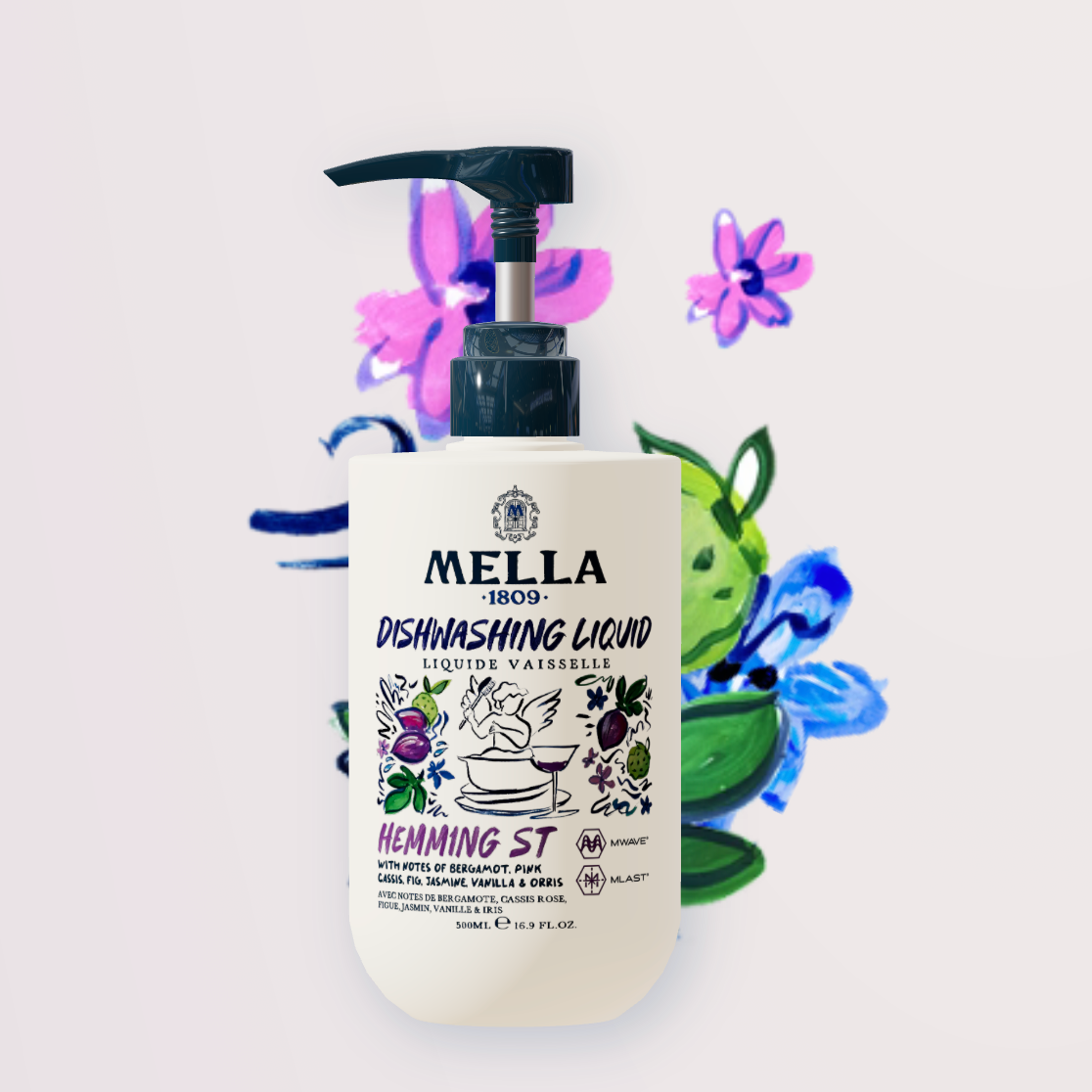
Washing-up liquid might be the most quietly overused product in any home. It sits by the sink and gets reached for dozens of times a day — which is why its formula matters more than people often realise.
Mella 1809 focuses on plant-derived surfactants that cut through oils and food residue efficiently while remaining gentler on hands than many traditional detergents. The formula skips unnecessary dyes and fillers, relying instead on a carefully balanced blend designed to tackle greasy pans, cloudy glasses and everything in between.
In short, the sort of sink-side staple that works hard without announcing itself too loudly.
None of these replace the occasional need for stronger disinfectants. When illness hits, practicality wins and the bleach comes out.
But most cleaning isn’t crisis management. It’s simply the quiet maintenance of a home that’s lived in — counters wiped, dishes rinsed, laundry folded somewhere between school runs and dinner.
And the healthiest homes are rarely the most aggressive or the most purist.
Just the most sensible.