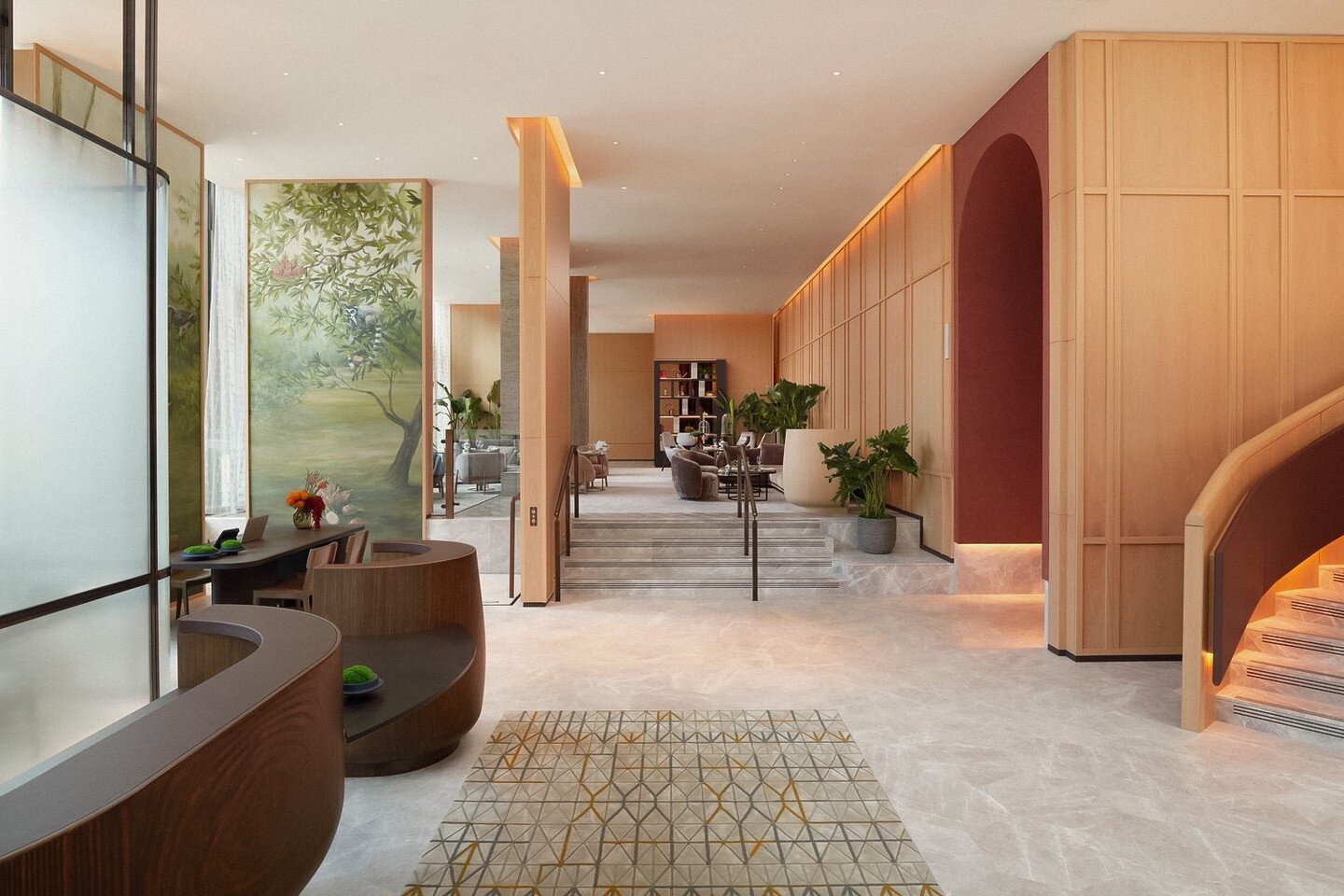
Why a return to real wood — grain, warmth and immersion — feels instinctive again, and how to live with it beautifully now.
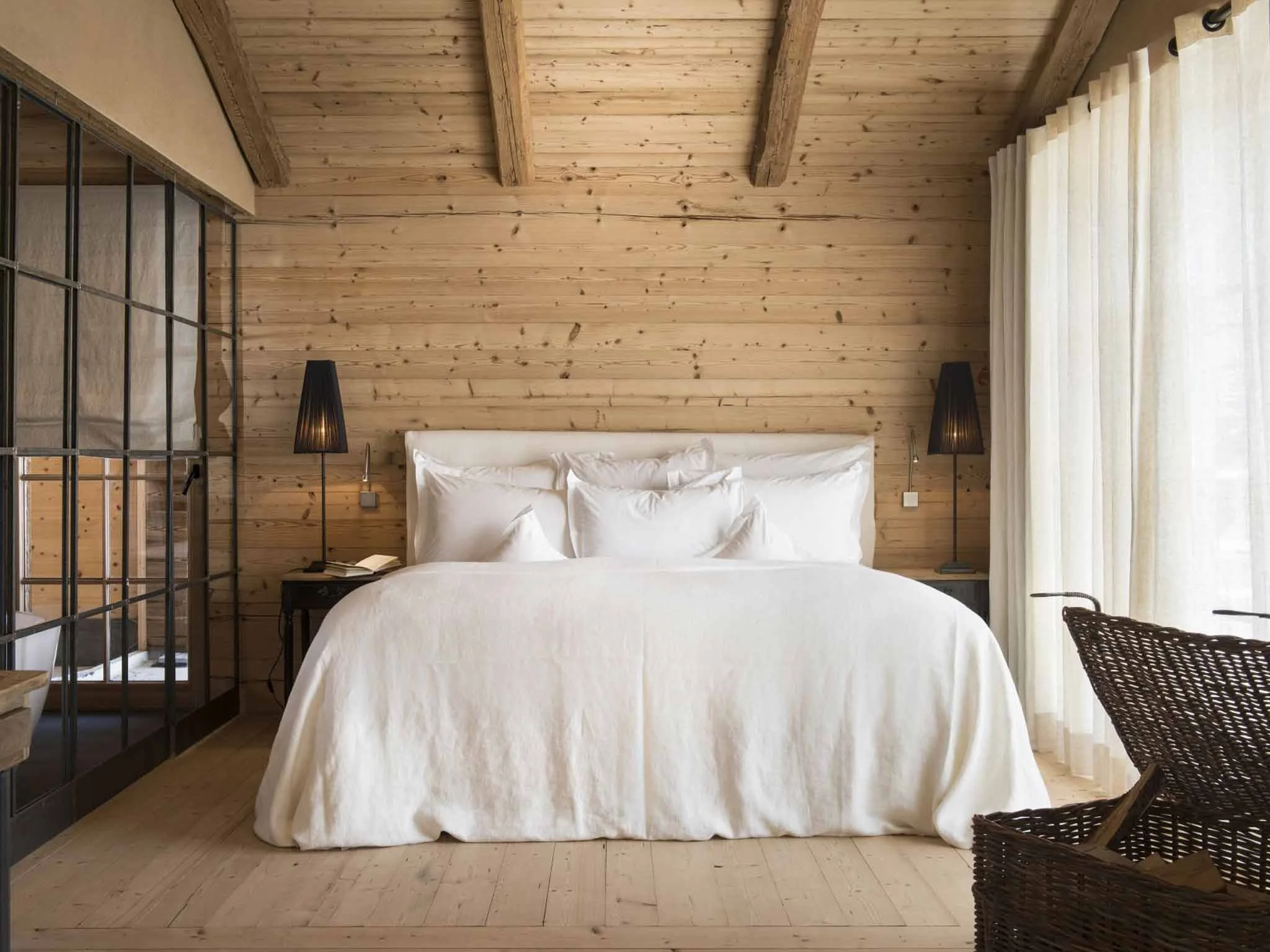
San Luis, Hafling
There are times when the way we decorate feels like a mirror rather than a moodboard. When interiors stop chasing what looks good and start quietly responding to how life actually feels.
This is one of those moments.
The world is noisy right now. Fast, unstable, relentlessly switched on. Even when everything is technically fine, there’s a low-level tension humming in the background — the sense that nothing quite settles. And, as ever, our homes are answering that before we consciously decide to.
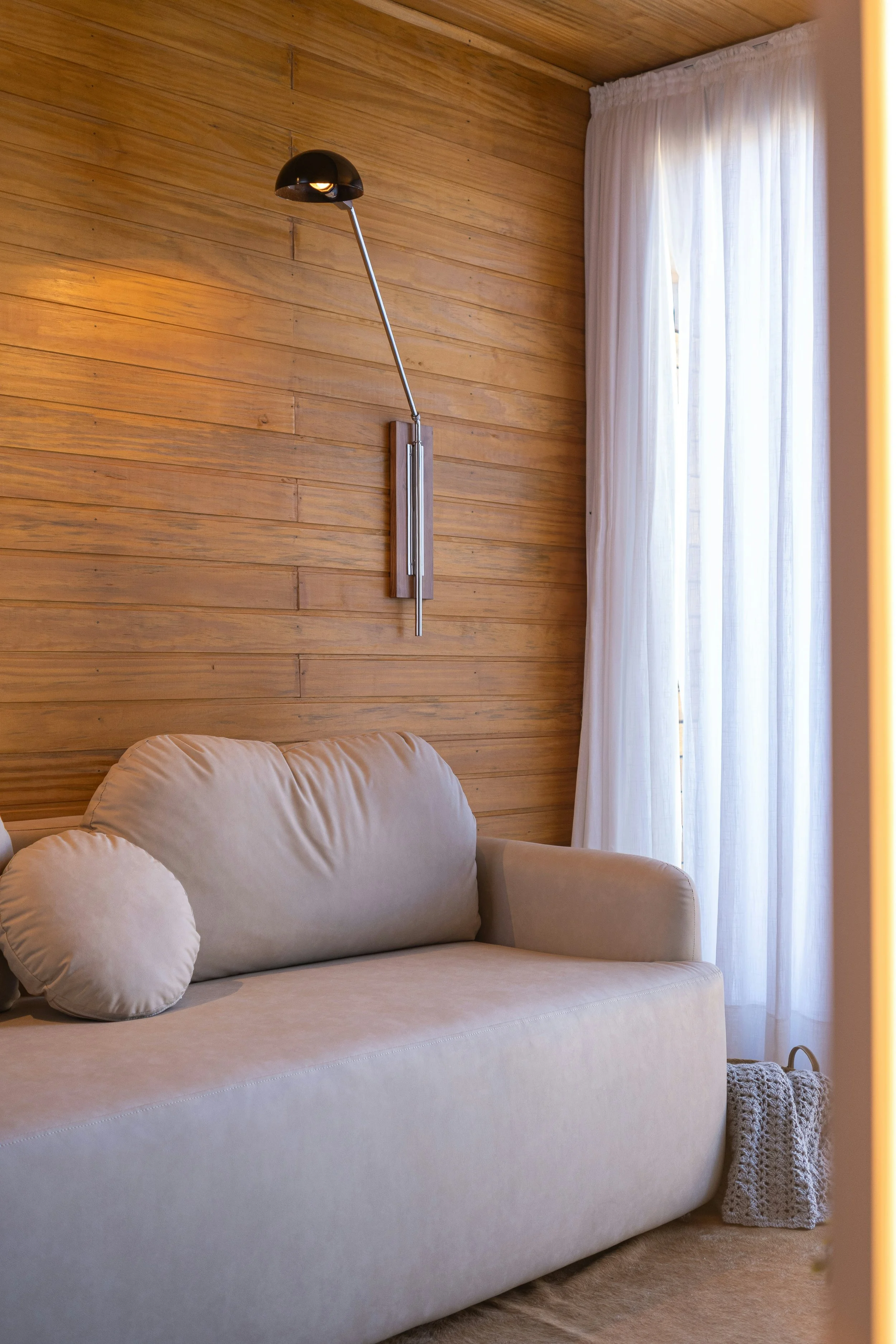
Enter wood. Not as a trend, not as a nostalgic gesture, but as something more immersive. Walls, ceilings, stairs, entire rooms — grain visible, finishes softened, surfaces allowed to feel real. A wrapping rather than a feature. What we’re now calling wood-drenching.
The instinct itself is ancient. Long before interiors were about taste, timber was used to make spaces bearable — lining cold stone houses, insulating alpine shelters, creating warmth where architecture alone fell short. Wood was never there to impress. It was there to protect.
“Wood doesn’t just change how a home looks — it changes how it feels to live in.”
What’s changed isn’t the material. It’s the moment.
It’s part of a wider shift toward interiors that actively support how we feel — not just how they look — a theme we explored more deeply in our feature Colours That Ground: The New Mood of Modern Interiors.
For years, we prized lightness and polish. Painted joinery, pale minimalism, smooth surfaces that reflected light and photographed beautifully. These interiors looked calm, but they required effort — careful living, constant maintenance, a certain level of restraint. Over time, that pristine perfection began to feel strangely demanding.
Wood offers relief from that. It absorbs light instead of throwing it back at you. Grain gives the eye somewhere to rest. Repetition creates rhythm. Even in the most modern settings — glassy, concrete, sharply architectural — wood rarely feels cold. It softens without fuss. Grounds without nostalgia.
This is why the return to wood-drenching feels so compelling now. Like colour-drenching before it, the appeal lies in continuity — wrapping a space to remove visual interruption and create calm. But where colour can feel declarative or temporary, wood feels steadier. More patient. Less tied to a moment in time.
And then there’s how it lives. Wood wears honestly. Marks become part of the surface, not evidence of failure. In homes that are no longer showpieces but working environments — full of movement, noise, children, life — that matters more than we once admitted.
None of this means wood-drenched interiors can’t be beautiful. Some of the most striking homes right now are exactly that — architectural, confident, quietly impressive. It’s just that impressing is no longer the only job.
We’re turning back to this kind of materiality because our homes are being asked to do more emotional work than before. To calm us. To hold us. To feel safe without feeling staged.
Wood, it turns out, does all of that — almost without trying.
How to Live With Wood Now
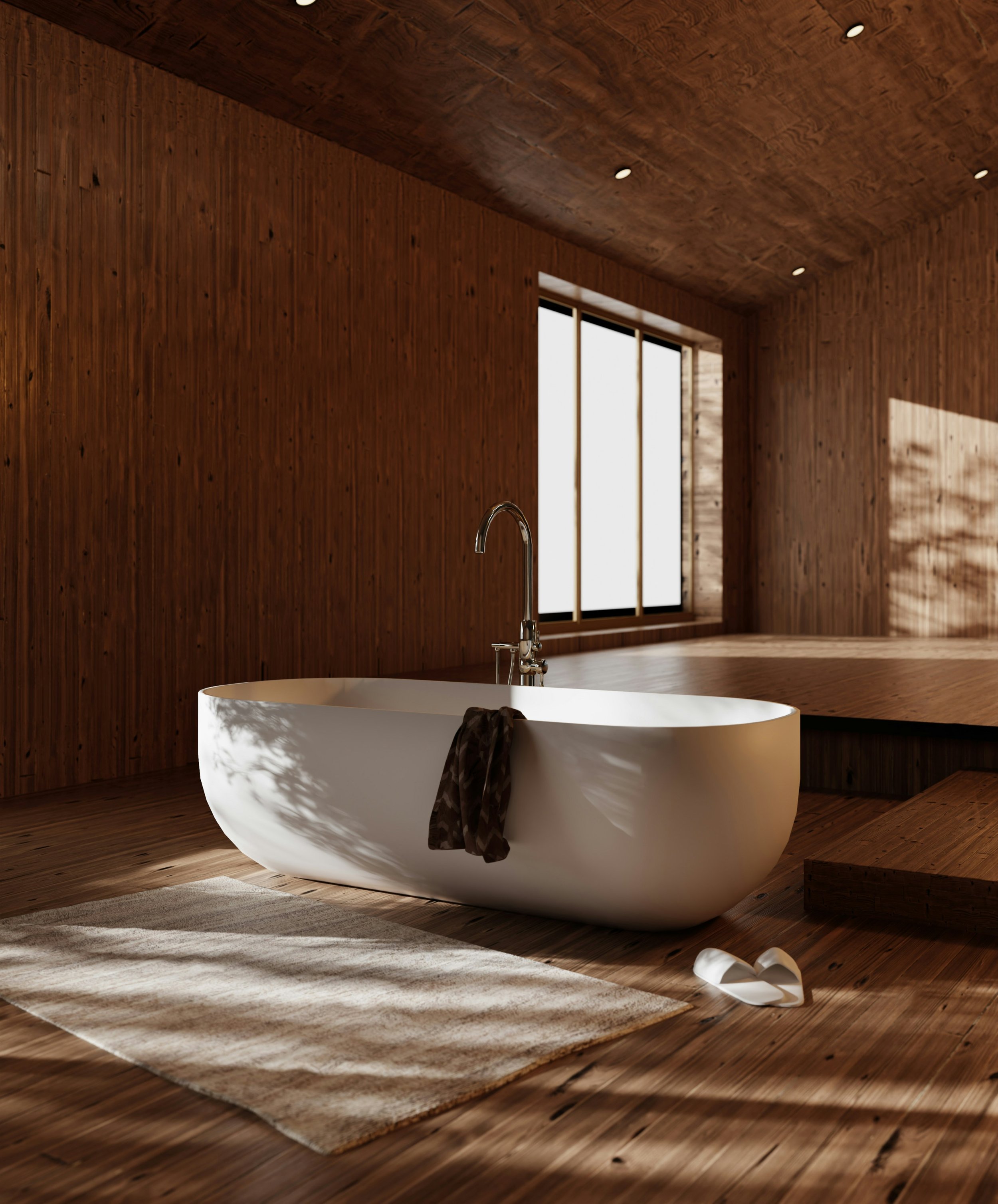
Wood-drenching isn’t a single decision; it’s a spectrum. It can be a whole-house commitment or a quiet correction to one space that has never quite worked. The key is knowing where warmth is missing — and responding there first.
Where Wood Makes The Biggest Difference
The spaces that benefit most from wood are rarely the showrooms of the house. They’re the in-between zones — hallways, staircases, landings, basements — areas we move through constantly but rarely think about until they feel wrong.
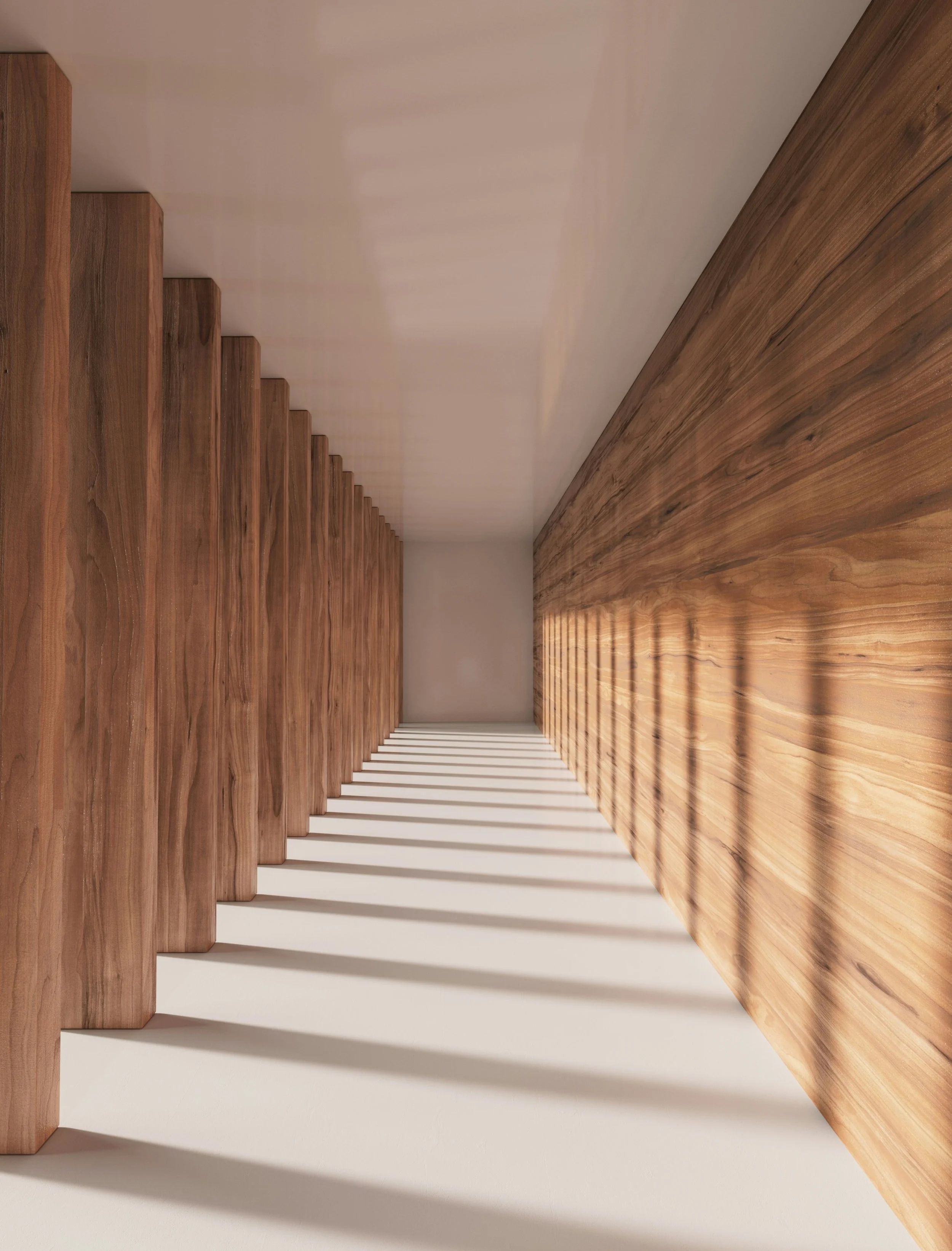
Cladding a hallway in wood changes how you enter a home. It slows you down. Sound softens. Light becomes warmer. What was once a passage becomes a place. Staircases behave the same way. When walls, stairs and even part of the ceiling are treated as one continuous surface, the effect is cocooning rather than dramatic — a quiet sense of being held as you move between floors.
When Wood Becomes Architecture
Wood-drenched interiors work best when they don’t look overly designed. One slatted wall or decorative panel often feels tokenistic. What works is continuity — walls that flow into ceilings, stairs that feel wrapped rather than attached, joinery that blends rather than announces itself.
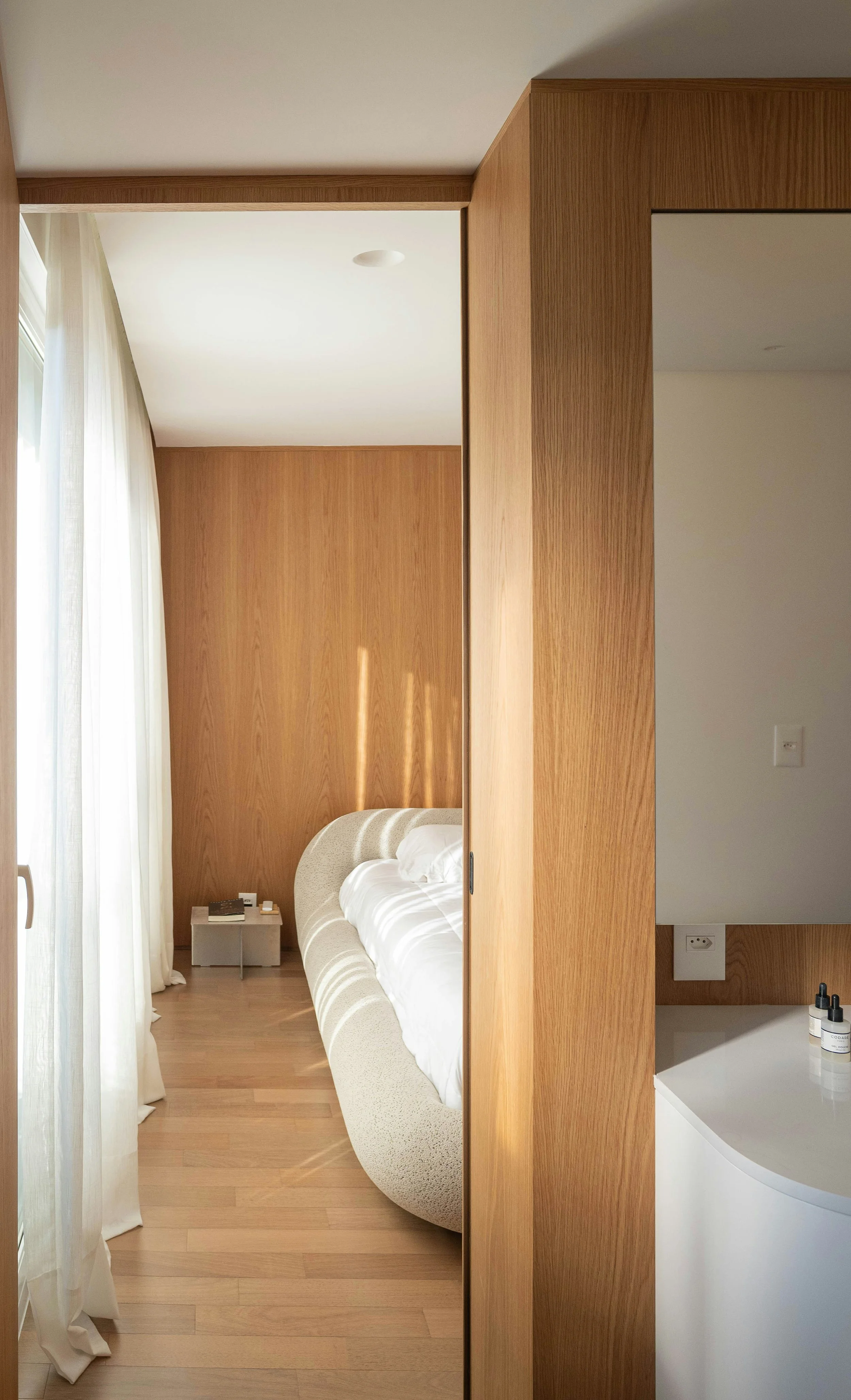
This doesn’t mean heavy or dark. Pale oak, ash and birch ply all keep spaces light while adding depth. The grain does the visual work; the detailing stays calm.
Sometimes The Wood is Already There
One of the simplest ways to lean into wood-drenching is also the least disruptive: stripping back what has already been painted.
Beams, doors, cupboards and panelling are often hiding in plain sight beneath layers of paint. Where the quality allows, removing it can instantly restore warmth without introducing anything new.
This doesn’t mean leaving wood raw or orange-toned. Finish is everything. A matt varnish or oil keeps wood modern and understated, while tinted finishes can gently warm or cool the tone depending on the mood you’re after. Shine, however, tends to push wood into dated territory. Wood should absorb light, not bounce it back.
An Easy Way In: Living with Wood Before Committing To It
If full cladding feels like too much, a wall of wooden bookshelves is often the most convincing first step.
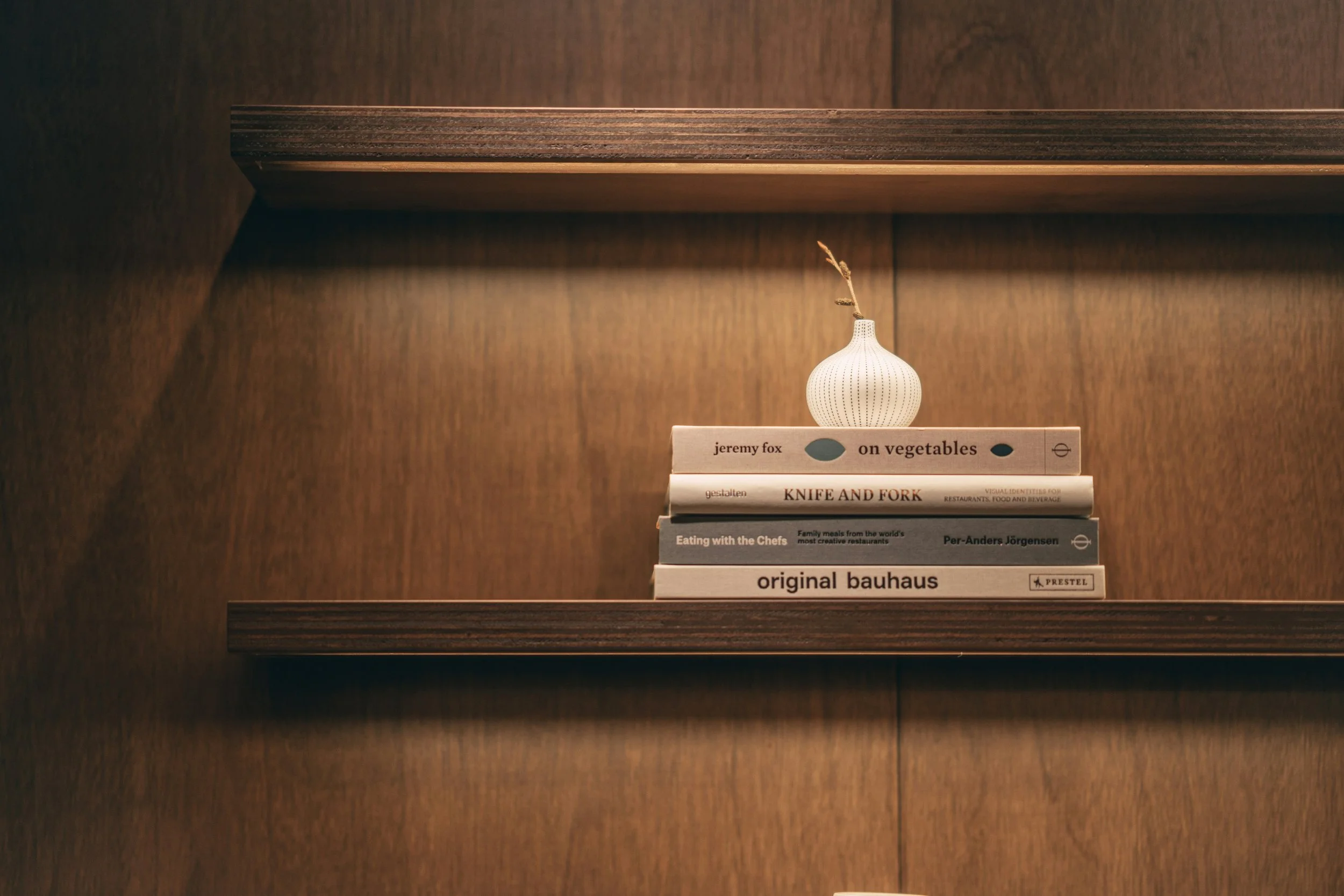
Floor-to-ceiling shelving introduces wood at scale without wrapping the entire room. Once shelves run wall-to-wall, they start to behave like architecture rather than furniture. Books break up the grain visually, creating rhythm and softness, while the timber backdrop absorbs light and sound.
The effect is calm, lived-in and quietly intellectual — never decorative, never try-hard.
Bedrooms, and The Case for Enclosure
There’s a reason timber has always belonged in sleeping spaces. Wood quietens a room. It softens sound, warms light, and makes even minimal bedrooms feel grounded.
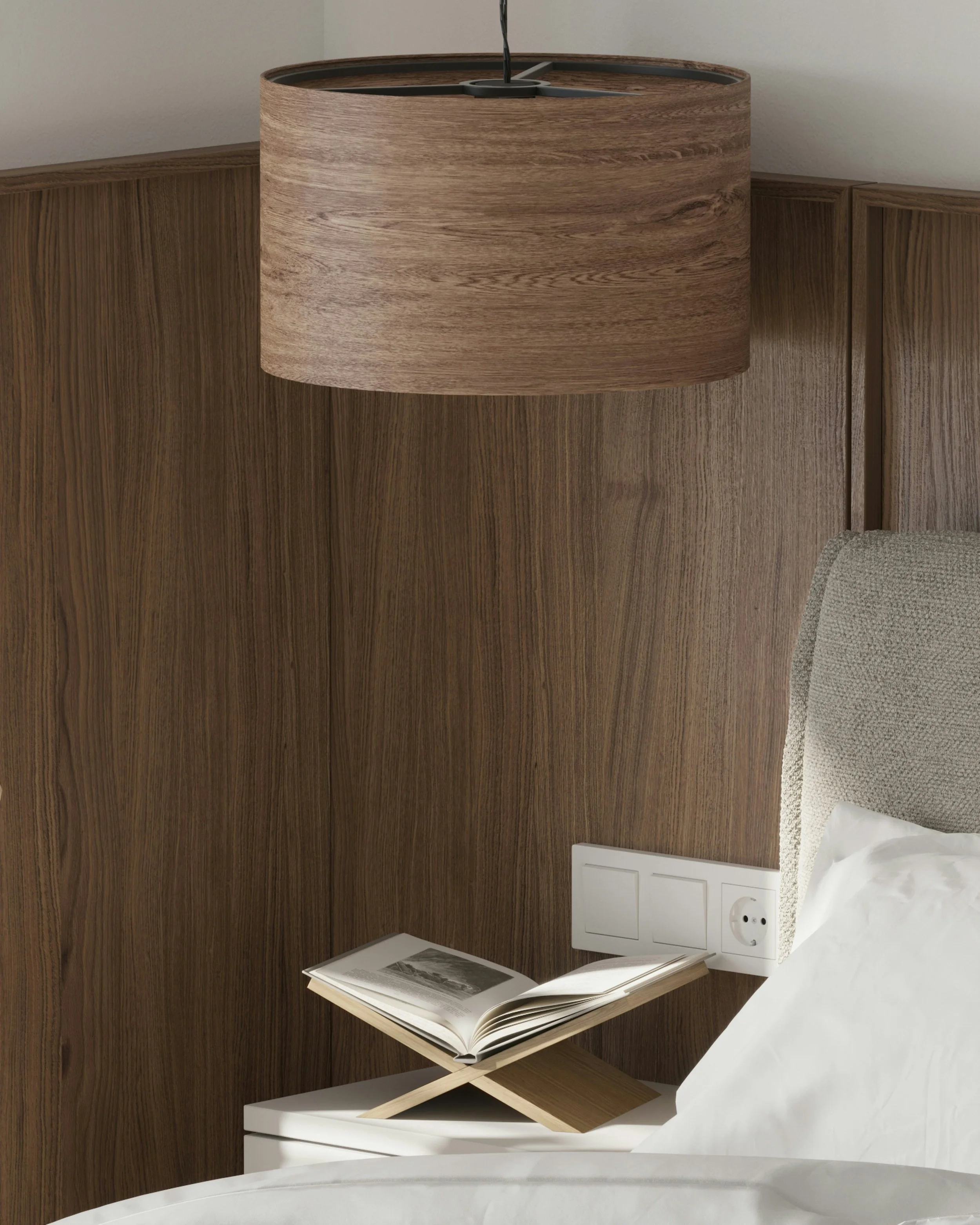
Cladding a ceiling, wrapping a headboard wall, or extending wood across walls and joinery creates a sense of enclosure paint rarely achieves. Paired with linen, wool and low lighting, the effect is deeply restful without feeling themed.
Going All in — And Why Restraint Still Matters
Fully wood-lined homes can look extraordinary, but restraint is what makes them last.
The most successful examples tend to use one dominant wood tone throughout, allowing variation to come from grain rather than colour. Breaks are introduced through plaster, stone, linen or upholstery — not competing timbers. Wood becomes the backdrop, not the headline.
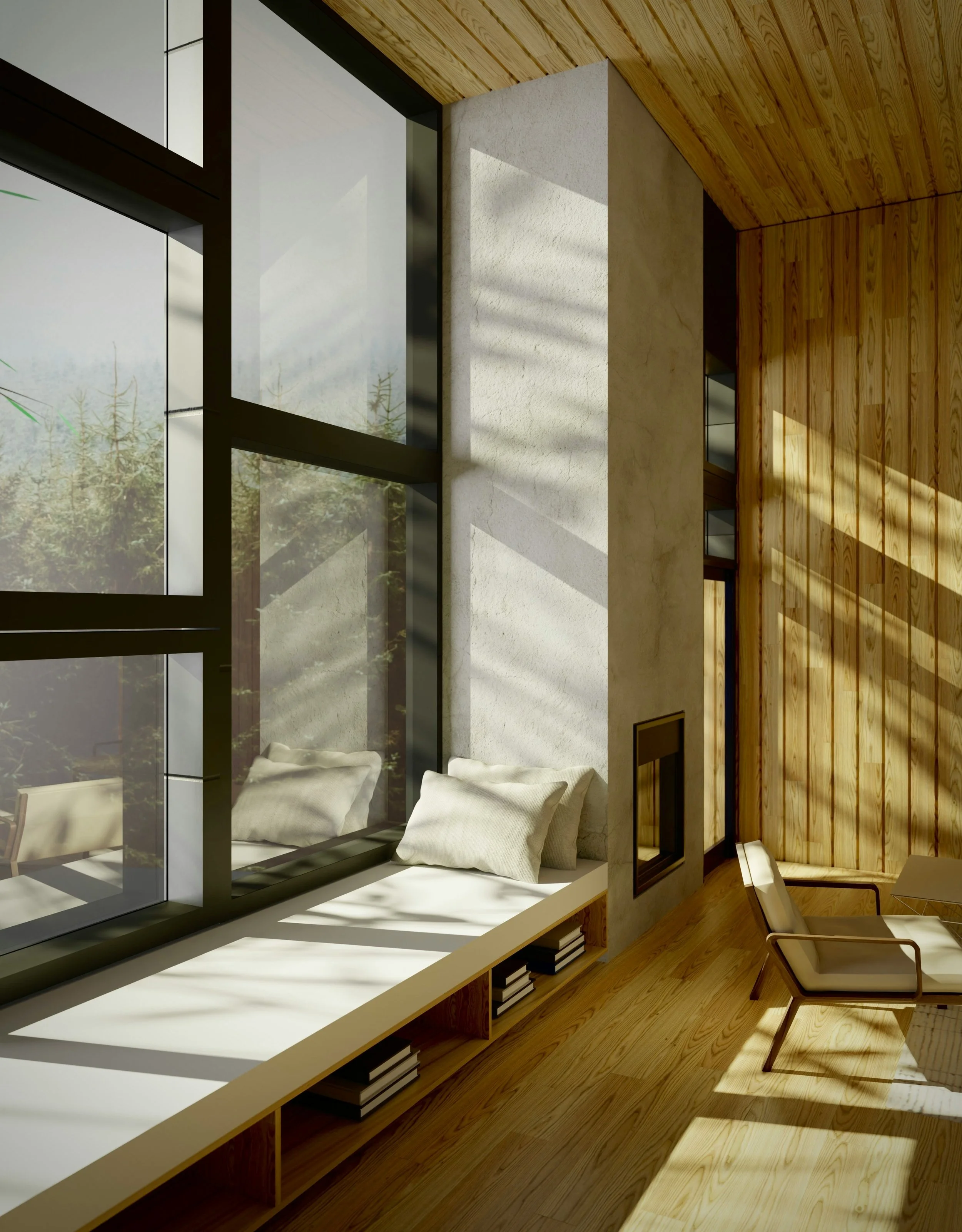
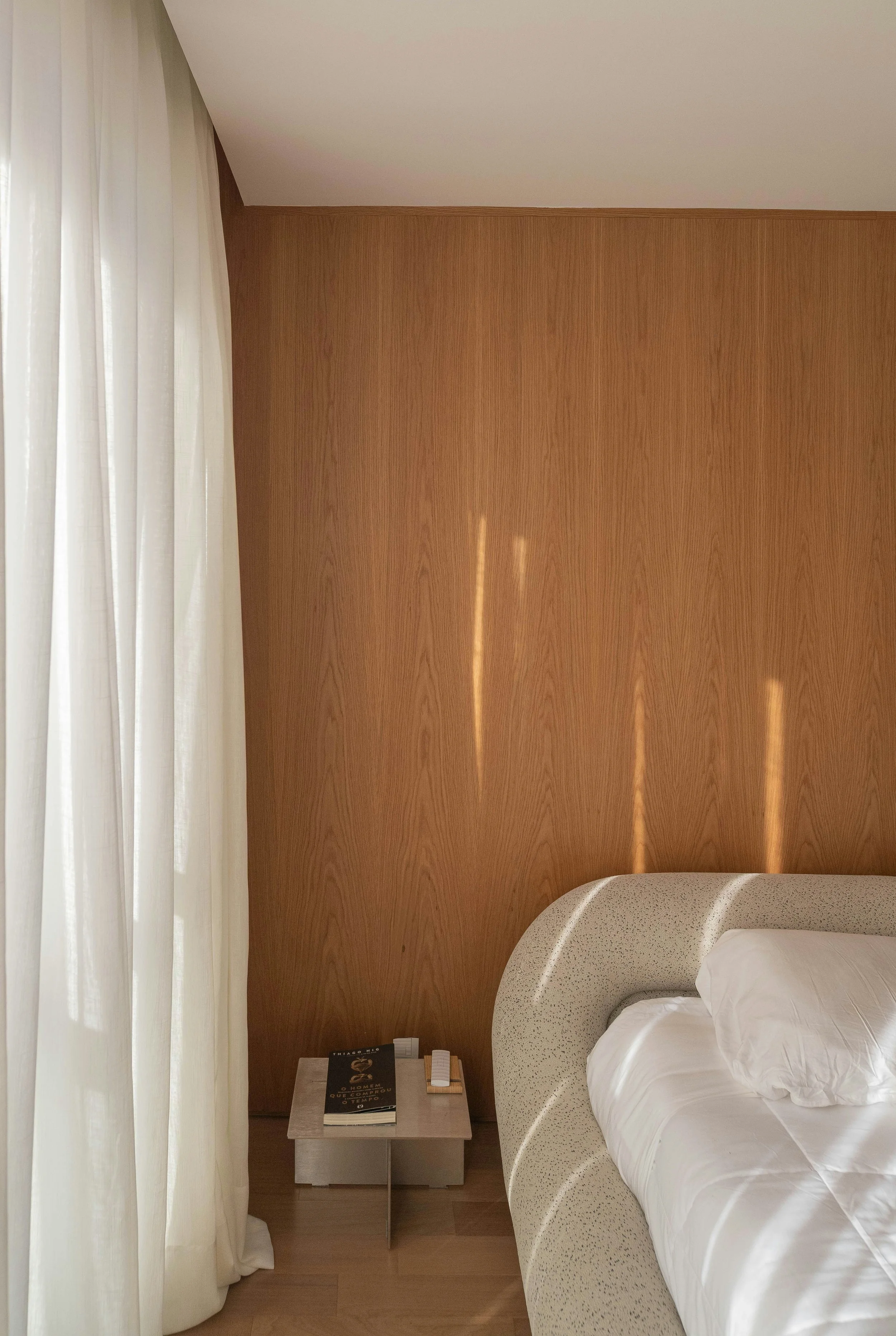
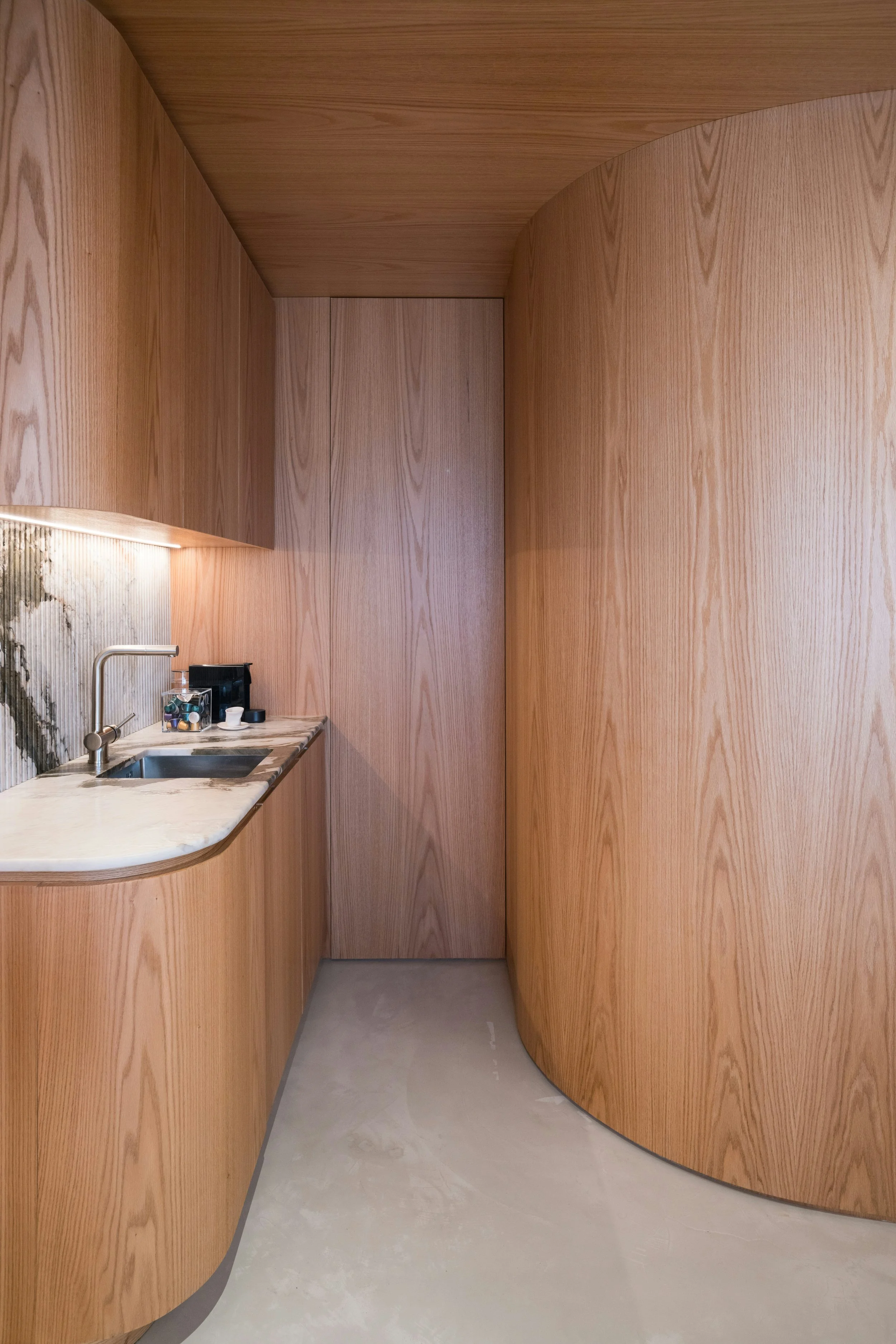
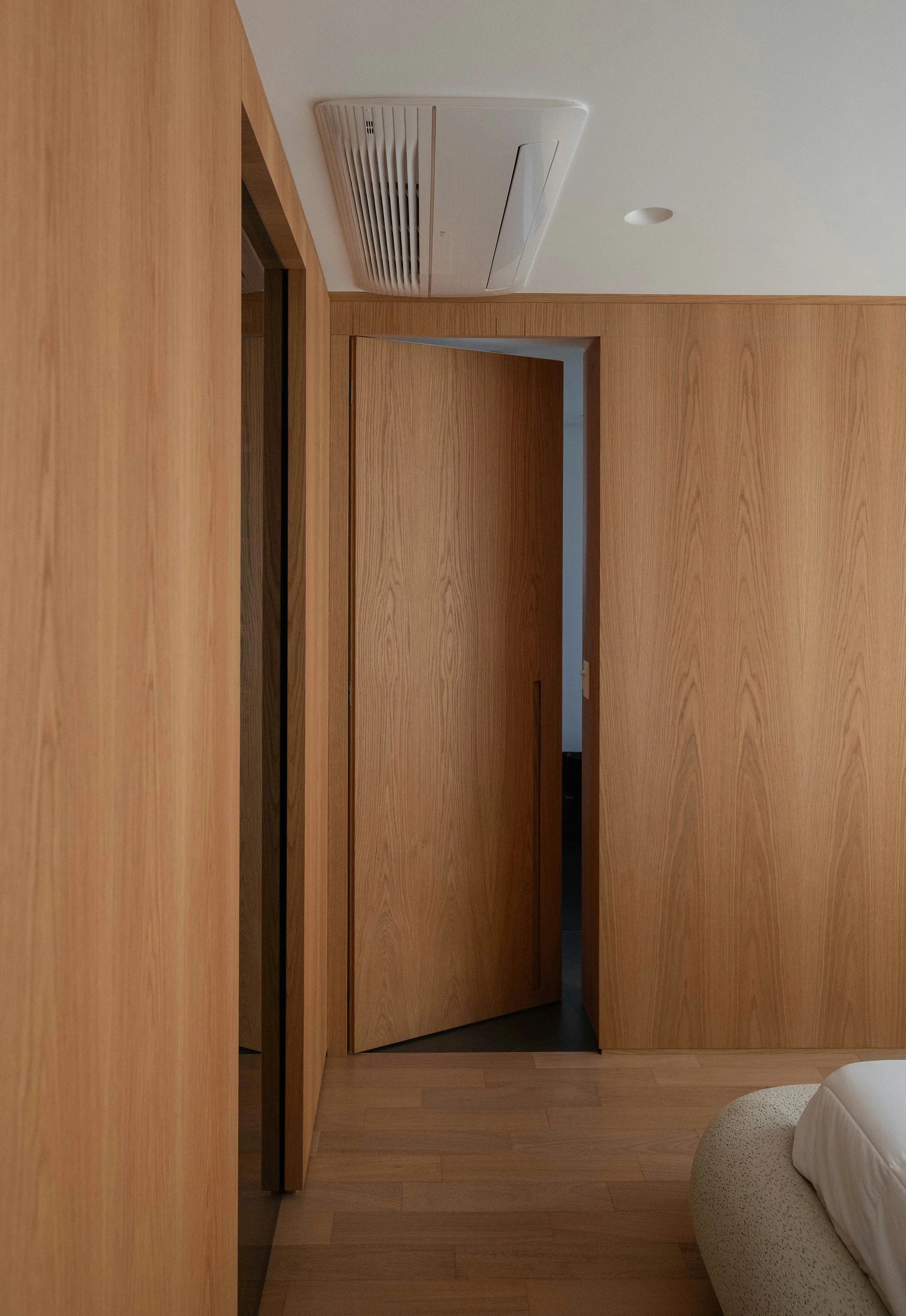
Mixing woods is possible, but it works best when done tonally rather than dramatically. Similar undertones, different scales. Wide planks alongside finer grain. Pale against slightly deeper, never sharply contrasting. When it feels calm, it reads as layered and intentional.
Finish matters more than species. Matte finishes feel modern and forgiving, oils enhance grain without shouting, and gloss dates quickly while highlighting wear. Wood that feels good to touch almost always feels good to live with.
Wood-drenched interiors can still be impressive — architectural, confident, beautifully resolved. But their real strength lies in how they live. They don’t demand attention or perfection. They age alongside the house and the people inside it.
Which is precisely why, right now, so many of us are turning towards them.
Not because wood is new.
But because, once again, it feels like the right material for the way we want to live.