The Design Hotels Worth Planning a Trip Around
The Design-Led Hotels Worth Planning a Trip Around This Spring
Occasionally you book a hotel. Sometimes you end up booking a trip around one.
You arrive, open the door to the room and immediately notice something slightly unusual.
The ceiling is higher than it strictly needs to be. The window is enormous. There’s a long stretch of empty space between the bed and the glass, left deliberately clear so the view can do its thing.
From a purely practical perspective, someone could probably have fitted another sofa there. Or another bed. Or perhaps even another room entirely.
But that’s not really the point.
Good design-led hotels follow a slightly different instinct. Light is given space to move properly through the room. Buildings are positioned so the landscape becomes part of the experience. The result is an atmosphere that quietly slows everything down the moment you arrive.
Mornings drift into late breakfasts. The terrace becomes the natural centre of the day. Slowly, you realise the architecture itself has become part of the holiday.
Not necessarily the biggest hotels, or the busiest, but the ones where the setting, the design and the sense of space make you want to stay a little longer than planned.
Each of the hotels below shares that same quality: places where the building, the landscape and the experience feel unusually well aligned.
Treehotel - Harads, Swedish Lapland
Some hotels impress when you arrive. Treehotel tends to make people stop the car.
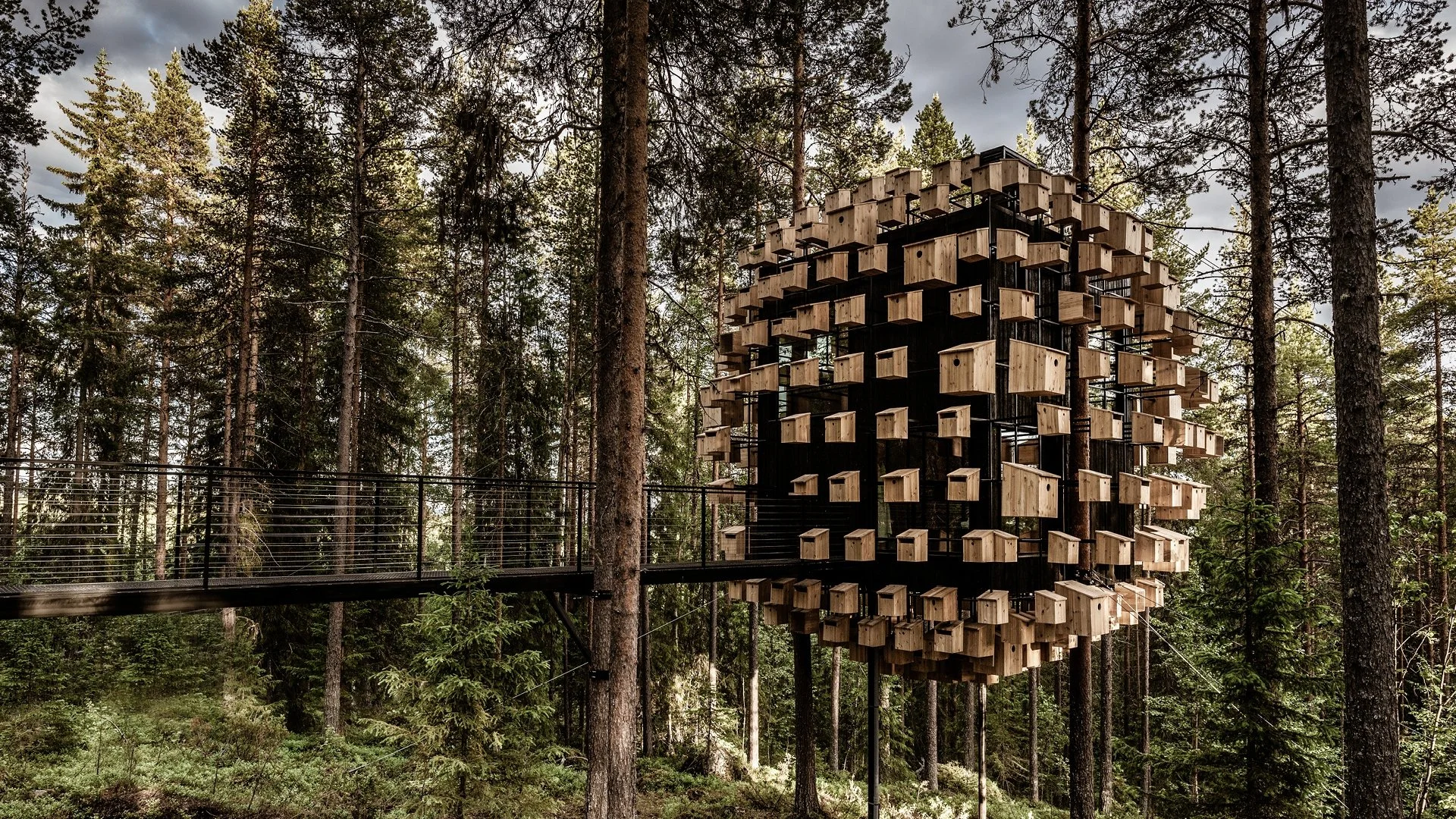
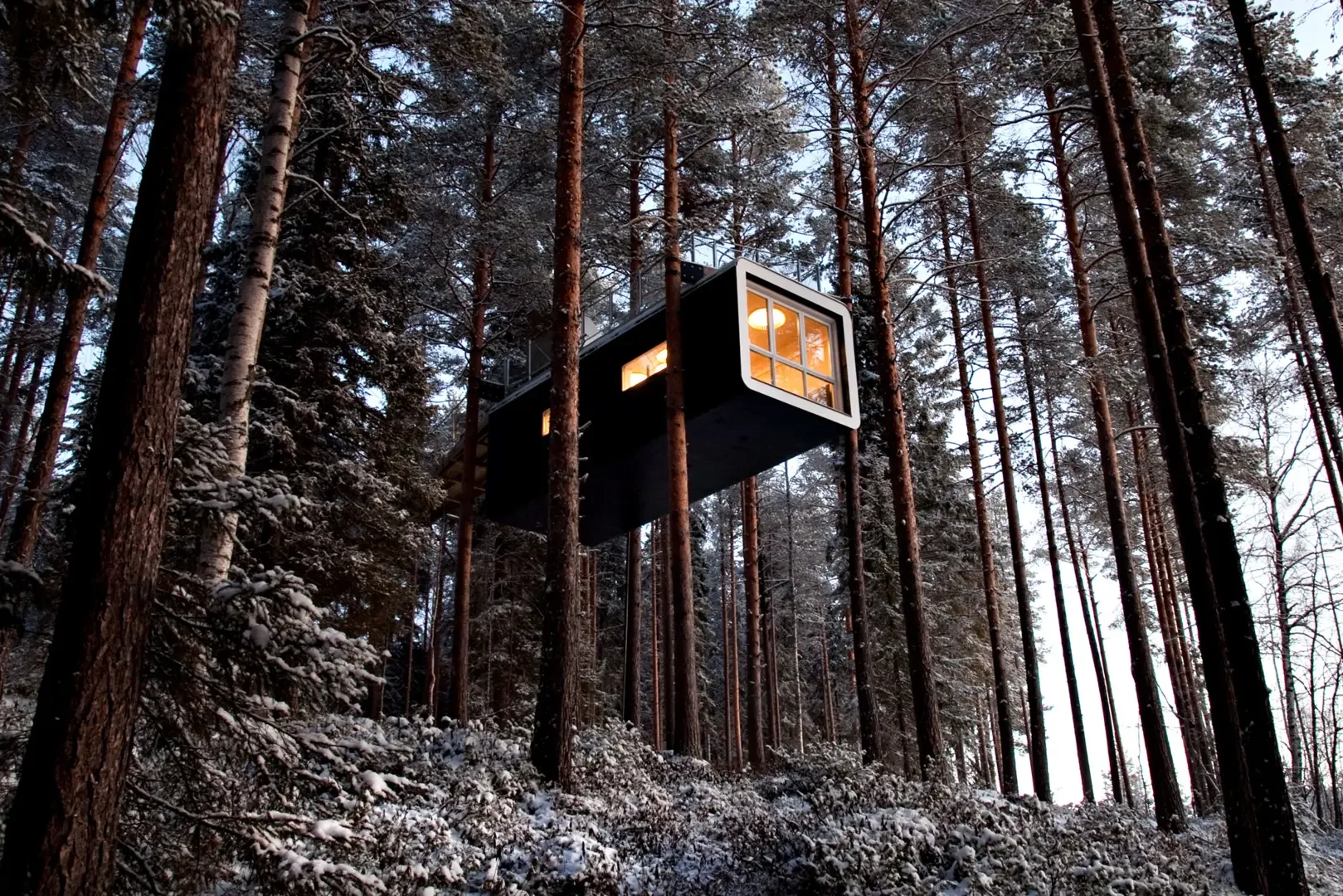
You drive through miles of pine forest in Swedish Lapland, wondering if you’ve somehow taken a wrong turn, when suddenly you realise the hotel is not really a building at all. Instead, a handful of striking architectural treehouses are tucked between the trunks — a mirrored cube that almost disappears into the forest, a giant nest of tangled branches, even a futuristic UFO hovering quietly among the trees.
It’s the sort of place that makes even the most composed adults behave slightly like children again. There is something deeply satisfying about climbing a small staircase into the trees and realising that, yes, you really are about to sleep in a beautifully designed treehouse.
Inside, the mood is calmer than the architecture suggests. Pale wood, soft lighting and huge windows keep the focus on the forest outside. In winter the entire landscape turns into a silent white world; in summer the midnight sun lingers long enough that bedtime becomes slightly negotiable.
Days here rarely follow a strict plan. You might spend the morning snowshoeing through the forest, the afternoon warming up beside a fire, and the evening outside scanning the sky for the northern lights with a mug of something hot.
Two or three nights is perfect — long enough to settle into the quiet rhythm of Swedish Lapland without losing that slightly surreal feeling that you’re sleeping in a design-forward treehouse.
The nearby village of Harads offers a glimpse of everyday life in northern Sweden, while the surrounding wilderness provides plenty of adventure — frozen rivers, husky sledding, forest trails and vast landscapes that make city life feel very far away indeed.
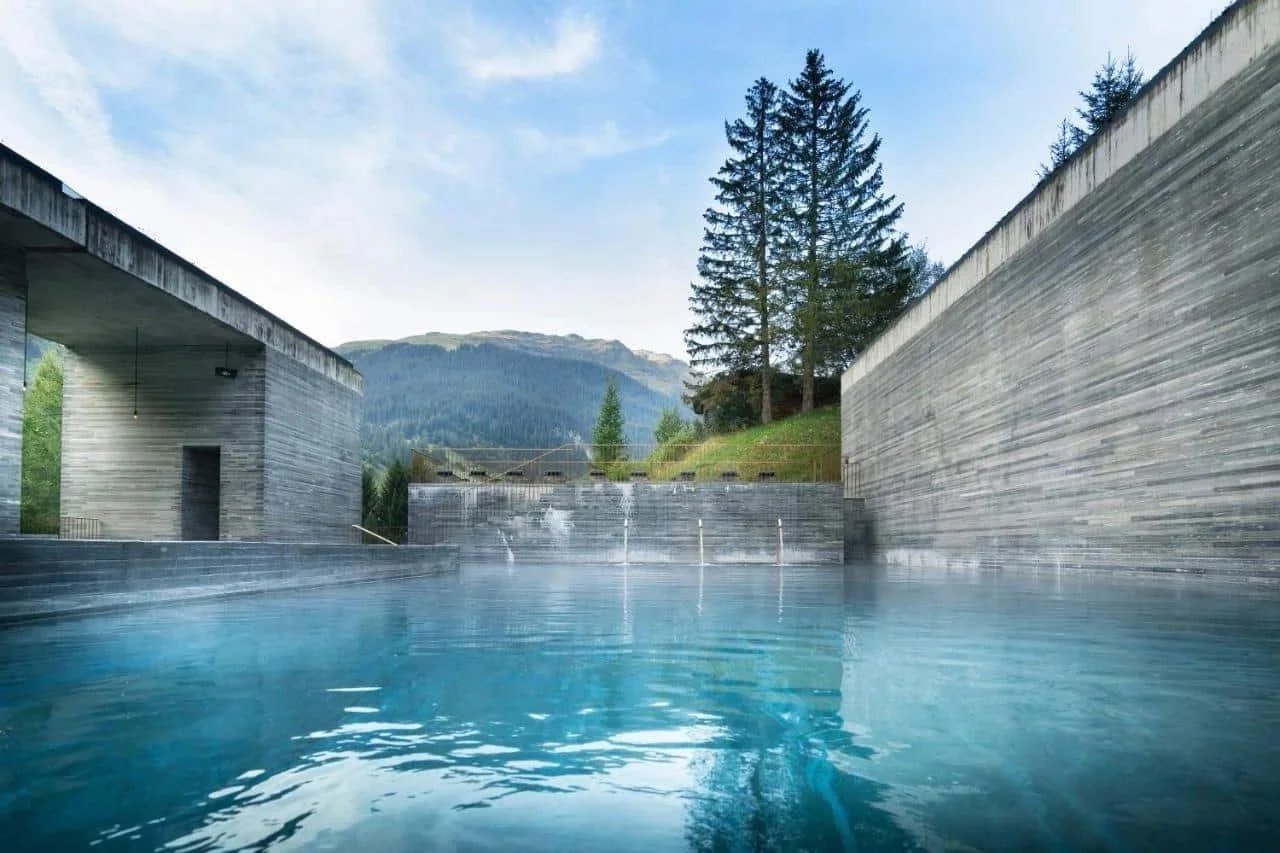
7132 Hotel — Vals, Switzerland
Vals is the sort of village you don’t really pass through by accident. Hidden deep in a Swiss Alpine valley, it feels increasingly remote the further you drive, until suddenly the road opens onto a cluster of wooden houses surrounded by mountains.
The reason people come here, however, lies just below the village.
The thermal baths designed by the Swiss architect Peter Zumthor are widely considered one of the most beautiful spa buildings in the world. Constructed from slabs of locally quarried quartzite stone, the structure feels almost geological — as if the mountain itself had quietly decided to become a spa.
Inside, the atmosphere is hushed and quietly hypnotic. Pools sit in stone chambers where shafts of light fall through narrow openings in the ceiling, and water echoes softly against the walls.
Even those who normally get restless after ten minutes in a spa tend to lose track of time here.
The hotel above the baths is deliberately calm and understated, letting the architecture and the surrounding valley do most of the talking.
Two or three nights is enough to fully appreciate both the baths and the landscape. Beyond the spa there are alpine hiking trails in summer, skiing in winter, and a handful of cosy restaurants in the village serving hearty mountain food.
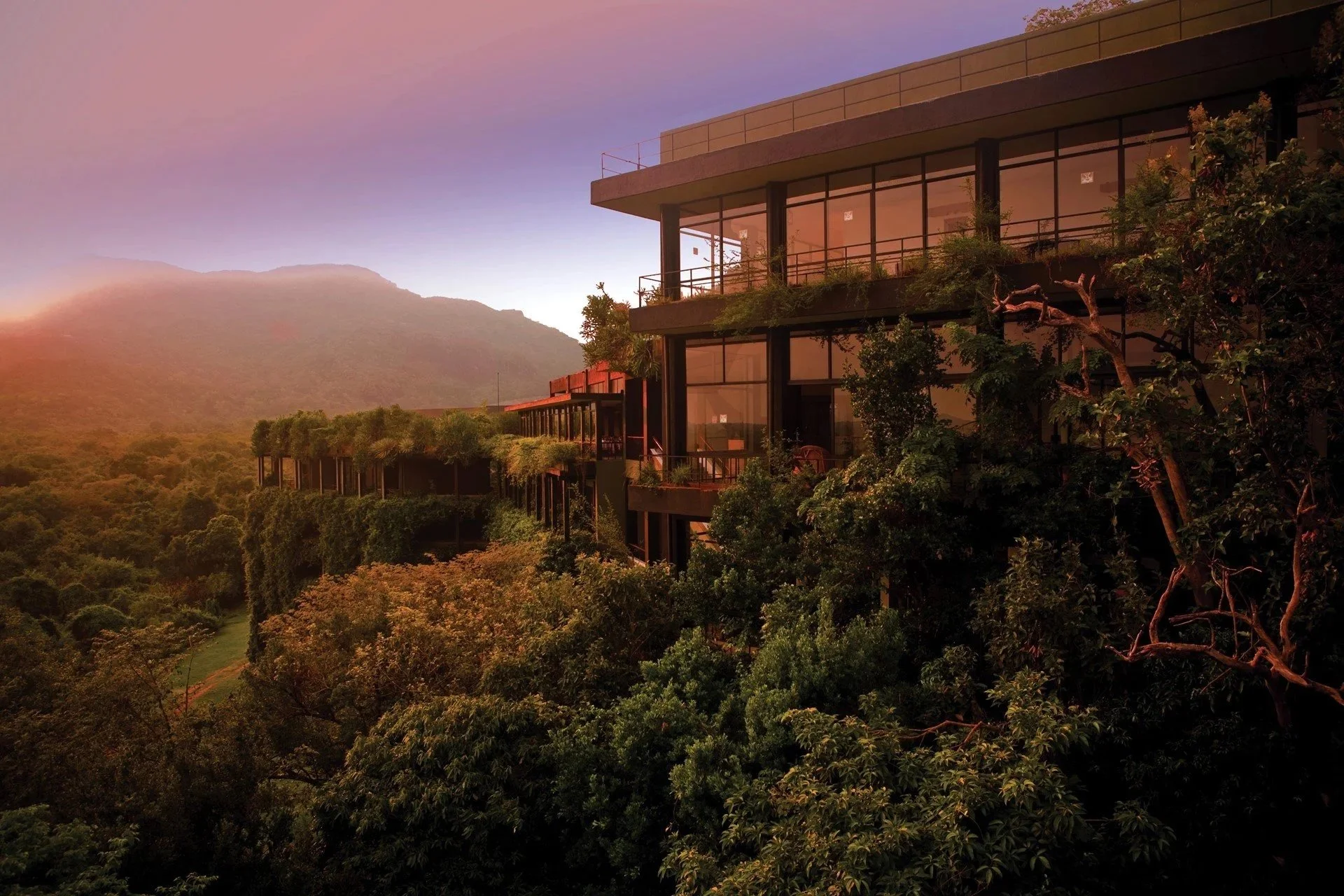
Heritance Kandalama — Sri Lanka
Few hotels disappear into their surroundings quite as elegantly as this one.
Designed by the architect Geoffrey Bawa, Heritance Kandalama stretches along a jungle-covered cliff above a vast lake in Sri Lanka’s Cultural Triangle. From a distance the building almost blends into the forest, vines trailing down its walls as monkeys wander casually across the terraces.
Inside, long open corridors frame views of jungle, water and distant hills. The entire hotel feels designed to keep reminding you where you are.
Early mornings here are particularly memorable. Mist drifts slowly across the lake while birds call from the surrounding trees and the jungle begins to wake up around the building.
The location also makes it a wonderful base for exploring nearby cultural sites including the ancient rock fortress of Sigiriya and the cave temples of Dambulla.
Three or four nights works beautifully — long enough to explore the area and still spend a lazy afternoon or two beside the infinity pool watching the jungle do its thing.
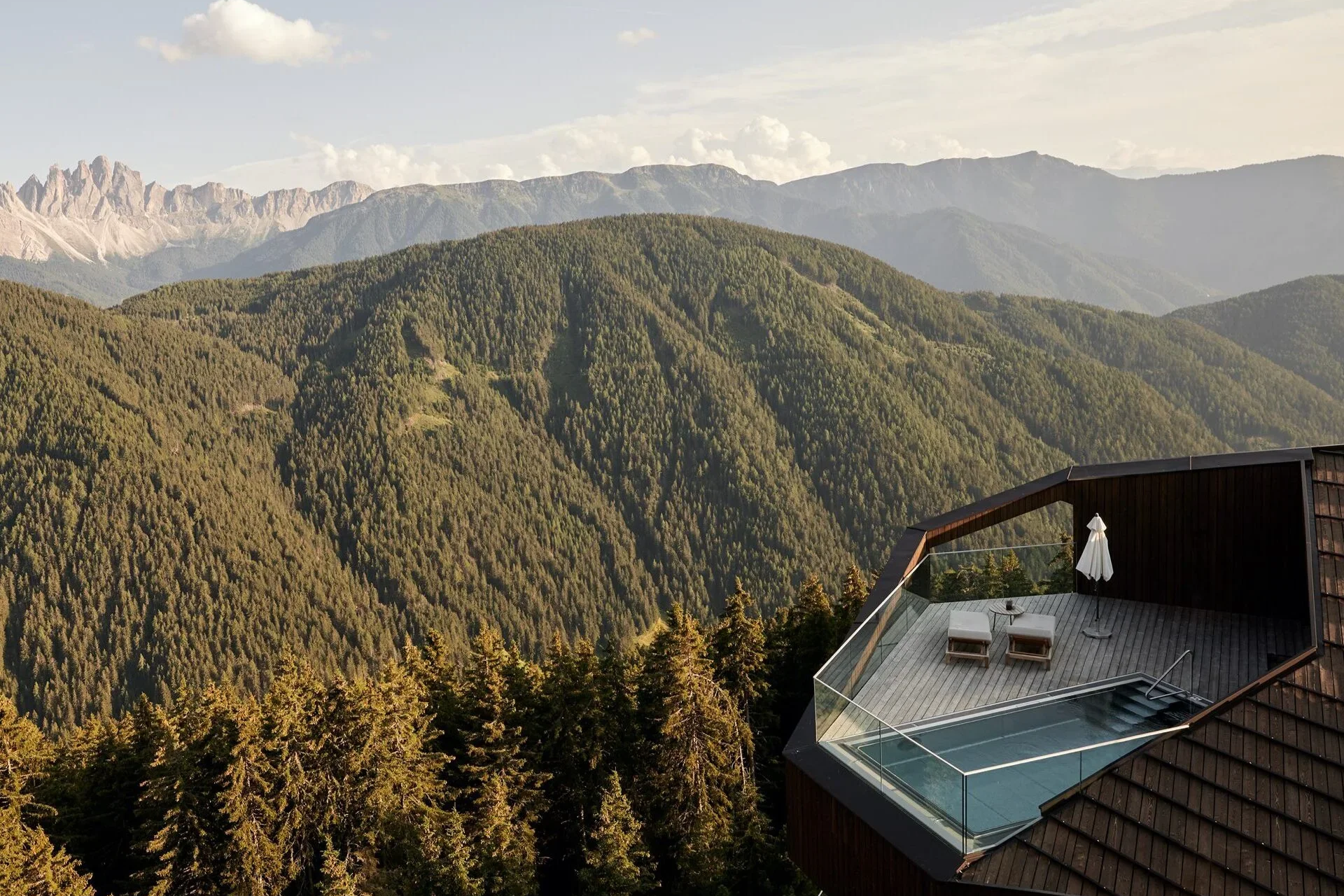
Forestis — Dolomites, Italy
High above the valleys of South Tyrol sits a hotel that seems designed almost entirely around one thing: the view.
Forestis occupies a peaceful mountainside plateau facing the jagged peaks of the Dolomites. The architecture is deliberately restrained — pale wood, clean lines and enormous windows that make the surrounding mountains feel like part of the room.
You wake up here with the sense that someone has thoughtfully arranged the scenery overnight.
Days fall into an easy rhythm. Breakfast with the mountains in full view, long walks through alpine meadows or forests, and afternoons spent drifting between the outdoor pools and the quietly spectacular spa.
The surrounding region is filled with spectacular mountain scenery and charming villages, while cable cars whisk visitors high into the Dolomites for some of the most dramatic hiking routes in Europe.
Forestis works beautifully for couples looking for a restorative few days, though families with older children who enjoy nature tend to love it too.
Three nights feels about right — long enough to reset properly before reluctantly heading back down the mountain.
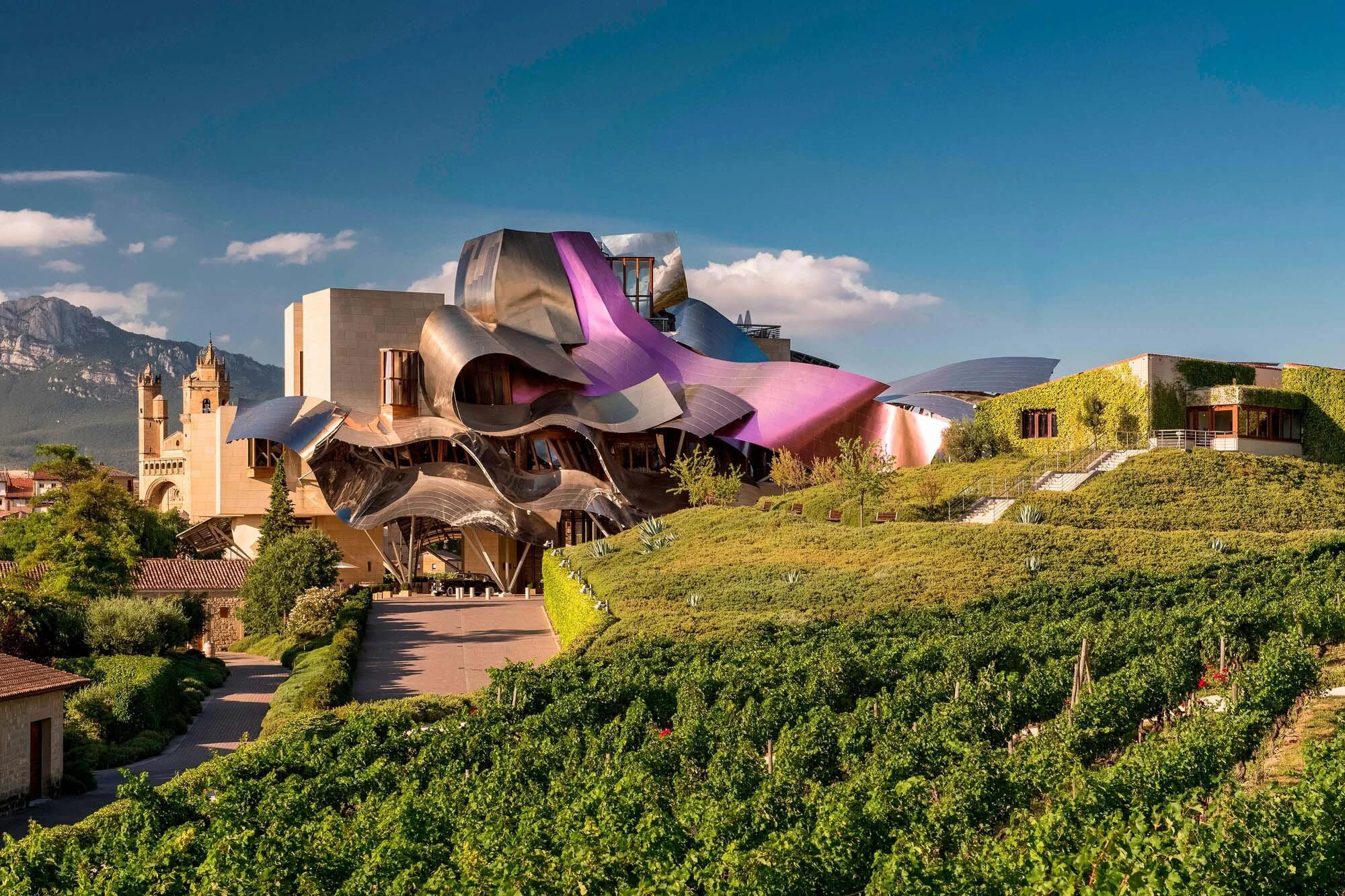
Hotel Marqués de Riscal — Rioja, Spain
If Treehotel disappears into the forest, this one does the opposite.
Designed by Frank Gehry, Hotel Marqués de Riscal rises above the vineyards of Rioja in sweeping ribbons of titanium that twist and fold across the sky.
It’s the sort of building that makes people pull over on the road just to take a photograph.
Inside, the atmosphere becomes calmer but no less impressive. Rooms look out across endless vineyards, while the surrounding countryside offers some of Spain’s most celebrated wineries.
Days here tend to revolve around long lunches, leisurely wine tastings and slow drives through vineyard-covered hills.
Two or three nights is ideal — enough time to explore Rioja’s wineries and fully appreciate the architectural drama of the hotel itself.
Fogo Island Inn— Newfoundland, Canada
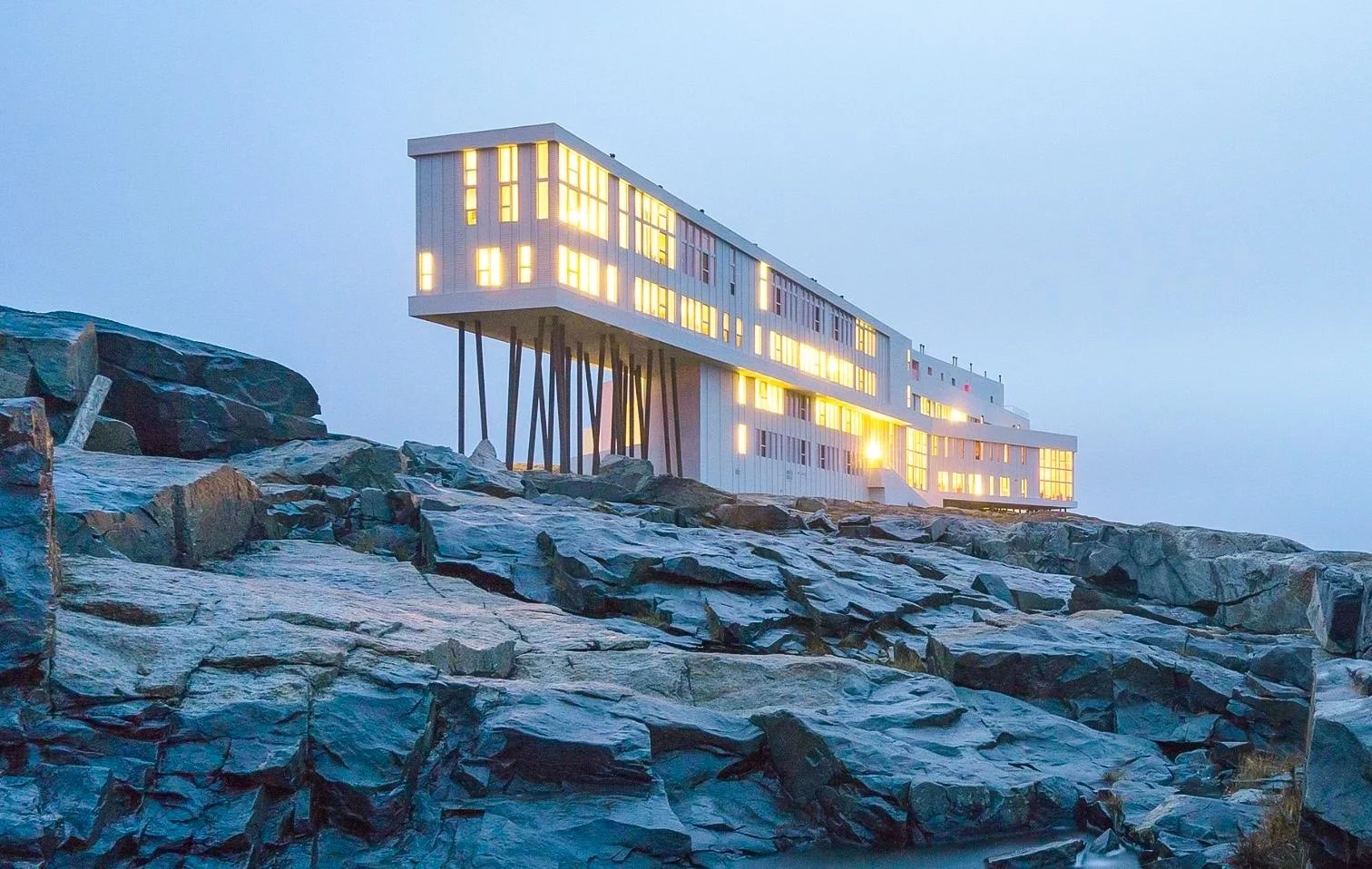
At first glance Fogo Island Inn looks almost improbable.
Perched on stilts above the rocky Atlantic coastline of Newfoundland, the striking white structure seems to hover over the water like a piece of contemporary sculpture. From a distance it feels bold and modern against the rugged landscape; up close it begins to make more sense, its long wooden stilts echoing the traditional fishing stages that once lined this coastline.
Inside, the atmosphere is warmer and more thoughtful than the architecture might suggest. Handmade quilts lie folded across beds, wood-burning stoves glow in the colder months, and much of the furniture has been crafted by local makers — a quiet reminder that the hotel is deeply tied to the island community around it.
The view, however, is always the real centrepiece. Every room faces the ocean, where the horizon stretches endlessly and the Atlantic changes mood throughout the day. In spring and early summer icebergs drift slowly past the coastline, while storms rolling in from the sea can turn the entire landscape dramatic within minutes.
Days here tend to follow the rhythm of the island itself. You might spend the morning walking coastal trails, visiting tiny fishing villages or joining one of the island’s artists and boat builders for a workshop, before returning to the inn for long dinners showcasing local seafood.
Evenings often end in the rooftop hot tubs, watching the light fade over the Atlantic while the wind moves across the water below.
Three or four nights is ideal — long enough to explore the island properly and understand why this remote corner of Newfoundland has become one of the most celebrated design hotels in North America.
Juvet Landscape Hotel — Valldal, Norway
The first thing you notice at Juvet is the quiet.
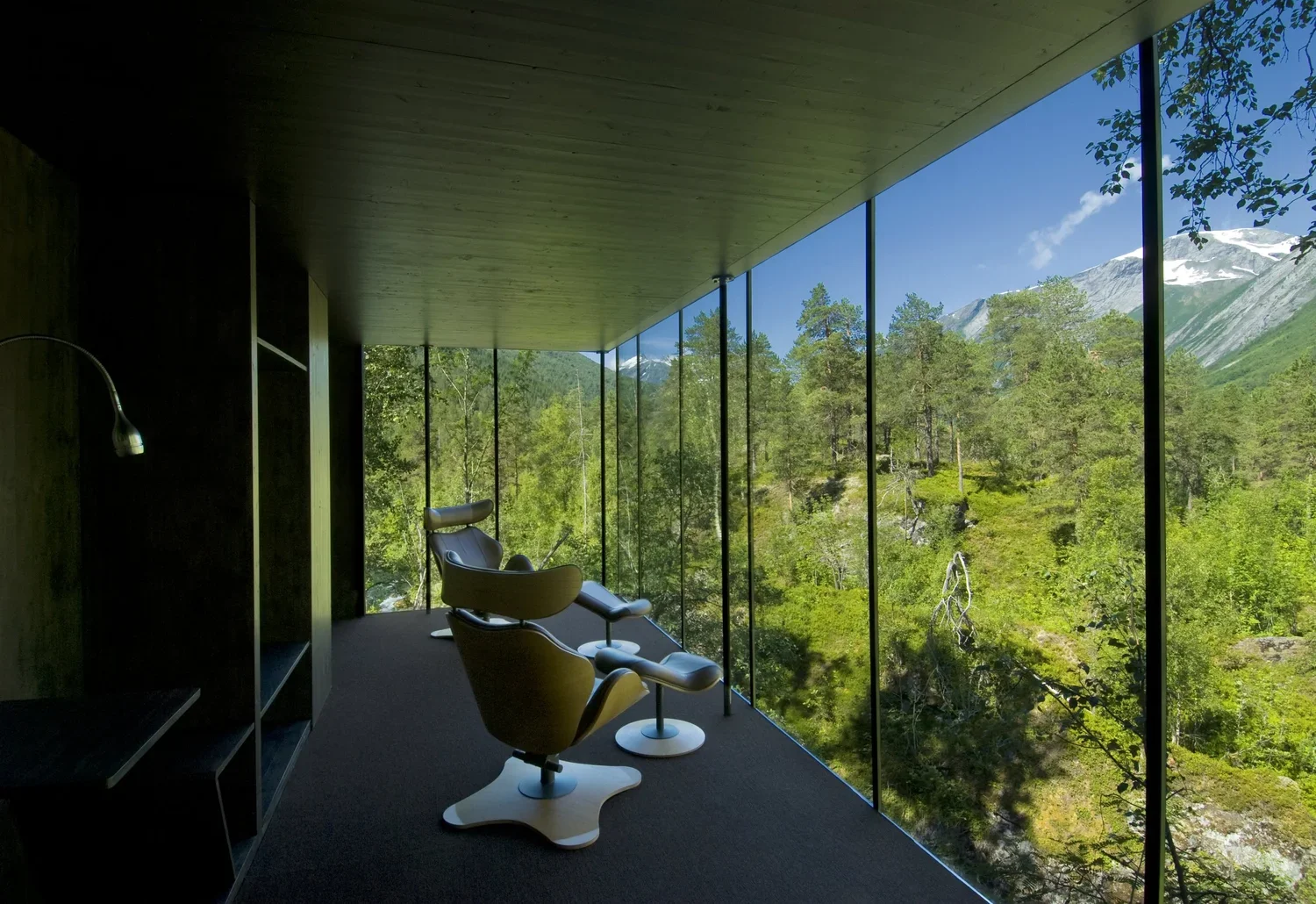
Set deep within a dramatic Norwegian valley, the hotel doesn’t announce itself in the usual way. Instead of one central building, a handful of glass-and-timber cabins are scattered carefully along the edge of a rushing river, each positioned to frame a slightly different view of forest, water or mountains.
From certain angles the buildings almost disappear into the landscape.
The architecture is deliberately restrained. Dark steel frames and pale timber interiors keep the focus firmly on the scenery outside, while floor-to-ceiling windows turn each cabin into something closer to a private observation post in the middle of the valley.
Mornings often begin with mist lifting slowly from the river below. Later you might follow forest trails through the surrounding mountains, kayak along nearby fjords, or simply sit on the terrace listening to the sound of water moving through the valley.
The region itself is spectacular. The famous Geirangerfjord lies within easy reach, while the surrounding Sunnmøre Alps offer some of Norway’s most dramatic hiking landscapes.
Two or three nights is ideal here — long enough to absorb the calm atmosphere and understand why this quietly radical hotel has become one of Scandinavia’s most celebrated pieces of landscape architecture.
Hotel Terrestre — Puerto Escondido, Mexico
Hotel Terrestre doesn’t so much sit in the landscape as emerge from it.
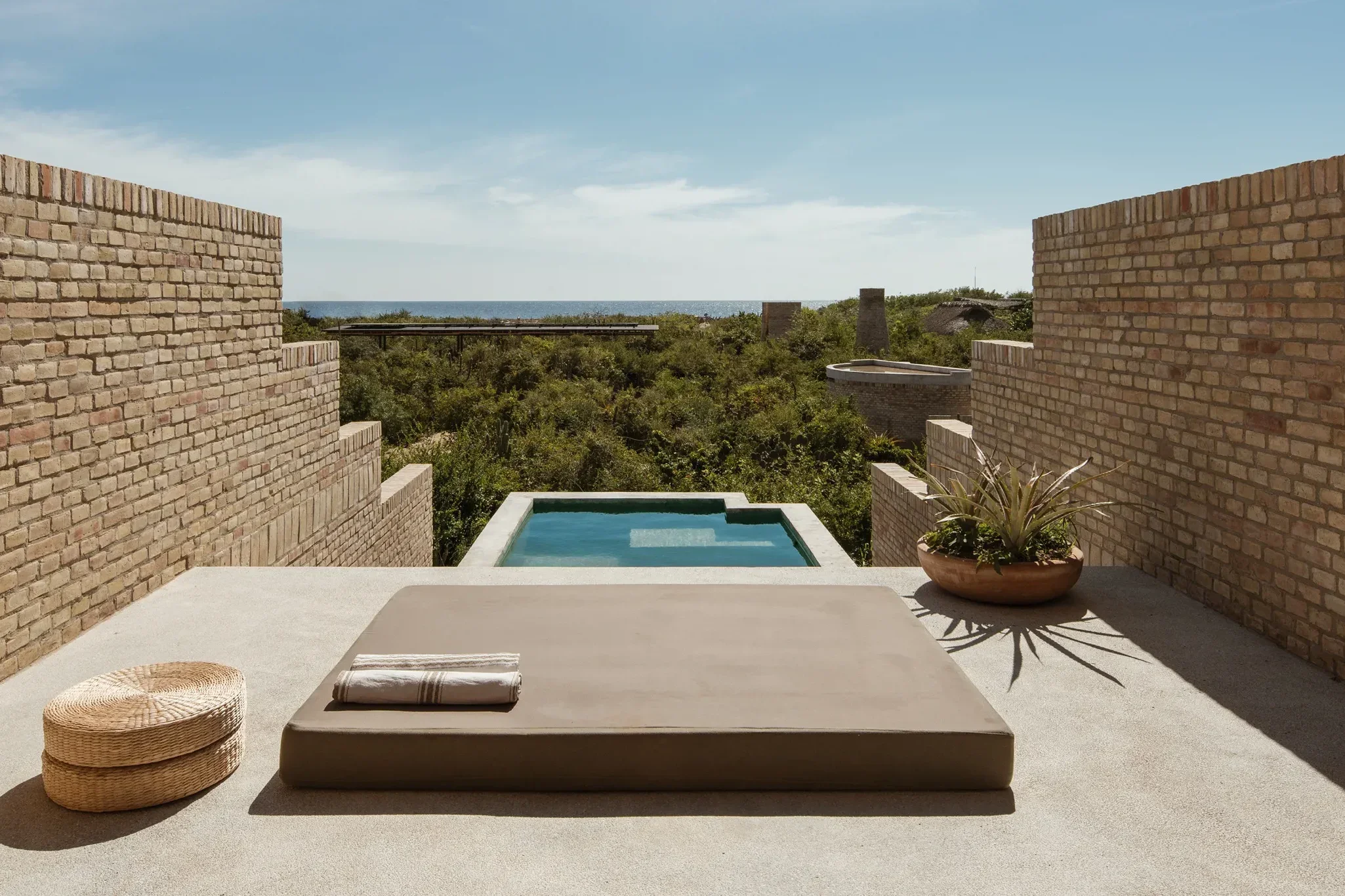
Set along a stretch of wild Oaxacan coastline outside Puerto Escondido, the hotel is made up of a series of low geometric structures scattered across desert terrain, their raw concrete forms blending into the dusty hills and cacti that surround them.
Designed by Mexican architect Alberto Kalach, the entire property feels intentionally elemental. Rough concrete, natural light and open-air walkways replace anything overly decorative, allowing the landscape and the architecture to carry the experience.
Rooms follow the same philosophy. Large terraces open towards the Pacific, private plunge pools catch the afternoon sun and sliding walls allow warm coastal air to drift quietly through the space.
Despite the striking design, the atmosphere remains relaxed rather than theatrical.
Days here tend to unfold slowly. Mornings begin with coffee overlooking the desert before wandering down to the beach, while afternoons might involve long swims in the hotel’s sculptural pools or exploring nearby Puerto Escondido, where surf culture and excellent seafood restaurants set the pace of life.
Evenings bring warm desert air, dramatic sunsets and the quiet satisfaction of staying somewhere where the architecture and landscape feel perfectly in sync.
Two or three nights works beautifully — long enough to appreciate both the building and the rhythm of the coastline.
The most memorable hotels rarely compete to be the biggest or the busiest. Instead, they tend to do something slightly different — leaving space for the view, allowing architecture to shape the experience, and creating places where the building and the landscape feel completely in sync. And once you’ve stayed somewhere like that, it becomes surprisingly easy to understand why some trips begin not with the destination, but with the hotel itself.