It can feel like something’s gone wrong — but most of the time, it hasn’t. Understanding it changes how you read it.
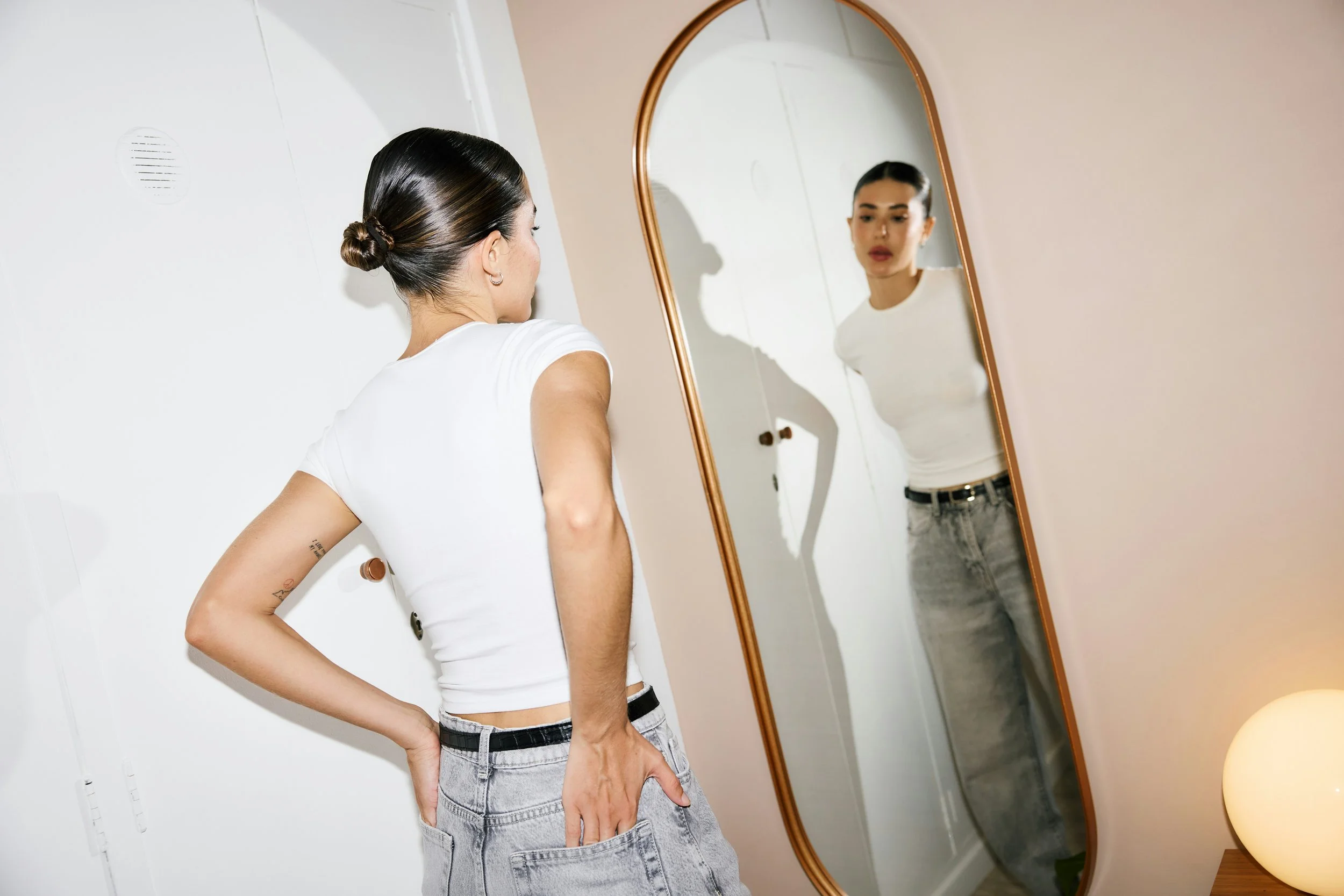
You notice it when your jeans — the ones that felt fine a few days ago — suddenly don’t. Not always dramatically, but enough to throw you off.
I thought I’d been eating well. There’s no obvious explanation. You just carry on, slightly aware of it.
And then, a day or two later, it’s gone.
That’s usually when it gets labelled as water weight — not because you knew at the time, but because it changed too quickly to have been anything else.
What makes it difficult to read is that the same pattern can come from completely different things.
A higher-carbohydrate day, a disrupted night’s sleep, a shift in your cycle — all can leave you feeling slightly heavier or less defined by the next morning. From the outside, it all looks the same. There’s no obvious way to tell which one you’re looking at.
So it gets simplified. Filed under one label, treated as one problem — even though the body is doing something different each time.
It’s Not About How Much — It’s About Where
Because this isn’t really about how much water your body is holding onto. It’s about where that water is sitting — and that’s what changes how it looks and feels.
When water is drawn into muscle, it tends to feel different. More stable, sometimes even firmer. That usually happens when the body is storing fuel or repairing after training — in other words, when something active is going on.
One of the main ways this happens is through glycogen — the form your body stores carbohydrates in, mainly in muscle. And when glycogen is stored, it pulls water in with it.
That’s why weight and shape can shift quickly after eating more (or fewer) carbohydrates, even though nothing has changed in terms of body fat. It’s also why those changes tend to be short-lived — usually settling within a day or two once intake and activity level out.
A harder workout is a good example. If your jeans feel tighter later that day or the next morning, it’s often not something you’ve eaten — it’s the body directing fluid into the muscle to repair it. It can feel like heaviness or tightness, but it’s part of a process that’s doing exactly what it should.
That kind of retention is usually local and temporary. It tends to peak within 24–48 hours after training, then ease as recovery completes.
“It’s not about how much water your body is holding — it’s about where it’s sitting.”
This is also where creatine tends to get misunderstood. It does change how the body holds water — but not in the way most people are picturing.
The concern is usually about looking bloated or puffy. That softer, slightly undefined feeling tends to come from fluid sitting closer to the surface. Creatine doesn’t work like that.
It pulls water into muscle — which is why it’s used to support strength and recovery. In practice, that tends to feel more like a slight increase in fullness rather than softness.
Some people notice a small shift on the scale in the first couple of weeks — often around a kilo — but it doesn’t keep increasing, and it doesn’t behave like the day-to-day fluctuations that come from hormones or diet.
If anything, once things settle, the effect is often less noticeable than expected — because the water is being held where it’s used, rather than where it’s seen.
When fluid sits more superficially, just under the skin, it reads differently. Softer. Heavier. Less defined. The same body, the same amount of water — just in a different place.
Hormonal shifts tend to show up more like this. Fluid is more likely to be held closer to the surface, which is why it changes how your clothes fit.
It’s also why it can feel less predictable. Unlike glycogen or training-related shifts, this isn’t tied to a single input — so it can last a little longer, often a few days, and resolve more gradually.
Most people think of it as something that happens just before their period, but it can show up earlier in the cycle as well — often around ovulation — just in a subtler way. The pre-period phase tends to be more noticeable, which is why that’s the one people recognise.
Then, towards the end of the cycle, it often shifts again. Fluid that’s been held onto is released, sometimes quite quickly — which is why you might suddenly find you’re going to the loo more often, and your body feels lighter again almost overnight.
Stress and poor sleep add another layer. They don’t create one clear pattern, but they do affect how fluid is regulated overall.
When cortisol stays elevated — even slightly — it can change how the body holds onto sodium and water. That can lead to fluid being retained more easily, particularly in that softer, more superficial way that shows up in how your clothes fit.
It’s also why it often feels harder to shift. You can eat well and train as usual, but if sleep has been off or stress has been running high, your body is working to hold onto balance elsewhere — and fluid is part of that response.
None of these operate in isolation, which is why the result can feel inconsistent.
What Helps — Without Overcorrecting
The instinct, when your body suddenly feels different, is to react quickly — eat less, cut things out, try to get back to where you were a few days ago.
That usually works against you.
Because most of these shifts are already in motion. They follow a rhythm — glycogen storage, muscle repair, hormonal changes — and they tend to resolve on their own once that process has played out. Trying to override them often just adds another layer.
What helps more is not doing more, but doing less, more consistently.
If it follows a harder workout, it’s usually short-lived — often easing within a day or two as recovery settles. If it’s tied to your cycle, it tends to move more gradually, and then release just as noticeably towards the end. Those are very different situations, even if they feel the same in the moment.
From there, it’s about supporting the body rather than correcting it.

Eating regularly — rather than swinging between extremes — helps keep glycogen and fluid shifts steadier. Sharp changes tend to create sharper responses, which is often what you’re feeling the next day.
Sleep plays into this more than it seems. Even a couple of disrupted nights can shift cortisol enough to affect how fluid is held — not always immediately, but enough to change how your body feels over the following days.
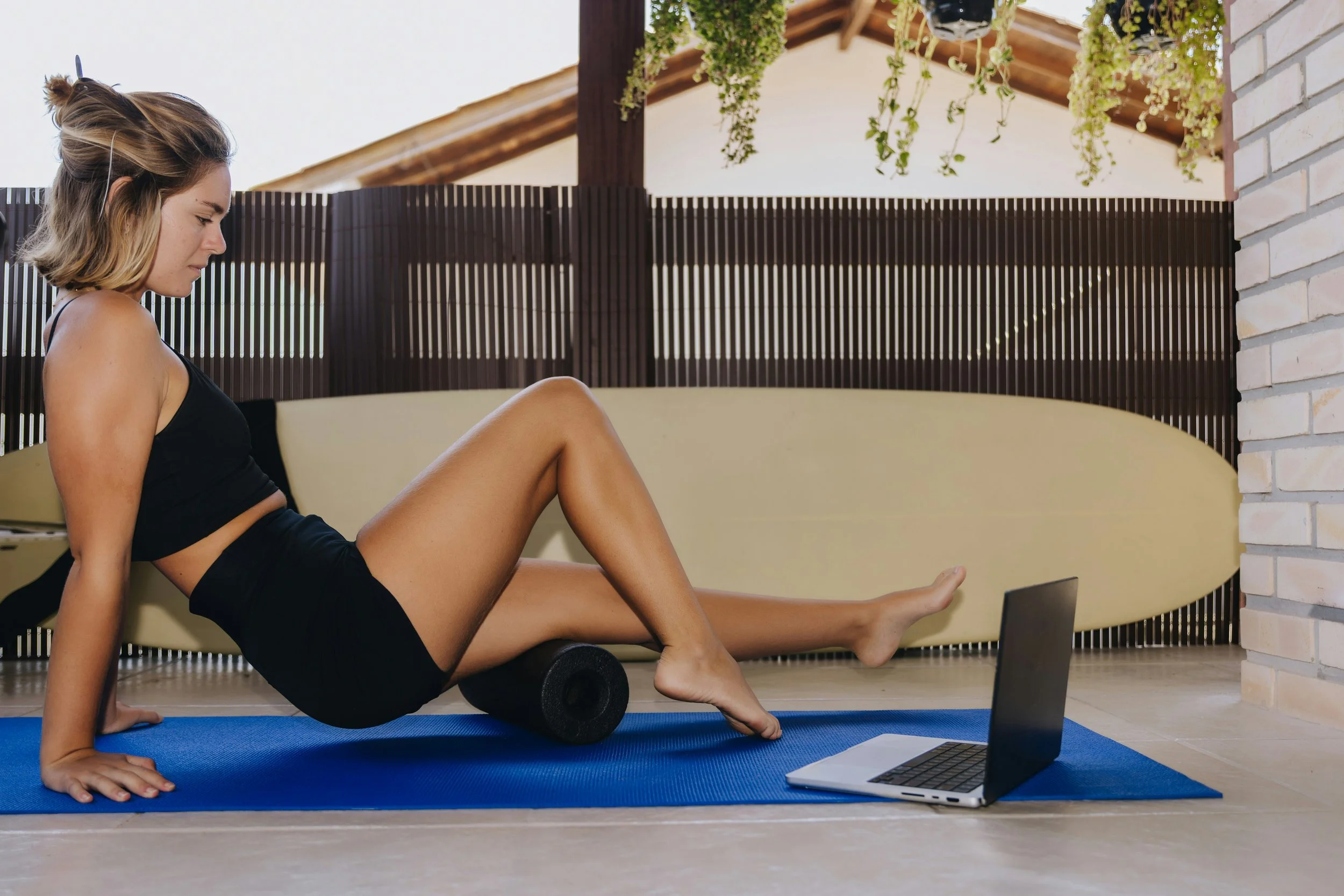
Movement helps, but it’s about the type. Gentle, consistent movement — walking, light strength work, even something slower like yoga — helps fluid move through the body, rather than sit in one place. It supports circulation and the lymphatic system without triggering another round of muscle inflammation, which can make that heavy, tight feeling linger.
That’s also where more targeted approaches can make a difference. Things like light lymphatic massage, dry brushing, or even just elevating your legs briefly can help move fluid that’s sitting more superficially. Not as a fix, but as a way of easing that slightly stuck, heavy feeling when it shows up.
The lymphatic system doesn’t have a pump in the same way circulation does — it relies on movement and gentle pressure to keep things flowing. That’s why slower, more deliberate techniques tend to work best.
In practice, that can be as simple as using light pressure and sweeping movements, always working upwards — from ankles towards knees, wrists towards shoulders — encouraging fluid to move back towards the centre of the body. It should feel gentle rather than forceful.
Even a few minutes can make a difference, particularly when that heavier, more surface-level fluid is what you’re noticing.
Hydration fits into this in a similar way. Drinking enough water doesn’t “flush” fluid out directly, but it supports the systems that regulate it. Restricting it tends to have the opposite effect, making the body hold on more tightly.
Food plays a role here too, but not in the way it’s often framed. It’s less about cutting things out, more about keeping things balanced. Meals that include enough protein, along with potassium-rich foods like leafy greens, beans or yoghurt, tend to support fluid balance more effectively than restrictive or overly processed ones.
Electrolytes can be useful in those in-between moments — when fluid feels like it’s sitting rather than moving. Sodium, potassium and magnesium all help regulate how water is distributed in the body, so when they’re out of balance, things can feel heavier or less defined. In practice, that doesn’t mean relying on supplements, but in situations where your routine has been off — travel, heat, disrupted eating — well-balanced electrolyte drink can help restore that balance more quickly — options like O.R.S or Innermost’s The Hydrate Blend are ones we tend to reach for.
Because most of this isn’t something you fix — it’s something you recognise. Once you start to see the pattern, it becomes easier to separate what’s temporary from what actually needs your attention.
And that’s usually the point where it stops feeling like something has gone wrong — and starts to make sense.