The Fitness Reset: What Women Should Actually Be Doing for Longevity in 2026
Longevity is about building a body that keeps up with your life — not one that burns out trying to impress it.

For a long time, women have been encouraged to exercise as though fitness were a test of tolerance. More sweat, more burn, more output — ideally with less food, less rest and very little margin for fluctuation. If it felt hard enough, it must have been working.
In 2026, that logic is finally starting to unravel.
Not because movement no longer matters — but because longevity has replaced aesthetics as the goal worth organising life around. Not visible abs or shrinking numbers, but something far more pragmatic: staying strong enough, capable enough and mentally sharp enough to live well for decades, not just seasons.
When you look at the research with longevity in mind, it becomes clear that much of modern fitness is optimised for burnout, not ageing well. Many of us grew up in a culture that equated thinness with discipline, hunger with virtue, and exhaustion with success — a model that asked a lot of women, and gave very little back.
Strength training sits at the centre of the rethink, but not in the watered-down, pastel-dumbbell way women were historically sold it. Light weights and endless repetitions keep us busy, but they don’t preserve capacity. And capacity — the ability to lift, carry, get up, stabilise and react — is what longevity actually depends on.
“Longevity isn’t built through extremes. It’s built through decisions that compound quietly.”
For women, lifting heavy matters. Not maximal. Not reckless. Not ego-driven. Heavy enough that the final repetitions demand focus. Heavy enough that form, breathing and intent all matter.
Bone density responds to load. Muscle preservation responds to resistance. Metabolic health follows closely behind. If the weight is always comfortable, the signal simply isn’t strong enough.
Frequency matters too. Two strength sessions a week will maintain what you already have — it keeps the lights on, but it doesn’t renovate the house. Women who want to see real progress tend to do better with three to four well-structured sessions spread across the week. Not hammering the same muscles daily, but returning often enough that the body understands strength isn’t optional.
Lower-body work does much of the heavy lifting here. The glutes and legs determine how we get up from the floor, climb stairs, stabilise ourselves and avoid falls later in life. They’re also metabolically powerful, playing a role in blood sugar regulation and hormonal balance. But longevity isn’t built on legs alone. Upper-body strength, spinal stability and core control quietly shape posture, confidence and independence as the years go on.
Heavier is necessary. Maximal is not.
This is where “harder” has been misunderstood.
Longevity doesn’t come from giving 100% every time you train. That’s not how bodies adapt — it’s how they wear down. Athletes know this instinctively, which is why they don’t treat every training session like a performance. Most of their work happens just below the edge, where progress compounds quietly rather than breaking loudly.
For women, the sweet spot tends to sit around 80% effort.
Heavy enough to stimulate bone and muscle. Demanding enough to require concentration. But not so maximal that recovery becomes the bottleneck. Training this way allows strength to build without overwhelming joints, hormones or the nervous system — which is precisely why it works for longevity.
In other words: lift heavier, not recklessly.
The goal isn’t to empty the tank. It’s to come back often enough that the body keeps adapting.
This same logic applies to impact — another area where nuance has been lost.
Bones don’t strengthen through repetition alone. They respond to force that changes direction and magnitude. Walking is excellent for cardiovascular health and mental clarity, but by itself it doesn’t challenge the skeleton enough to stimulate adaptation. At the same time, full-blown plyometric programmes were never designed with longevity — or women’s joints — in mind.
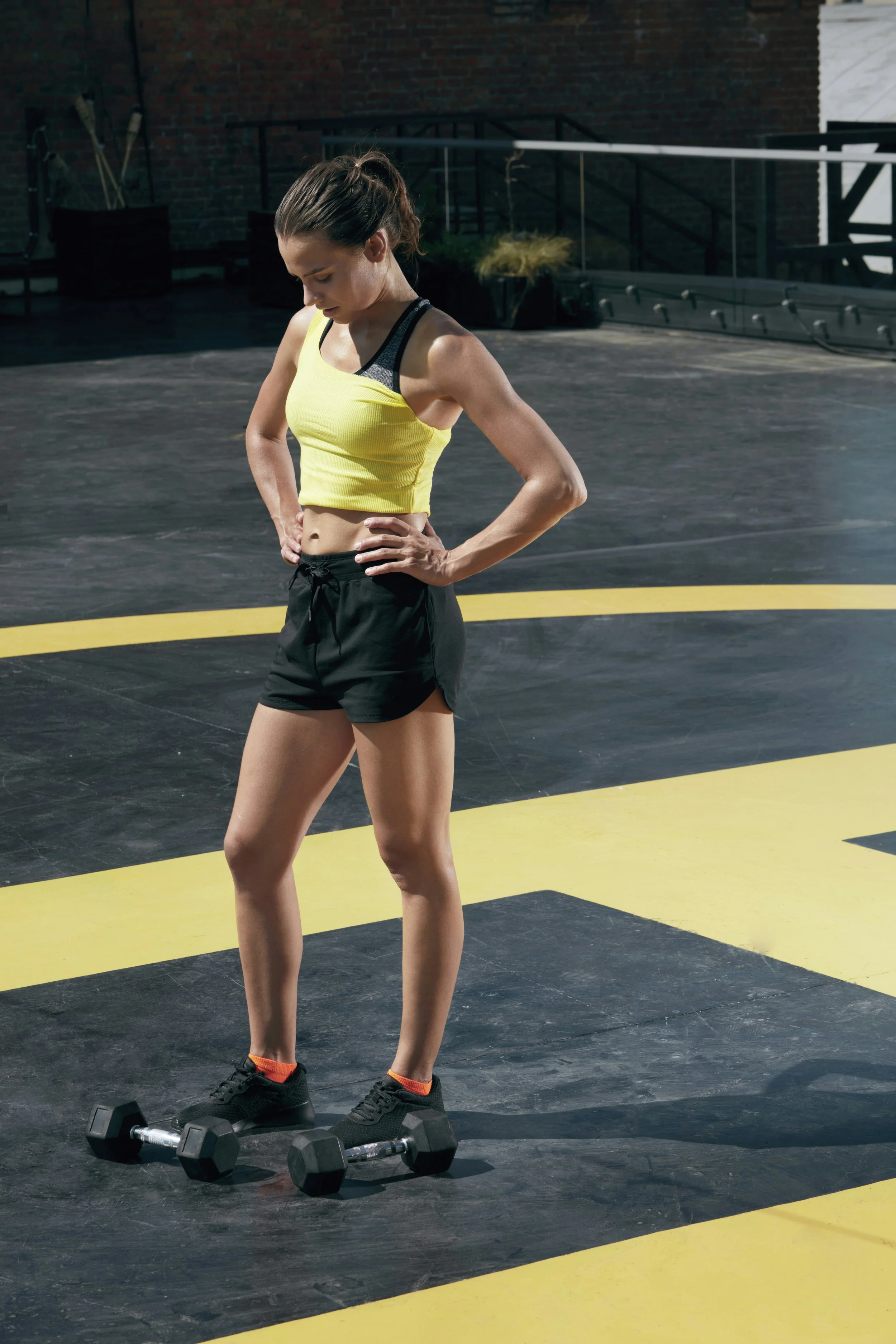
The sweet spot sits somewhere in between.
Short, controlled bursts of impact — a few hops after a weighted movement, a brief skip between sets, low jumps with soft landings — are enough to send the right signal to bone without overwhelming joints or the nervous system. This isn’t about jumping higher or longer. It’s about reminding the skeleton that it’s still required.
The quieter signals that predict how well we age
This way of thinking also explains why one of the strongest predictors of longevity isn’t something most people train deliberately at all: hand strength.
Large population studies have shown grip strength to be a powerful predictor of cardiovascular health, cognitive decline and overall mortality. Not because strong hands are impressive, but because grip strength reflects overall neuromuscular integrity — how efficiently the brain, nerves and muscles communicate under load.
In other words, it’s not just about opening jars or carrying bags. Grip strength is a proxy for heart health and brain health combined.
Carrying kettlebells or dumbbells. Farmer’s carries Suitcase carries. Learning to hang from a bar — even briefly, building time gradually.
These movements place meaningful demand on the hands while engaging the entire system. They challenge coordination, attention and strength at once, which is precisely why they’re so closely linked to cognitive resilience as we age.
Cardio, too, looks different when longevity is the goal. Running still has its place, but it’s no longer treated as the default. Incline walking, in particular, has earned renewed attention: challenging for the heart and lungs, kinder to joints, deeply effective for metabolic health, and far easier to recover from. When consistency matters more than intensity peaks, that trade-off starts to look very sensible.
Perhaps the most important shift, though, is psychological.
Women are no longer being told that fitness must be punishing to be valid. The emerging model is steadier, more intelligent, and far more sustainable. Strength without depletion. Challenge without chaos. Recovery treated as part of the system, not a reward for surviving it.
Even supplements simplify when viewed this way. Creatine — long misunderstood — is now emerging as one of the most compelling tools for women training with longevity in mind, not just for muscle but for the brain. At doses around 5 grams per day, creatine supports strength, power output and lean muscle preservation, making heavier training more achievable and more effective. At slightly higher intakes — closer to 10 grams per day — research suggests additional benefits for cognitive resilience and brain energy metabolism as we age.
It’s not a shortcut. It’s support — for training that asks something of the body, and for a brain that needs just as much protecting as muscle. We explored this shift in more detail in creatine and why women are finally paying attention to it.
And that, really, is the point. Longevity isn’t built through extremes or optimisation theatre. It’s built through decisions that compound quietly: lifting weights that actually challenge you, often enough to matter; training at an effort you can sustain rather than survive; keeping bones responsive, hands strong, and the nervous system respected.
Strong legs so you can move freely. A strong mind because the brain is part of the system too. A body that doesn’t feel fragile as the years pass.
That’s not anti-ambition. It’s fitness with a future.