Fermented Rice Is the Quiet Ingredient Making Actives Work Better
Fermented rice isn’t here to replace your actives — it’s here to make them behave.

There comes a point in skincare where adding something stronger isn’t the answer.
You’ve done the acids. You understand retinol. You can scan an INCI list without blinking. And yet — your skin still has off weeks. Not irritated. Not damaged. Just… slightly inconsistent.
That’s rarely a potency problem. It’s a regulation problem.
Modern routines are exceptional at accelerating change. What they’re less focused on is maintaining biological balance — particularly at the level of the barrier and the microbiome. That’s where fermented rice becomes more than “a hydrating step.”
The Biology Behind the Ingredient
Rice itself is already biologically compatible with skin.
The bran layer contains lipids and vitamin E derivatives, along with gamma-oryzanol — an antioxidant studied for its ability to reduce oxidative stress and support more even-looking pigmentation. Rice proteins break down into amino acids that mirror components of your skin’s Natural Moisturising Factor — the internal system responsible for holding water in the outermost layer.
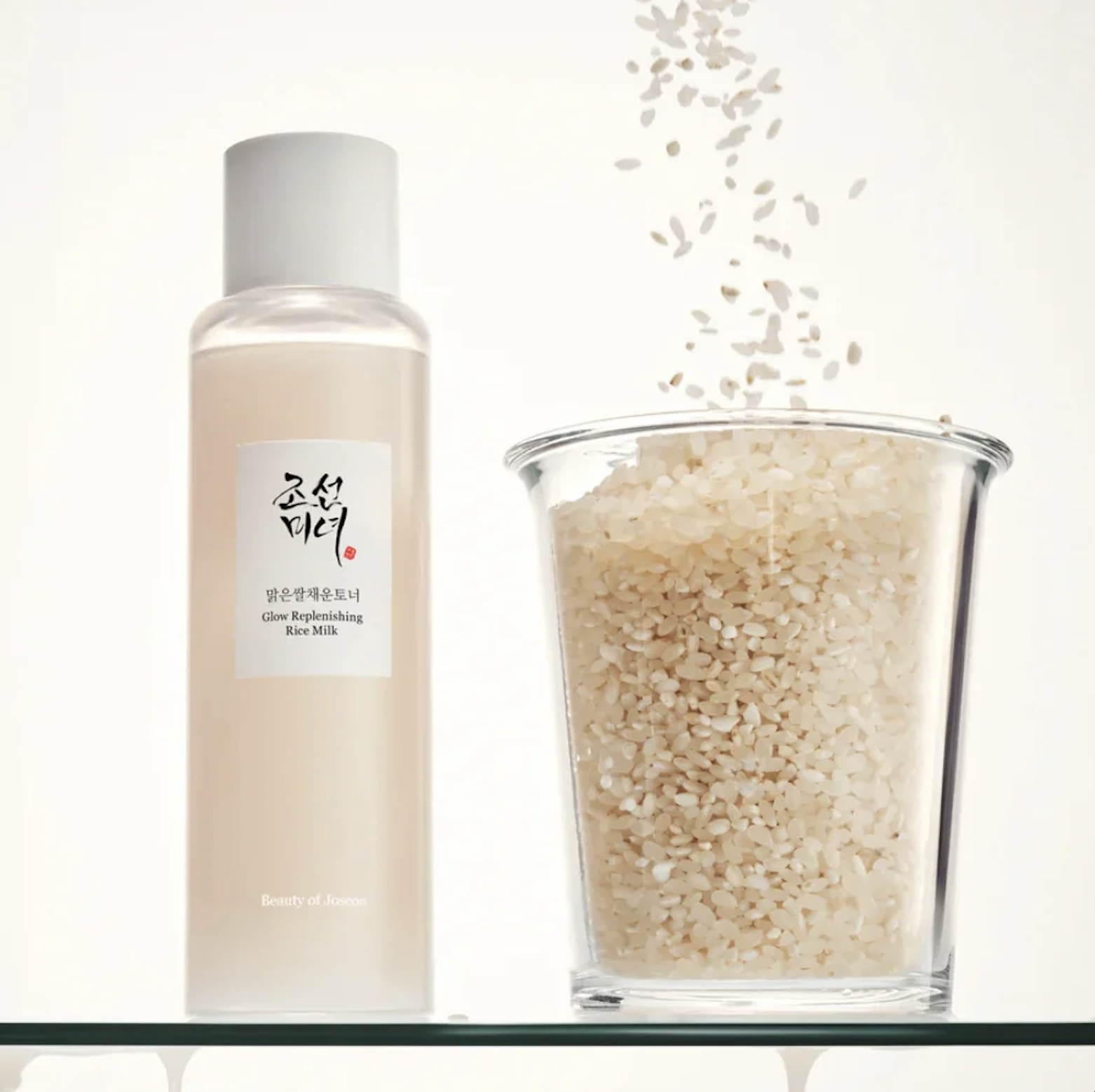
So even before fermentation, rice isn’t random. It’s structurally relevant. Now add microbes.
When rice is fermented — typically with yeast such as Saccharomyces — enzymes break large starches and proteins into smaller, more bioavailable fragments.
That changes two things.
First, absorption and antioxidant activity increase. Second — and this is the more modern layer — fermentation produces metabolites that appear to support microbial equilibrium on the skin.
Your skin isn’t sterile. It’s an ecosystem. A balanced microbiome influences inflammation levels, barrier repair and even pigmentation signalling. When that ecosystem is disrupted — through over-exfoliation, environmental stress or barrier compromise — skin becomes reactive, uneven and less tolerant of actives.
Fermented rice doesn’t strip.It doesn’t sterilise.It doesn’t accelerate turnover. It reduces background stress — oxidative and inflammatory — while reinforcing barrier cohesion and supporting microbial balance.
It’s not resurfacing. It’s recalibrating.
And recalibration matters if you’re already using high-performance ingredients.
“Fermented rice doesn’t resurface your skin. It recalibrates it — quietly reducing background stress so your actives can finally behave.”
Retinol accelerates renewal — but can temporarily disrupt lipid organisation and microbial balance. Vitamin C brightens — but can increase sensitivity if the barrier is fragile. Even mild acids alter surface pH, which influences microbial populations.
A ferment-forward step doesn’t compete with those actives.
It buffers them.
Used daily, it becomes infrastructure. Less fluctuation. Fewer unpredictable weeks. A more even baseline.
It isn’t dramatic. It’s cumulative — the kind of improvement you can build every day, rather than spike for a week and then pause to repair.
The Rice Formulas That Actually Deserve the Step
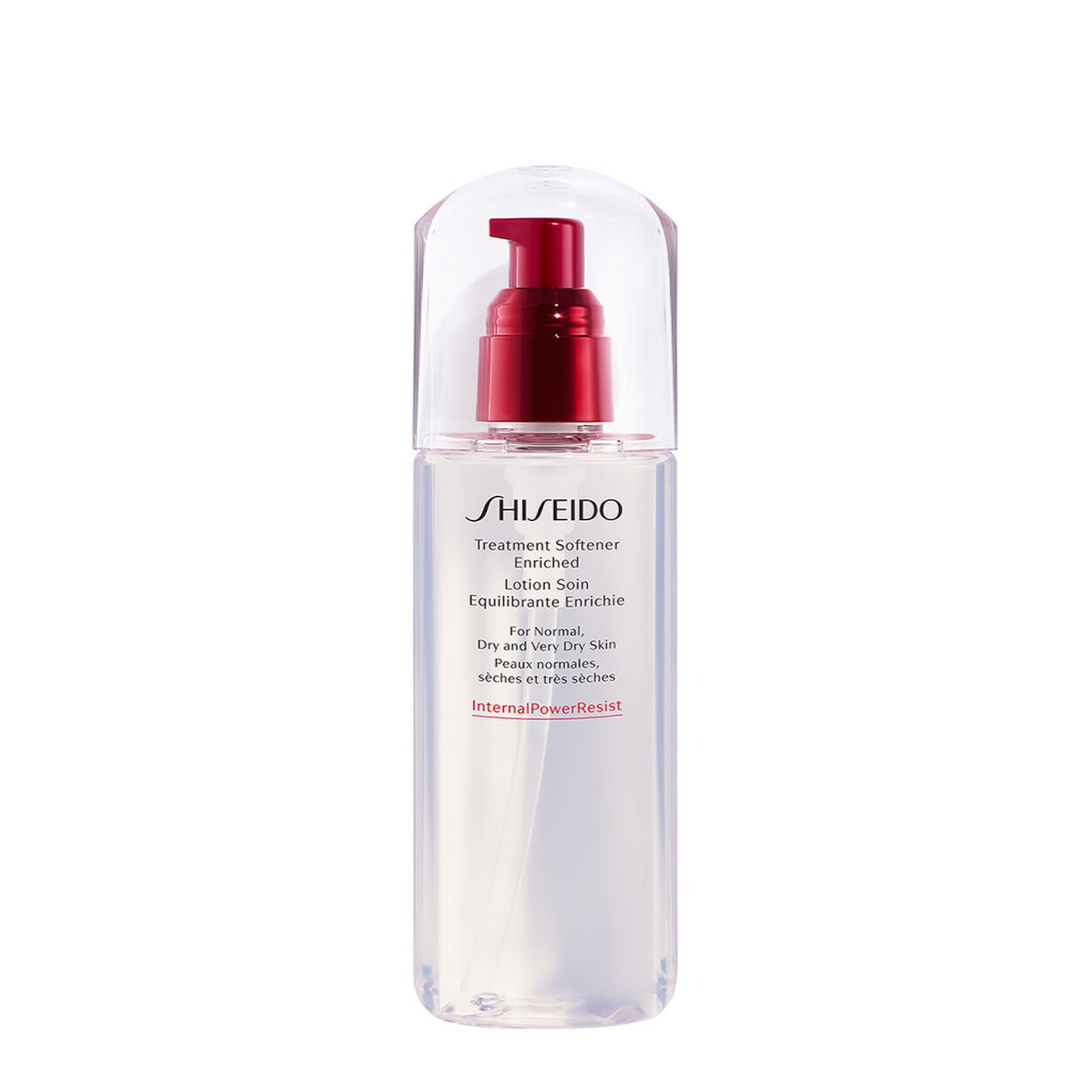
Japanese conditioning discipline in a bottle. Rice germ oil supports lipid organisation, but this formula is engineered around refinement rather than radiance — preparing the skin before actives take over.
Texture: Lightly viscous — structured but not heavy, sitting between toner and emulsion.
Who it suits: Skin that feels dehydrated yet reacts poorly to layered hydration or rich creams.
Function: Helps organise surface lipids and improve water retention so subsequent serums distribute more evenly.
Why it earns a place: It refines the condition of the skin itself, rather than chasing brightness.

Fermented black rice is the backbone here, not a supporting act. Paired with beta-glucan and hyaluronic acid, it’s designed to reinforce resilience rather than stimulate change.
Texture: Thin, fast-absorbing and completely layer-friendly.
Who it suits: Retinol users noticing subtle tightness or tolerance dips over time.
Function: Strengthens hydration architecture and antioxidant defence, smoothing low-grade reactive swings.
Why it earns a place: It stabilises performance when your routine is already advanced.
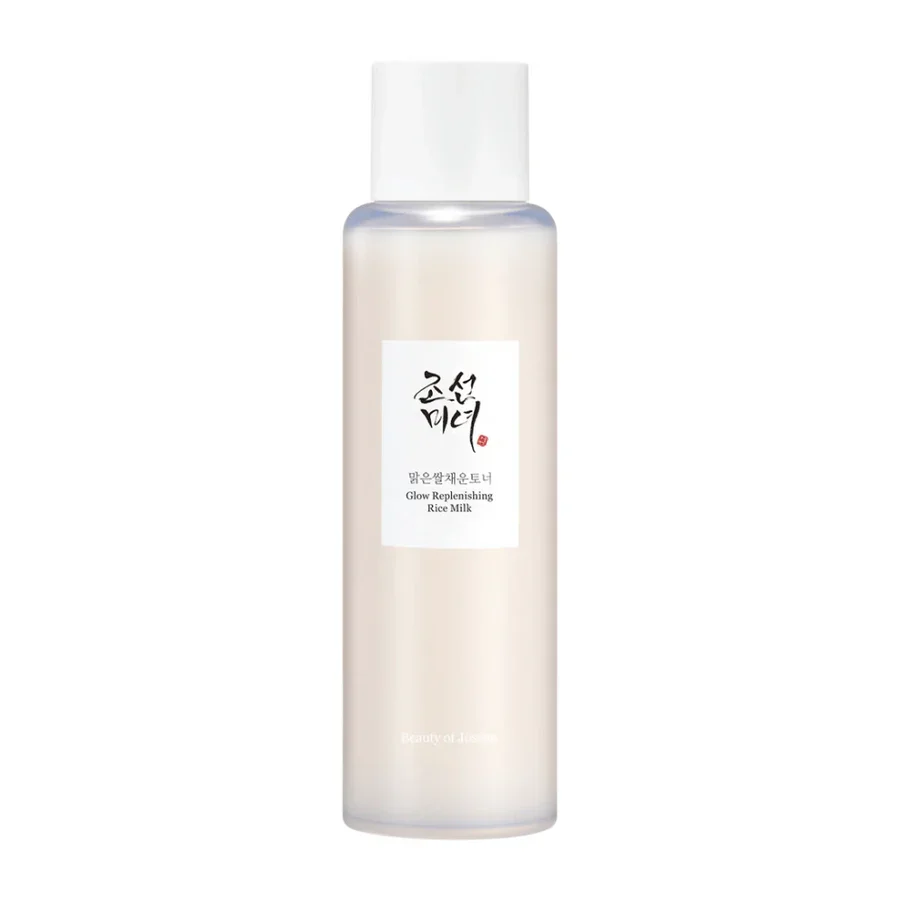
A softer, milky interpretation of rice. Less about sharp clarity, more about steady tone and comfort — particularly when skin fluctuates.
Texture: Cushioned but breathable, absorbing without heaviness.
Who it suits: Redness-prone or hormonally fluctuating skin that looks uneven across the month.
Function: Supports lipid comfort while reducing background inflammatory stress that contributes to tone inconsistency.
Why it earns a place: It prioritises steadiness in skin that tends to overcorrect.
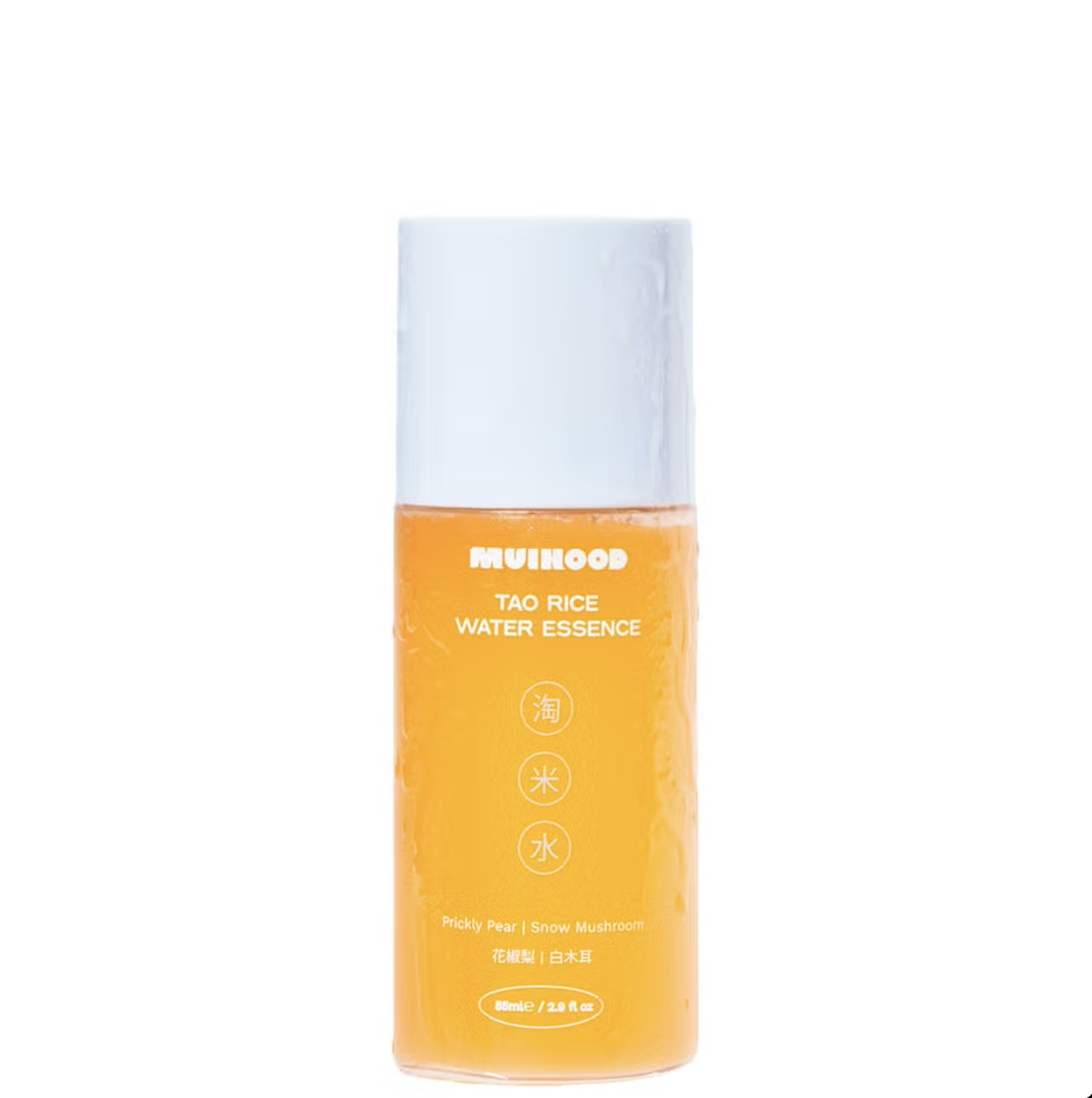
A lighter, more modern take on rice water. Where some formulas cushion, this one clarifies — without ever crossing into exfoliation territory.
Texture: Lightweight and slightly viscous, absorbing quickly with a clean finish.
Who it suits: Skin that looks dull but doesn’t tolerate frequent resurfacing.
Function: Uses rice water to support hydration balance and antioxidant protection while subtly refining tone through conditioning.
Why it earns a place: It delivers brightness without the recovery cycle.
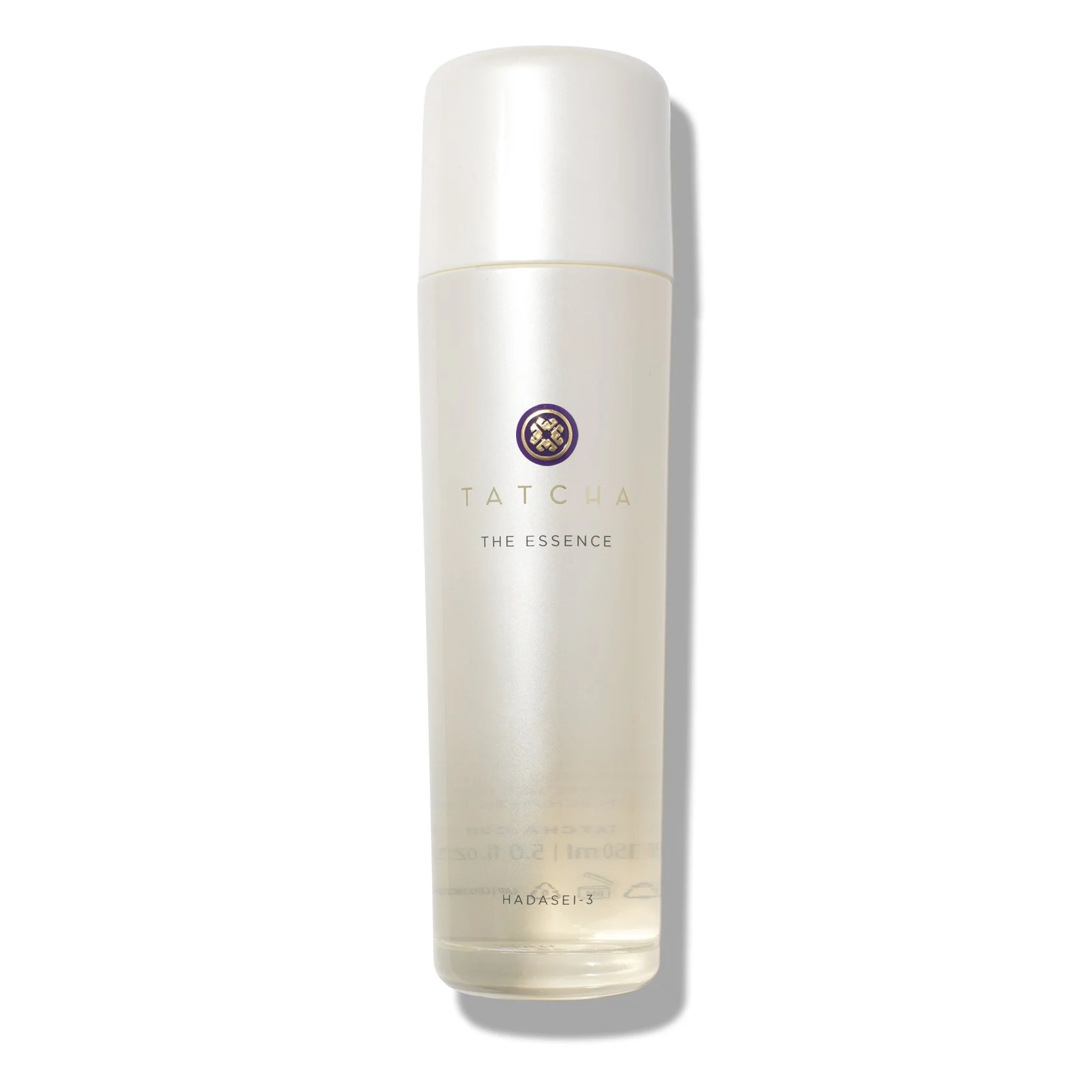
Tatcha The Essence (£102)
This is fermented rice in its most distilled, performance-focused form. Built around Tatcha’s Hadasei-3 complex — fermented rice, green tea and algae — it’s designed to refine the skin’s surface and improve how the rest of your routine absorbs.
Texture: Watery and ultra-light, disappearing almost instantly.
Who it suits: Routines already built around strong actives, where optimisation matters more than addition.
Function: Gently conditions the surface while enhancing the absorption efficiency of subsequent treatments.
Why it earns a place: It improves the precision of your routine without increasing intensity.
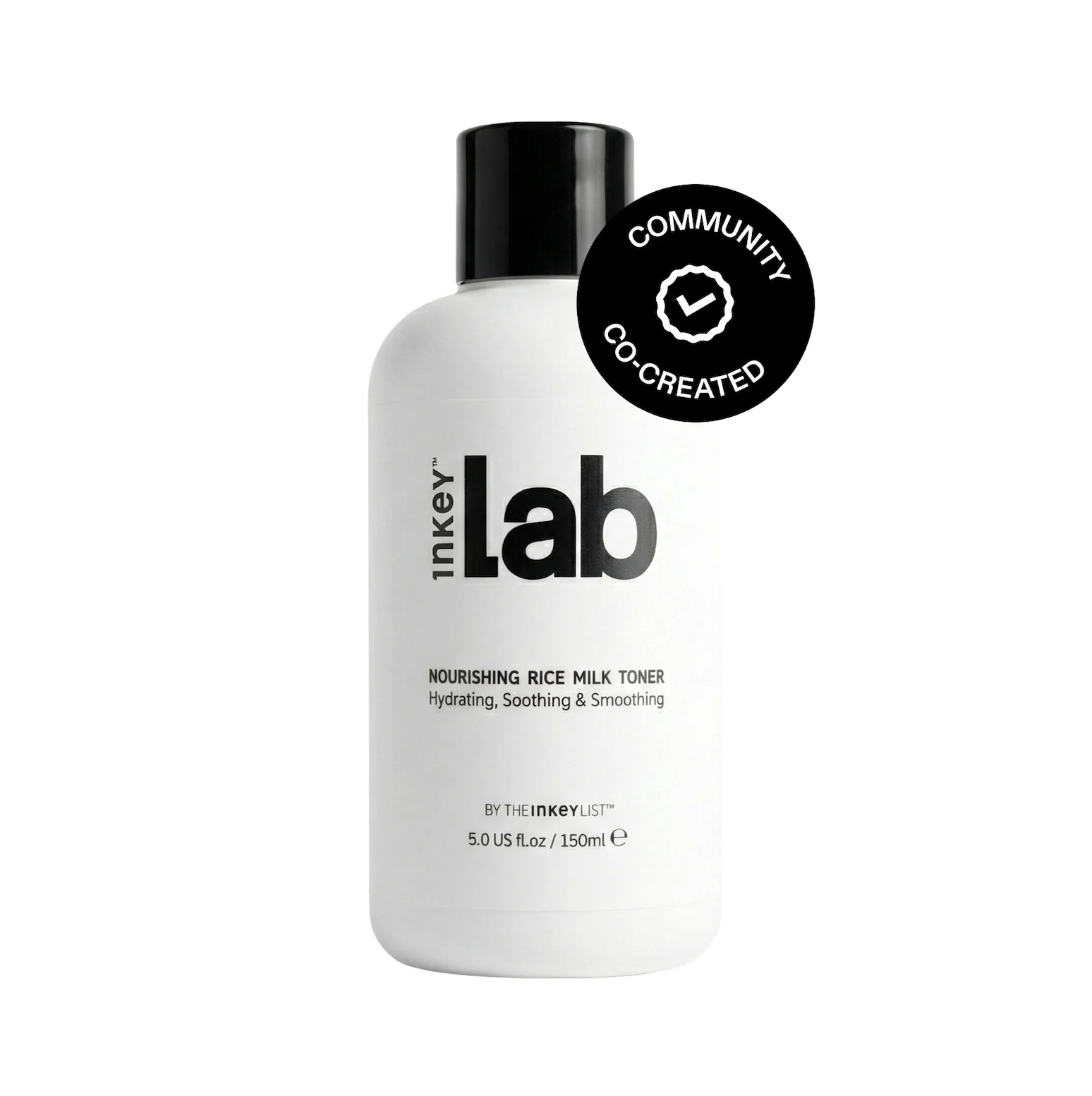
Rice in its most practical form. No fermentation mythology — just a comfort-first formula designed to soften and replenish.
Texture: Softly milky but lightweight, absorbing cleanly without residue.
Who it suits: Skin that feels tight, slightly overworked or less tolerant than it used to be.
Function: Replenishes surface hydration and reduces the dryness that can quietly undermine stronger actives.
Why it earns a place: It delivers regulatory support at an accessible price point — proof that stability doesn’t have to be expensive.