Hormonal Skin: It Was Never the Problem — Our Understanding Was
Understanding hormonal skin isn’t about correction — it’s about interpretation.

Hormones aren’t new. They aren’t dangerous. And they certainly aren’t something to “fix” — but they are something to understand, support and, when needed, gently rebalance.
They shape how we sleep, how we think, how we feel — and yes, how our skin behaves. They are part of us, not an inconvenience to work around. The real issue isn’t our hormones; it’s how little we’ve been taught to understand them.
For decades, women’s health — and by extension women’s skin — has been under-researched, under-discussed and quietly simplified. Hormones were framed as something unpredictable, embarrassing, or vaguely problematic. Useful for explaining breakouts or “bad skin days”, but rarely explored beyond that. We learned to work around them, rather than with them.
“Hormonal skin isn’t random — it’s responsive. Once you understand the signal, the right response becomes obvious.”
Only now are we starting to talk about hormones openly — not as villains, but as messengers. Signals that tell us what the body needs, when support is required, and why the same skincare routine can feel perfect one week and completely wrong the next.
Hormonal skin isn’t one condition. It’s a language. And once you know how to read it — whether your skin is responding to shifts in oestrogen, progesterone, cortisol or testosterone — it stops feeling random and starts making sense.

This is about understanding what your skin is responding to, and choosing care that answers that — not silencing the signal.
We’ve explored this wider hormone picture before — from sleep and stress to supplements that support balance — in The Hormone Whisperer: Why Your Body’s Quietest Messengers Might Be Making All the Noise, where the focus shifts from what hormones do to how we can support them day to day.
Oestrogen: Structure, Bounce, Staying Power
Oestrogen is often credited with glow, youth and “good skin days”, but its real contribution is less photogenic and far more important. It’s the hormone that gives skin structure.
It supports collagen and elastin production, helps skin retain water, maintains thickness, and keeps the barrier functioning efficiently. When oestrogen is doing its job, skin feels resilient. It has bounce. It recovers quickly. It tolerates actives without sulking.
When oestrogen dips — commonly before a period, after pregnancy, or through perimenopause — skin doesn’t usually erupt in protest. Instead, it loses its bounce. Elasticity softens, fine lines feel more noticeable, dryness appears where it never used to, and skin becomes less forgiving overall. Healing slows. Makeup starts behaving like it has a personal vendetta.
How to read it
If your skin suddenly feels flatter, thinner or oddly fragile — despite a sensible routine — this is often oestrogen-led. Skin isn’t asking to be exfoliated harder. It’s asking for scaffolding.
How to respond
This is not the moment to chase renewal. Focus on replacing what oestrogen quietly supports behind the scenes: lipids, barrier integrity, and repair capacity.
The product that fits the signal
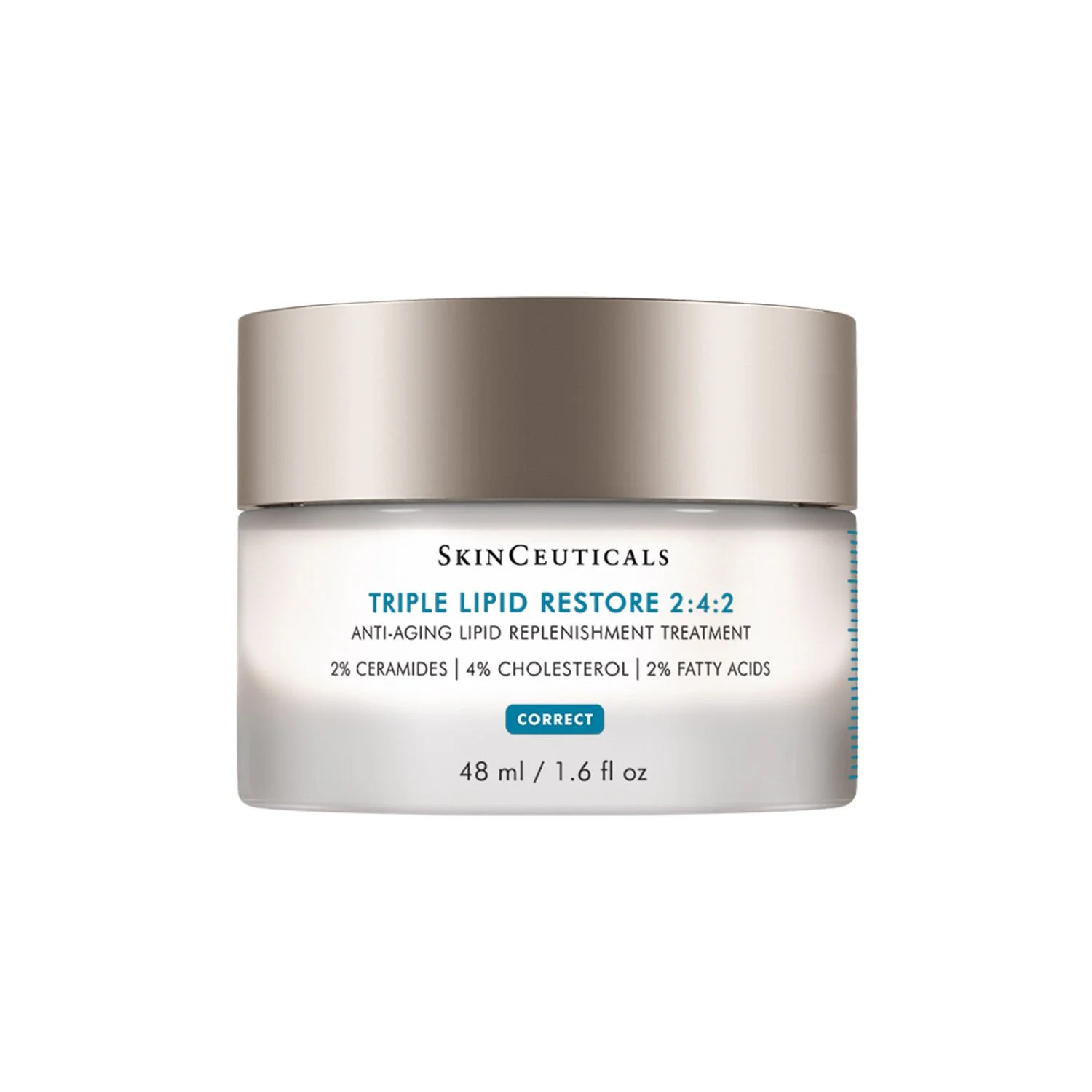
SkinCeuticals Triple Lipid Restore 2:4:2 (£155)
A grown-up moisturiser that restores ceramides, cholesterol and fatty acids in skin-identical ratios. It doesn’t promise miracles — it gives skin its backbone back.
Progesterone: When Oil Slows Down
Progesterone rises in the second half of the menstrual cycle to prepare the body for the possibility of pregnancy. Biologically, it’s a hormone of consolidation. It stabilises tissue. It slows things down. It encourages the body to hold, rather than shed.
In skin, that calming influence has a side effect: oil becomes more sluggish.
Progesterone doesn’t instruct the skin to produce more oil. Instead, it changes how oil behaves. Sebum becomes thicker, slower-moving, less inclined to exit the pore with any urgency. Pores clear themselves less efficiently, which is why congestion tends to appear along the jawline and chin in the days before a period — often without redness, pain or “proper” spots.
How to read it
If your skin develops predictable bumps or texture on a schedule — same time every month, same places — this is progesterone at work. Think rush-hour traffic, not an oil spill.
How to respond
The aim is mobility, not dryness. Keeping pores gently clear allows oil to move out instead of backing up. Over-stripping only thickens sebum further and guarantees a rebound.
The product that fits the signal
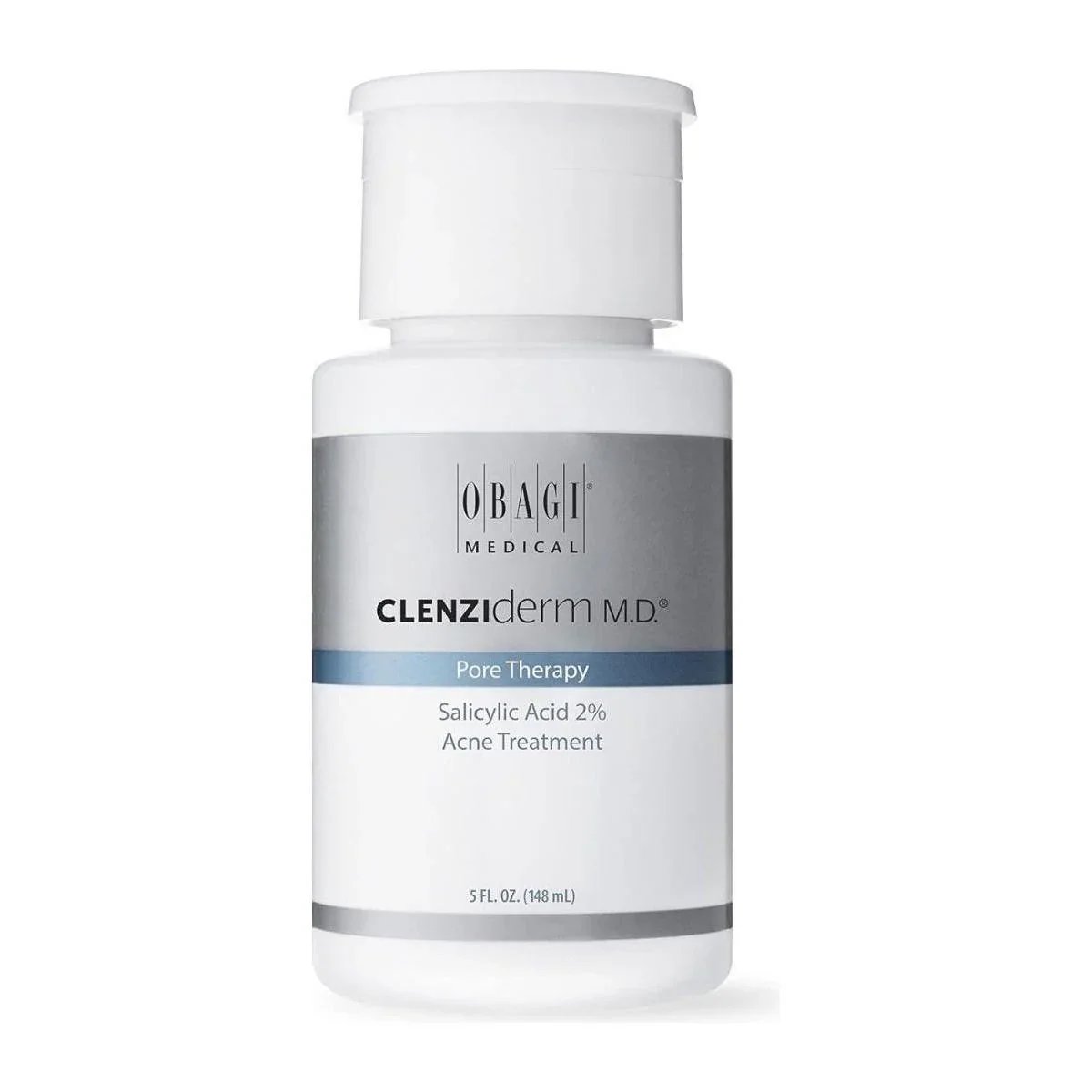
Obagi Clenziderm M.D. Pore Therapy (£57.95)
A salicylic acid toner that works inside the pore to prevent congestion before it announces itself. Used a few evenings a week, it keeps things flowing — quietly and efficiently.
Cortisol: When Skin Has Had Quite Enough
Cortisol is the body’s primary stress hormone. In short bursts, it’s useful. Chronically elevated, it’s less charming — especially for skin.
High cortisol increases inflammatory signalling, weakens the skin barrier, and heightens nerve sensitivity. Skin becomes reactive, less tolerant, and far more easily overwhelmed. Products that once worked start to sting. Redness lingers. Everything feels like too much.
This isn’t classic “sensitive skin”. It’s overstimulated skin — skin that has been asked to process one thing too many.
How to read it
If your skin starts reacting “out of nowhere”, particularly during periods of stress, poor sleep or general overload, cortisol is often behind it. Skin isn’t being dramatic. It’s maxed out.
How to respond
De-escalate. Fewer actives. Fewer steps. More support. Calm isn’t passive here — it’s corrective.
The product that fits the signal
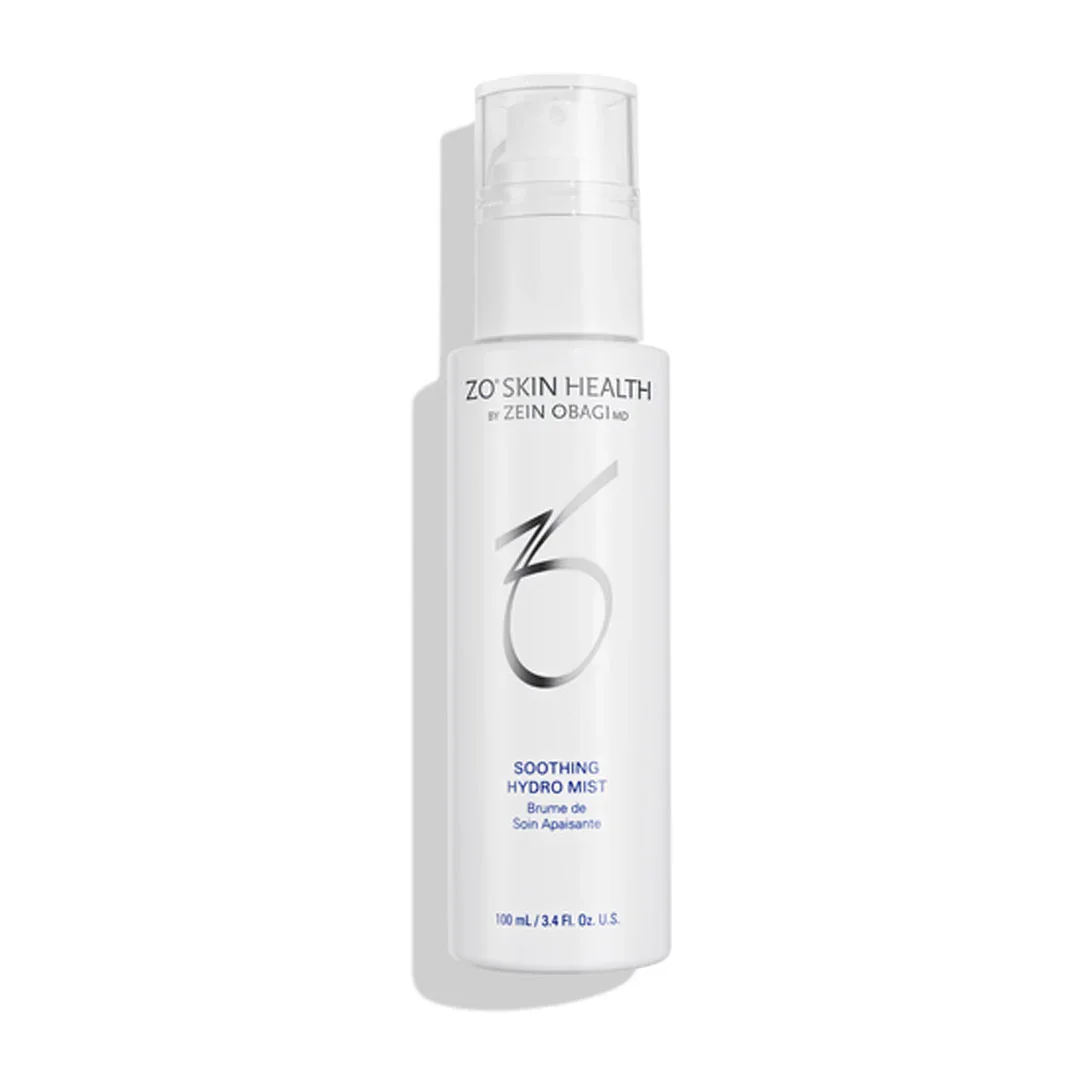
ZO Skin Health Soothing Hydro Mist (£64.80)
Lightweight, anti-inflammatory and quietly effective, it reduces visible redness while supporting barrier recovery — without adding further stimulation. Consider it a ceasefire.
Testosterone (Androgens): Oil With a Purpose
Testosterone and other androgens are often blamed for adult breakouts, but oil production isn’t a design flaw. It’s a feature.
Androgens stimulate the sebaceous glands to produce sebum because sebum is protective. It reduces water loss, keeps the barrier flexible, cushions the skin against friction and environmental stress, and supports antimicrobial defence. In evolutionary terms, oil is skin’s armour.
When androgen activity is well regulated, oil quietly does its job. Skin feels comfortable, protected, and robust.
Problems arise when oil production outpaces the skin’s ability to manage it — during hormonal shifts, periods of stress, or when skin is particularly responsive to androgens. Sebaceous glands become over-enthusiastic, pores adapt to handle the volume, and inflammation becomes more likely.
This is why androgen-driven breakouts tend to cluster around the jawline and lower face, heal slowly, and leave pigmentation behind. Unlike progesterone congestion, this isn’t about oil moving too slowly. It’s about oil volume meeting inflammation.
How to read it
If oiliness persists well into adulthood, breakouts favour the lower face, and drying treatments only provoke more oil and irritation, this is likely androgen-responsive skin. Oil isn’t the enemy — excess oil in the wrong context is.
How to respond
Regulation, not eradication. Skin that feels attacked produces more oil in defence; skin that feels supported is far more inclined to settle.
The product that fits the signal
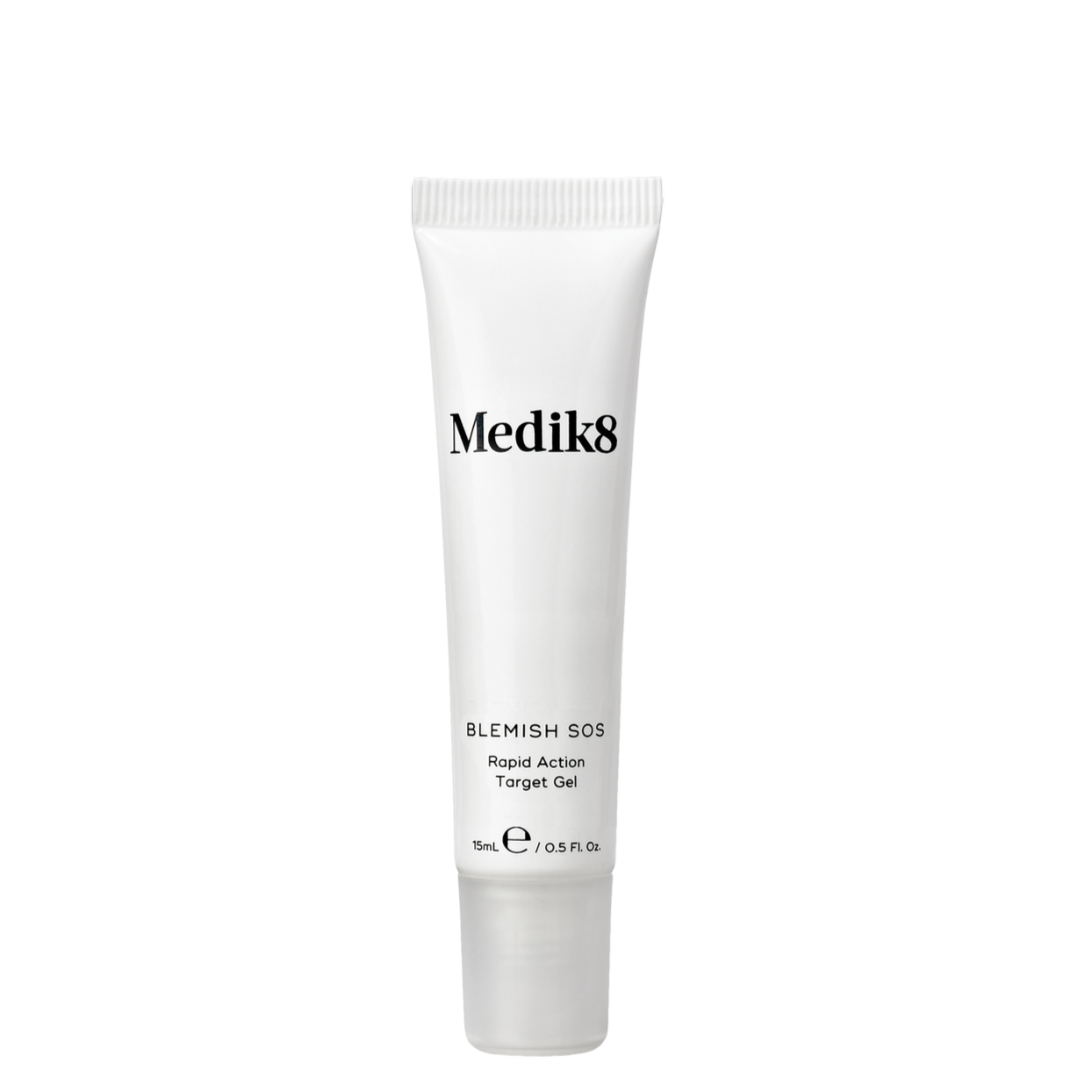
Medik8 Blemish SOS (£25)
A targeted treatment that calms inflammation and supports healing without stripping the skin — helping oil, pores and irritation stop escalating into a longer saga.