Jowls rarely come down to one thing — and neither does treating them.

Jowls are rarely the first thing people notice about ageing. But once you start seeing them, they have a way of quietly stealing your attention.
It might be a photograph taken slightly from the side, or a certain angle in the bathroom mirror. The jawline looks a little softer than it once did. Nothing dramatic, but enough to make you look twice.
The best aesthetic clinics rarely treat jowls with just one treatment.
That might sound surprising in an industry that loves the idea of a miracle fix — one injection, one device, one quick appointment that promises to rewind the clock. In reality, the lower face is rarely that obliging. Jowls don’t usually appear because of one single issue, and they rarely disappear because of one single intervention either.
Instead, they tend to develop quietly through a combination of changes happening at once. Muscles around the mouth gradually begin pulling downward more strongly over time. Structural support in the face shifts as collagen production slows. Skin itself becomes softer and less elastic.
Addressing just one of those elements rarely produces the most natural result.
Which is why the most thoughtful practitioners now take a more layered approach — combining treatments that work at different levels of the face rather than relying on a single intervention.
It’s an approach that sits at the heart of the philosophy at ALTA Medi Clinic in London, a clinic known for its personalised treatment plans and emphasis on subtle, natural-looking results.
Where Treatment Becomes Strategy
I wasn’t starting from scratch when I walked into the clinic.
Over the past year I had already explored energy-based treatments such as Morpheus8 and laser — procedures designed to stimulate collagen and gradually tighten the skin. They work slowly and cumulatively, the sort of treatments that quietly improve things in the background rather than announcing themselves overnight.
But jowls are rarely caused by skin changes alone.
And while mine were still relatively subtle, the slight softening around the jawline had begun to bother me — not because it looked dramatic, but because I could see where things were heading.
Rather than waiting for the problem to become more pronounced, I wanted to approach it earlier and a little more intelligently.
“The best aesthetic work rarely happens in one dramatic moment. More often it’s a series of small, thoughtful adjustments.”
My consultation was with the clinic’s founder, Anastasia, whose background spans biomedical science and neuroscience before moving into aesthetic medicine. It’s the sort of training that tends to produce a more analytical, less trigger-happy approach to treatments — something that becomes clear very quickly once the consultation begins.
Within minutes it was obvious the plan wasn’t going to involve a single “fix”.
Instead, the conversation focused on the different forces shaping the lower face — muscle movement, structural support and skin quality — and how each could be adjusted in a way that worked together rather than competing with one another.
In other words, the aim wasn’t to chase one dramatic change. It was to make several smaller, smarter adjustments that together could subtly shift the way the lower face behaves.
The first appointment focused on structure and muscle balance. Profhilo Structura was placed strategically across several points of the lower face — around the chin, along the jawline towards the ear and just below the ears into the upper neck.
The aim wasn’t to create volume in the way traditional fillers might. Profhilo Structura behaves quite differently. Made from stabilised hyaluronic acid, it integrates within the tissue and helps reinforce the skin’s underlying structure, supporting areas where firmness has begun to soften.
It’s also not a treatment that shouts about itself immediately. The changes develop gradually as the product integrates into the tissue, subtly improving the way the skin holds and supports itself over time.
Alongside this, a light dose of Botox was placed around the mouth, chin and neck. The goal wasn’t to freeze expression but to soften the depressor muscles responsible for pulling the corners of the mouth downward — something that can quietly exaggerate the appearance of jowls over time.
There’s also an interesting behavioural element involved. Many of us develop habitual facial movements that reinforce that downward pull without even realising it. By relaxing those muscles slightly, Botox can interrupt that pattern — something practitioners often refer to as muscle memory.
Two weeks later I returned for a Botox review — the point at which the treatment has fully settled and its effect on muscle movement can be properly assessed.
Because the lower face can change expression very easily, Anastasia prefers to begin with a lighter dose and then reassess once the muscles have responded. It’s a more cautious approach, but it allows the treatment to be adjusted rather than overdone.
“Good aesthetic medicine isn’t about doing more — it’s about knowing when to stop.”
At that stage a small top-up was added where needed to further soften the downward pull around the mouth and chin.
Six weeks after the original appointment — roughly four weeks after the Botox review — we reassessed the structural element of the treatment. The initial plan had been to evaluate whether another round of Profhilo Structura would be beneficial.
Instead, after reviewing how the face had responded, Anastasia decided not to add more. Structura continues integrating beneath the skin for several weeks after treatment, meaning the full effect develops gradually. Adding additional product at that stage risked introducing unnecessary volume in an area that didn’t need it.
Rather than building further structure, the focus shifted to improving the quality of the skin itself.
The final session therefore involved classic Profhilo, which works closer to the surface of the skin to stimulate collagen and elastin while improving hydration and elasticity.
The results were never intended to be dramatic overnight changes. Treatments like Profhilo Structura work gradually, strengthening the skin’s underlying support while Botox subtly adjusts the way the lower face moves.
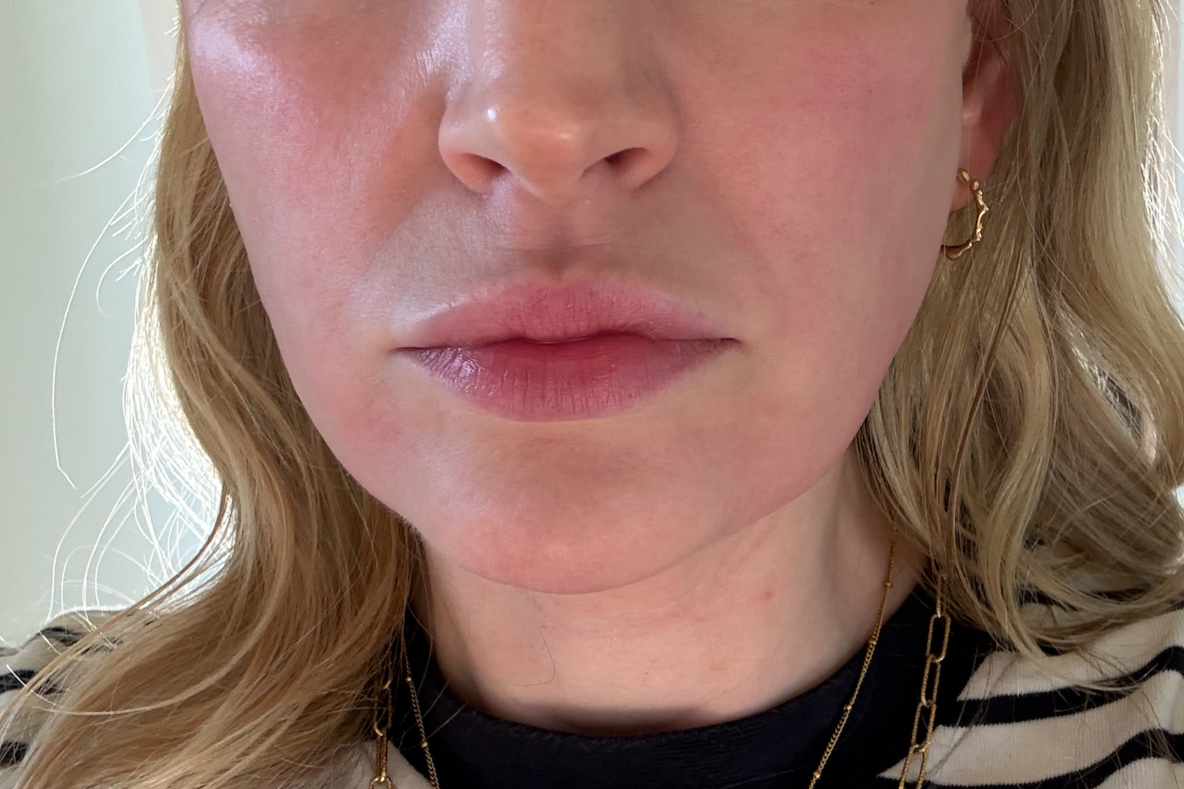
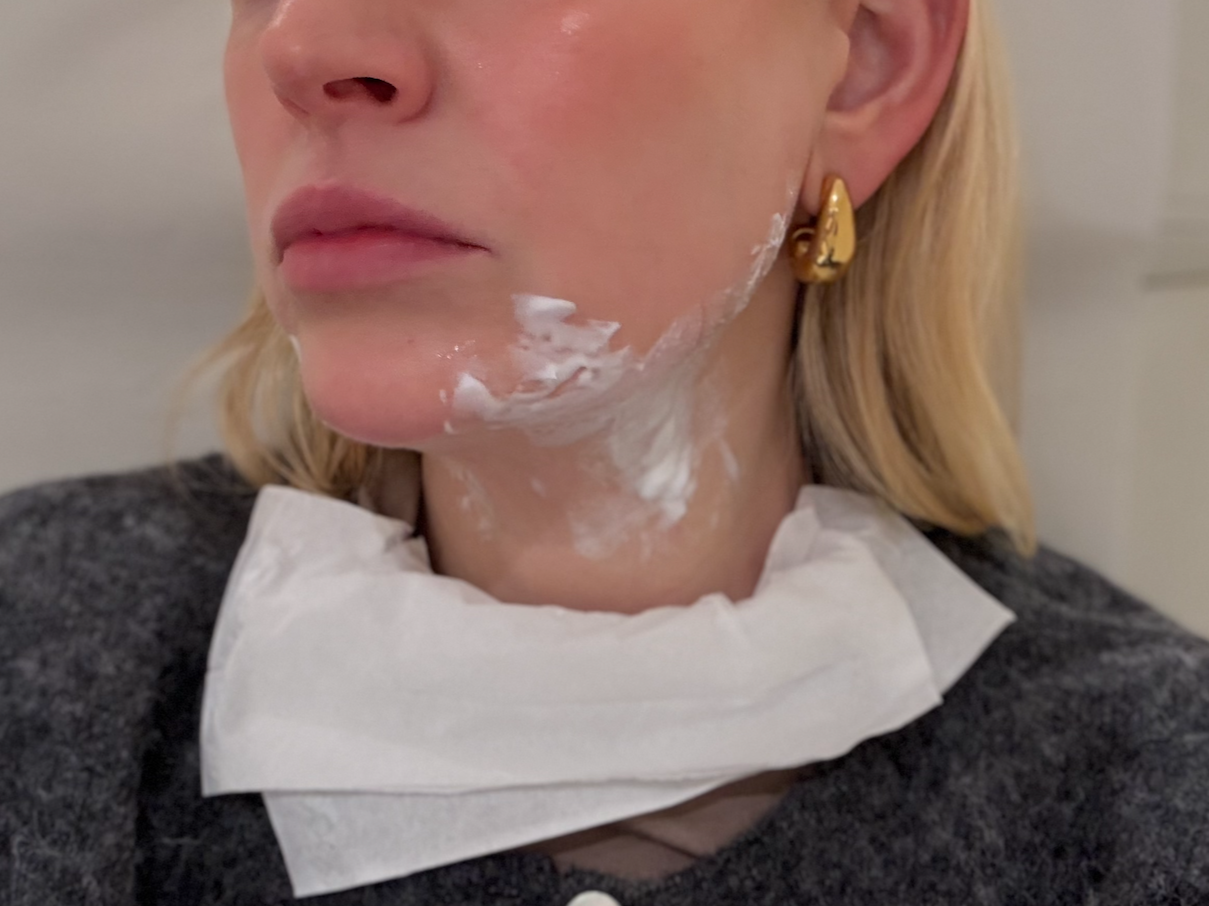
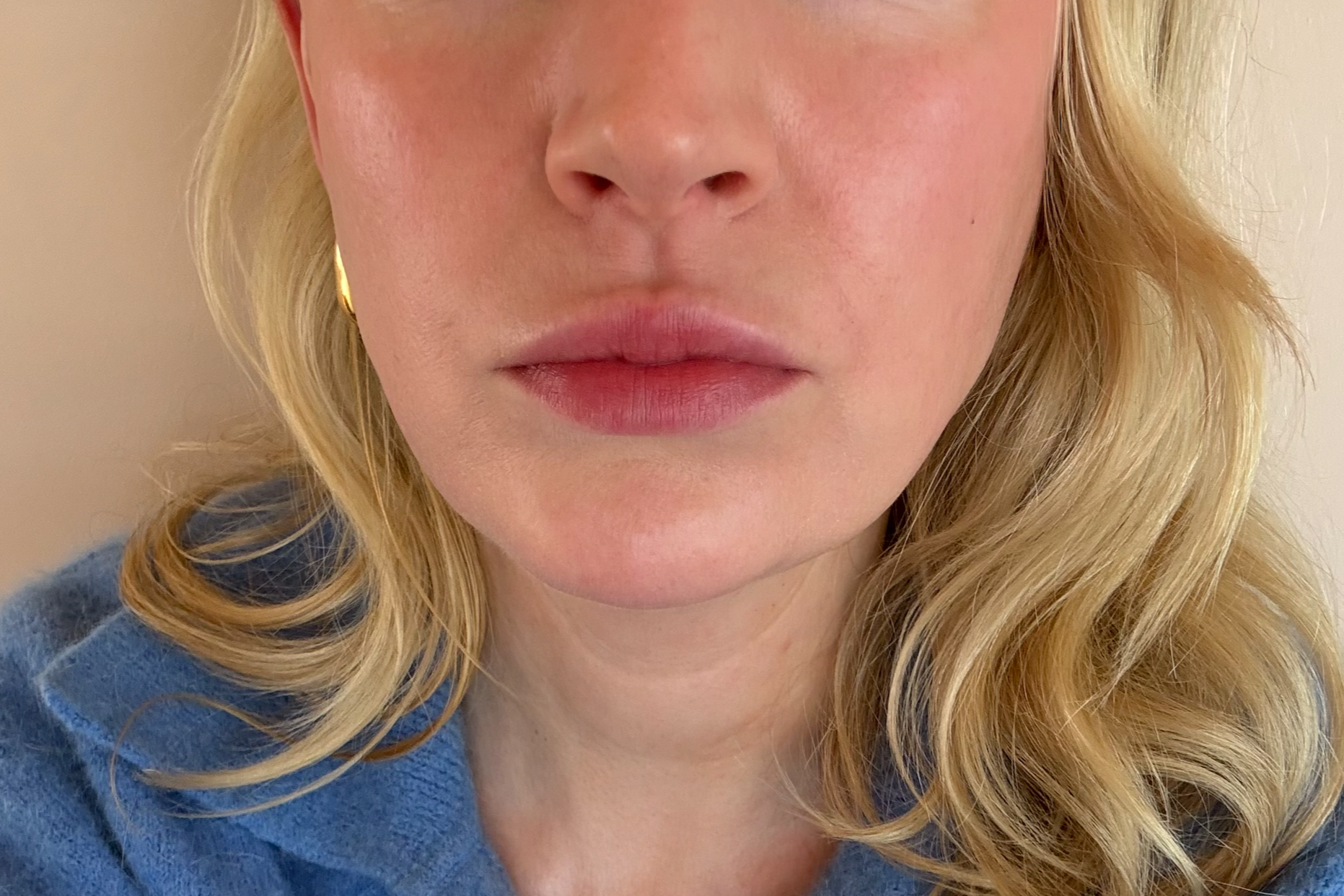
What I noticed first was a sense of lightness around the jawline. The slight heaviness that had begun to appear near the corners of the mouth looked softer, and the lower face felt more balanced overall.
The Botox played its part too. By relaxing the muscles responsible for pulling the mouth downward, the lower face no longer carried the same subtle tension that can exaggerate early jowls.
As the weeks passed, the improvements from Structura and Profhilo continued to develop. Skin in the area looked healthier, more hydrated, and the jawline appeared a little more defined without looking altered.
Perhaps the most reassuring aspect of the treatment was how subtle the result felt. Nothing looked “done”. Instead, the lower face simply looked fresher and slightly more supported — the sort of change you notice in the mirror without quite being able to pinpoint why.
And that, in many ways, is the real skill in aesthetic medicine.
The industry loves to talk about products and procedures — Botox, Profhilo, lasers — but the outcome is shaped far more by the judgement of the person holding the syringe. Knowing when to treat, when to wait, and when not to add more at all is where the real expertise lies.
In this case, the decision not to add further Profhilo Structura turned out to be just as important as the treatments themselves. The plan shifted as the face responded, moving from structural support to skin quality once the foundation was already beginning to improve.
It’s a reminder that the best aesthetic work rarely happens in one dramatic moment. More often it’s a series of small, thoughtful adjustments — the kind that leave people thinking you simply look well, rather than wondering what you’ve had done.
To book your consultation at ALTA Medi Clinic visit altamedispa.com