When Bright Children Struggle: Understanding Twice-Exceptional Kids
Some children don’t fit the picture they’re given — and understanding why can change everything.
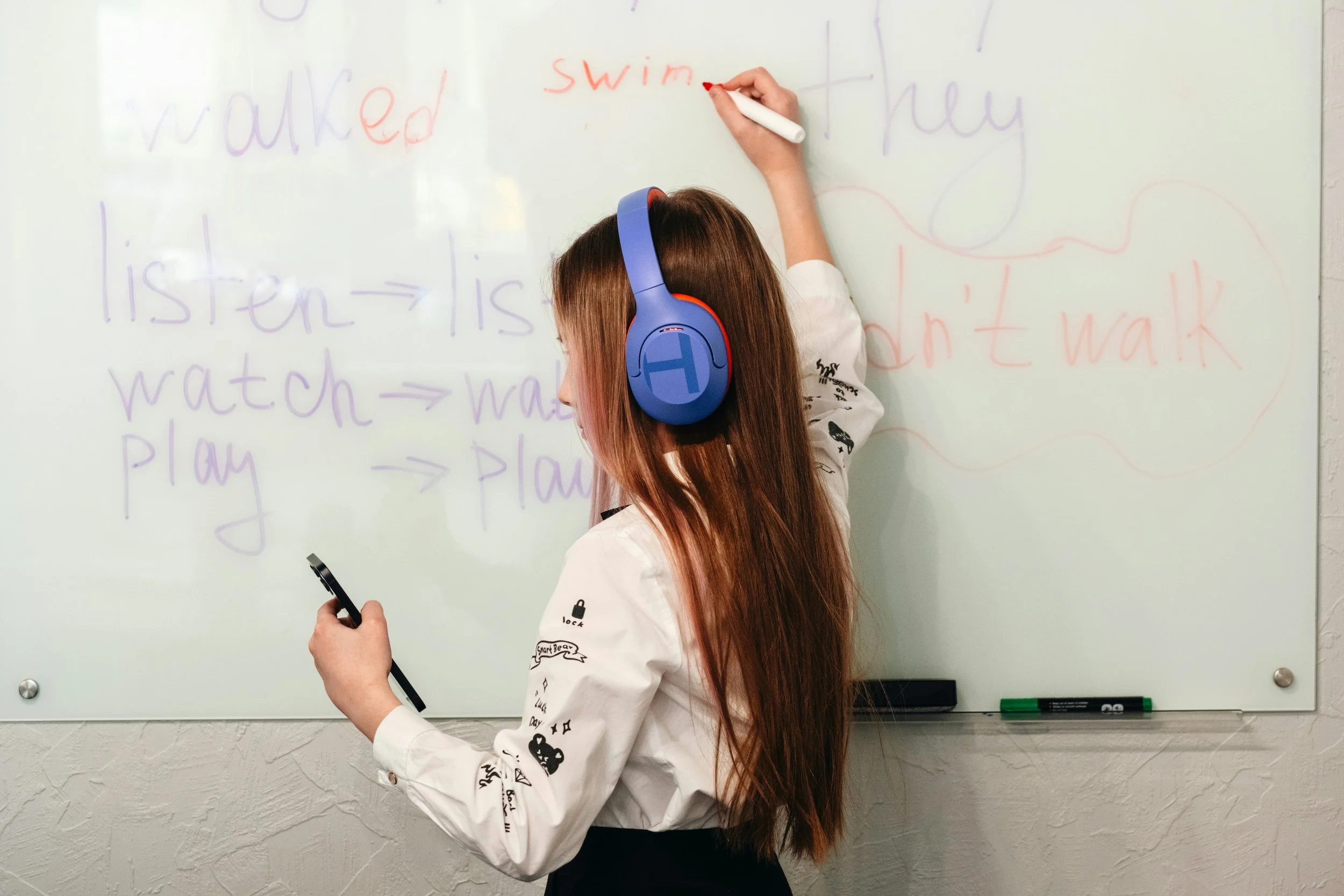
Some children don’t just struggle in school — they confuse it. They can talk in a way that feels years ahead, make connections that don’t seem to come from anywhere, absorb information at a pace that catches you off guard. And yet, ask them to write it down, follow a set of instructions, or complete a task in the expected way, and everything seems to fall apart.
Or they stumble through reading — slow, effortful, avoiding it where they can — and still somehow understand the text on a level that doesn’t match what you’re seeing.
It doesn’t add up.
This isn’t a neat pattern of strengths and weaknesses. It’s spiky. Uneven. At times, extreme. A child who can seem highly capable in one moment and completely stuck in the next.
And that’s where things become difficult — because it doesn’t fit the way we’re used to thinking about ability. In education, children are often placed, consciously or not, into one of two groups: those who are coping, and those who need support. Working at the expected level, or below it.
But some children sit across both.
Showing a natural aptitude in some areas — often far beyond what’s initially visible — and struggling, at the same time.
So what tends to stand out first is the difficulty — not the ability. The writing that doesn’t reflect their thinking. Missed instructions. Distraction. Sensory overwhelm. The parts that disrupt, or fall outside expectation.
And what’s much easier to miss is everything else.
When Bright Children Don’t Fit the System
There’s a term for this — twice-exceptional, often shortened to 2e. It describes children who are both highly able and navigating a learning difference or neurodivergence at the same time. In simple terms, two overlapping profiles: one that reflects high — often significantly above-average — ability, and one that creates challenge.
That’s the official definition, at least.
In reality, it rarely feels that clear-cut. For many children, those two sides aren’t separate things running alongside each other — they’re intertwined. The same brain that drives deep curiosity, pattern recognition or intense focus can also struggle with organisation, writing, processing or sensory overwhelm.
So while 2e is described as “twice” exceptional, it doesn’t always feel like two distinct parts. More like one complex profile that doesn’t fit neatly into how we tend to measure ability.
“It’s that gap — between what’s there and what’s visible — that’s so often missed.”
Which is exactly why it’s so often missed.
And it rarely presents in just one way.
For some children, it’s obvious — exceptional musical or artistic ability, a natural instinct for numbers, or a way of solving problems that feels well beyond their years. For others, it’s less visible but just as striking: an intense curiosity, a need to understand how things work, an ability to absorb and retain information at a level that sits well above average.
But that isn’t always what’s visible.
Because it can be masked — or pulled down — by the very real challenges happening alongside it. Writing that doesn’t reflect their thinking. Difficulty focusing or following instructions. Sensory overwhelm. Processing delays. Gaps between what they know and what they can actually produce.
So instead of that higher level ability being recognised, what’s often visible is something much more inconsistent. A child who appears average in some areas, behind in others — when in reality, their true level sits somewhere else entirely.
And it’s that gap — between what’s there and what’s visible — that makes these children so easy to misread.
What Twice-Exceptional Really Looks Like
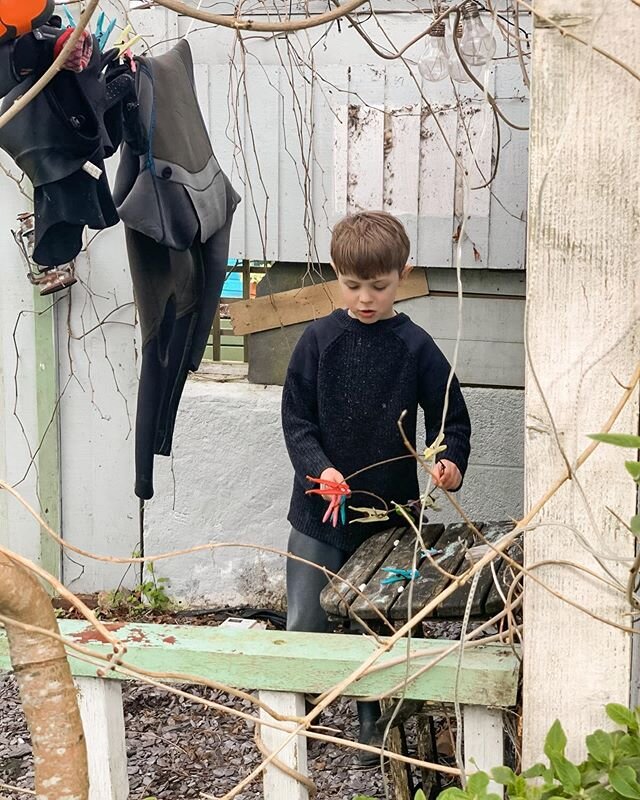
I saw this very clearly with my own son.
When he was little, I didn’t realise his speech was behind. He was talking — and I could understand him — so it didn’t immediately stand out. What I didn’t realise was that I’d simply learnt how to interpret what he was saying. Other people couldn’t.
When he started school, nothing was picked up. Academically, he was doing well enough, and at four, unclear speech and messy writing don’t necessarily raise concern — especially for a summer-born child. So it passed unnoticed.
But at home, I could already see something else.
The books he was reading with me were far beyond what school was giving him. His understanding, the way he absorbed information, the questions he asked — it didn’t match the level he was being placed at. But because his speech wasn’t clear, and his writing lagged behind his peers, none of that translated into the classroom.
It was only when we moved schools at five, into a smaller setting, that things began to become clearer. His speech. His coordination. From there, he was given speech therapy and support for his motor skills, and gradually, a fuller picture began to form.
He started bringing in books that weren’t typical for his age — including full editions of Shakespeare — and it quickly became clear his reading and understanding were far beyond what anyone had realised. It hadn’t suddenly appeared. It had always been there — just not visible in the classroom.
And that was true of so much of it.
Sleep had always been difficult, but by six or seven it had taken on a different shape — late nights spent reading, or lying awake, overwhelmed by questions about existence, about why we’re here, trying to make sense of things most adults avoid.
The meltdowns, too, began to feel different. What might have once sat within the range of normal for a toddler no longer did. As he got older, it became clear this was something else.
And this all happened just as Covid hit.
The loss of routine had a huge impact. He became overwhelmed in a way we hadn’t seen before — meltdowns, aggression, complete dysregulation. And yet, at the same time, he was completely at ease in his online learning environment — calm, focused, absorbed.
It wasn’t until he was eight, when school life had stabilised again, that we finally received diagnoses of autism and dyspraxia. And with that, the whole picture finally made sense.
More importantly, it meant we could put the right support in place. Not to change who he was, but to remove the barriers that were getting in his way.
From there, things began to change.
He learned to type. He used a laptop for his work. A scribe in exams. In the classroom, small adjustments — reducing sensory overload, limiting distractions — made a huge difference.
None of it created ability. It simply allowed it to be seen.
His progress since then has been significant — but it hasn’t been quick. It’s been years of understanding, adjusting, advocating, and gradually unlocking what was already there.
And now, we’re in a different phase again.
Some of the support he once needed so heavily is no longer as central. He’s far better at managing his sensory environment, more aware of what overwhelms him and how to handle it. Emotional regulation is still something he works on — and likely always will be — but he now has the tools to recognise when things are building, and to manage that before it tips over.
That hasn’t happened on its own. It’s been taught, supported, practised — over time.
His speech, which once made it so difficult for others to understand him, is now clear. But other things haven’t shifted in the same way. His handwriting hasn’t improved, despite support, and he will always need to use a laptop for his work — and a scribe in exams.
And that’s part of understanding this properly too.
Progress doesn’t mean everything changes. It means understanding where support is still needed — and where it no longer is.
He’s twelve now. And like any child, he’s moving into a stage that brings its own challenges. Adolescence is rarely straightforward for anyone. For children who already experience the world a little differently, it can add another layer entirely.
So while so much has improved, it doesn’t feel like an ending. More like a continuation — a move into the next phase of understanding who he is, and how best to support him as that continues to evolve.
For something that explains so much, twice-exceptionality isn’t widely talked about.
It doesn’t tend to come up in everyday conversations about education, and it’s not always something schools name directly. More often, it sits in the background — recognised in parts, but not always brought together as a whole.
In my case, it was mentioned almost in passing, by an educational psychologist who saw something that hadn’t yet been fully articulated. And once it was said out loud, it changed everything. Not because it changed who my son was, but because it gave context to what we’d been seeing all along.
And that’s often where this starts for other parents too.
Not with a clear label, but with a sense that something doesn’t quite add up. That the usual explanations don’t fully fit. That there’s more going on than what’s being measured or reported.
If that feels familiar, it’s worth exploring further.
Not to put a label on a child unnecessarily, but to understand how they learn, where the gaps are, and what might be getting in the way of what they’re capable of showing. That might mean speaking to the school in a more specific way, or seeking input from someone who can look at the full profile — not just the areas of difficulty.
Because when you start to see both sides clearly — the ability and the challenge — the conversation changes.
And so does the support.