Why Some Children Read Well But Don’t Understand What They Read
A child who reads aloud beautifully but can’t explain the story is more common than many parents realise — and rarely means what you think.
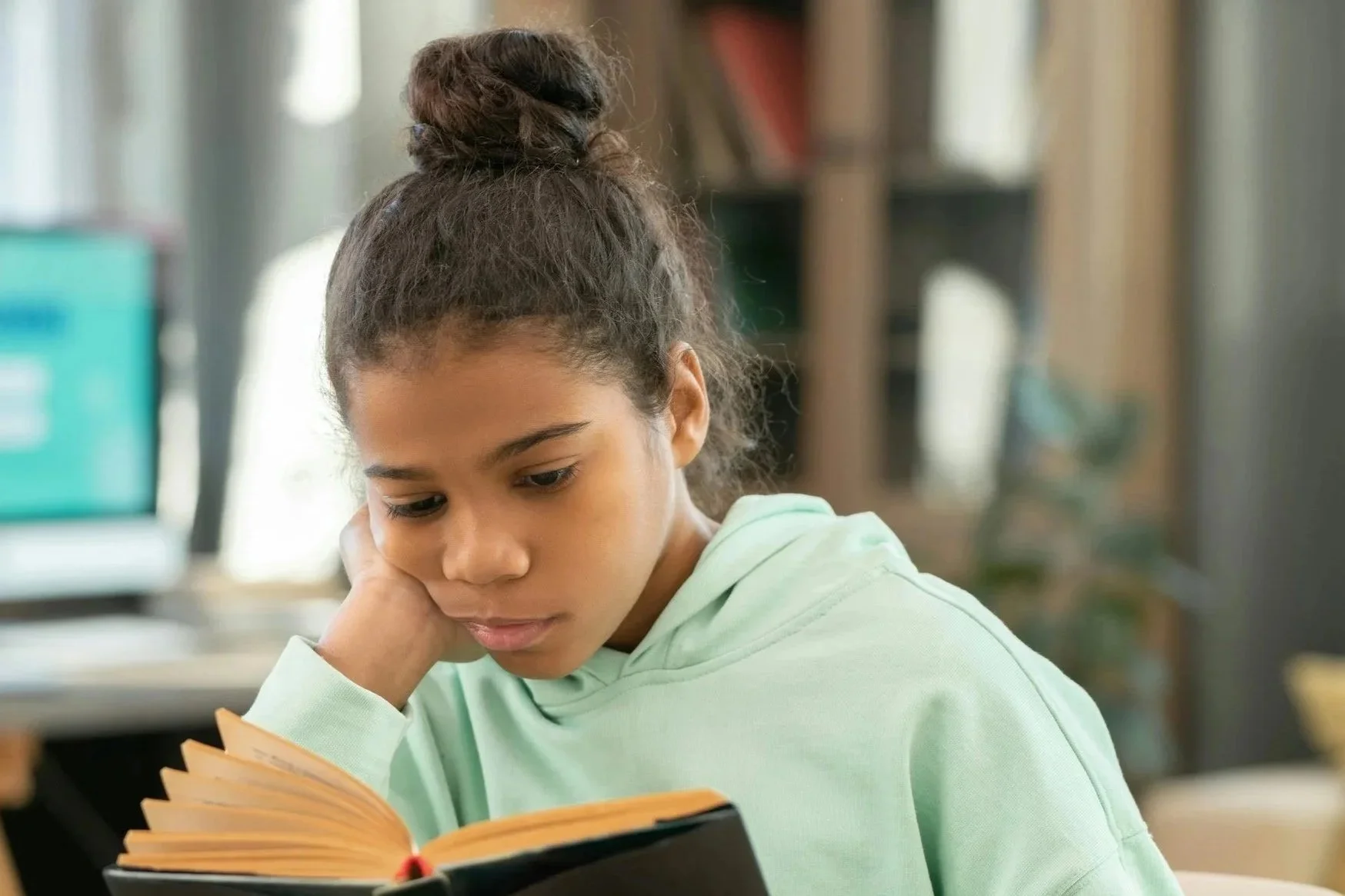
A child reads aloud beside you — smoothly, confidently, almost effortlessly. The words are all there. The rhythm is right. On paper, it sounds exactly like what a “good reader” should sound like. And yet, when you pause and ask what the page was about, something doesn’t quite connect.
The answer is vague. Or guessed. Or missing altogether.
It’s one of those quietly disorientating parenting moments — because it doesn’t fit the narrative we’ve been given. We’re taught to look out for children who struggle to read, not children who appear to read well but somehow aren’t taking it in.
It’s also where concern tends to creep in.
If they can read the words, shouldn’t they understand them? And if they don’t — does that mean something has been missed?
In reality, what you’re seeing is far more common than most parents realise.
And crucially, it often has less to do with a problem — and more to do with how children develop.
When learning doesn’t move in straight lines
Learning in childhood is rarely linear. It’s often uneven — with certain skills racing ahead while others take more time to fall into place.
Reading is a particularly clear example of this. From the outside, it looks like a single skill. But in reality, it’s made up of several different processes happening at once.
There’s decoding — recognising words and reading them aloud. And then there’s comprehension — understanding vocabulary, holding information in mind, connecting ideas, imagining what’s happening and making sense of it all.
These don’t always develop together.
Some children become very strong decoders early on. They recognise patterns quickly, move confidently through text, and can read aloud in a way that sounds fluent — sometimes even advanced.
“Reading isn’t a single skill — and when one part develops ahead of another, it can look confusing from the outside.”
But comprehension relies on a broader set of skills: language development, attention, working memory, and the ability to process and organise information.
Those systems can take longer.
So you end up with what is sometimes described as a spiky learning profile — where one area is strong, while another is still catching up.
Parents often recognise this in small, familiar ways:
a child who reads a page fluently but can’t explain what happened
a child who reaches the end of a paragraph and immediately forgets it
a child who reads quickly but seems slightly disconnected from the story
a child who avoids talking about books, even though reading itself isn’t difficult
a child who prefers being read to, despite being capable of reading alone
It’s also where attention can come into the picture. Some children move quickly through text, but their focus drifts just enough for meaning to slip past — reading the words without fully holding onto them. This can be more noticeable in children with attention differences, but it isn’t limited to them. Many children — particularly when they’re tired, distracted or still developing their language skills — will dip in and out of focus while reading.
It doesn’t necessarily point to a specific issue. More often, it reflects a stage where different parts of learning are developing at different speeds.
And importantly, it isn’t the same as dyslexia.
Dyslexia tends to affect how children recognise and process words. What you’re seeing here is often the opposite — where decoding is strong, but understanding is still developing.
How to support understanding (without turning reading into a test)
When comprehension lags behind fluency, the instinct is often to encourage more independent reading. But more pages don’t necessarily solve the issue — because the difficulty isn’t effort, it’s how the brain is engaging with what’s being read.
What tends to help more is shifting reading from something a child performs into something they actively experience.
One of the simplest ways to do that is to slow things down slightly.
Instead of focusing only on finishing the page, pause occasionally and open things up:
• What do you think is happening here?
• Why do you think they did that?
• Does that make sense to you?
The tone matters. It’s less about checking and more about thinking alongside them.
Another helpful approach is to ask children to retell what they’ve read in their own words. It doesn’t need to be perfect — the process of recalling and explaining helps build the connection between reading and understanding.
For some children, comprehension also improves when reading becomes more visual and conversational.
You might:
• talk about what the setting looks like
• relate the story to something in their own life
• pause to imagine what a character might be feeling
It’s also worth paying attention to vocabulary. Sometimes comprehension gaps come down to not fully understanding key words — particularly in books that are technically readable, but more complex in language.
And importantly, it helps to remove pressure. Children who feel they are being evaluated often focus even more on getting the words right — which leaves less mental space for understanding.
Reading back to a child — even one who can read independently — can also make a quiet difference. Hearing the same passage read fluently and expressively allows them to focus entirely on meaning, rather than the mechanics of decoding. It’s a simple shift, but for some children, it’s the moment the story finally begins to make sense.
For most children, this isn’t a fixed issue. It’s a stage. Given time, language development, and a slightly more supported approach, comprehension tends to catch up with fluency.
And when it does, the shift is noticeable.
Reading stops being something they can do — and becomes something they can follow, question and enjoy. Which, quietly, is where everything starts to fall into place.