Corsica With Children — When Greek and Spanish Islands Start to Feel Done
Less obvious than Greece or Spain, Corsica feels wilder, with slower days and open beaches.
There’s a familiar pattern to how most family holidays come together. Mallorca gets mentioned. Then Greece. Italy usually follows — somewhere that feels like a safe bet and looks good in photos. And more often than not, that’s where it lands.
Corsica rarely makes the shortlist.
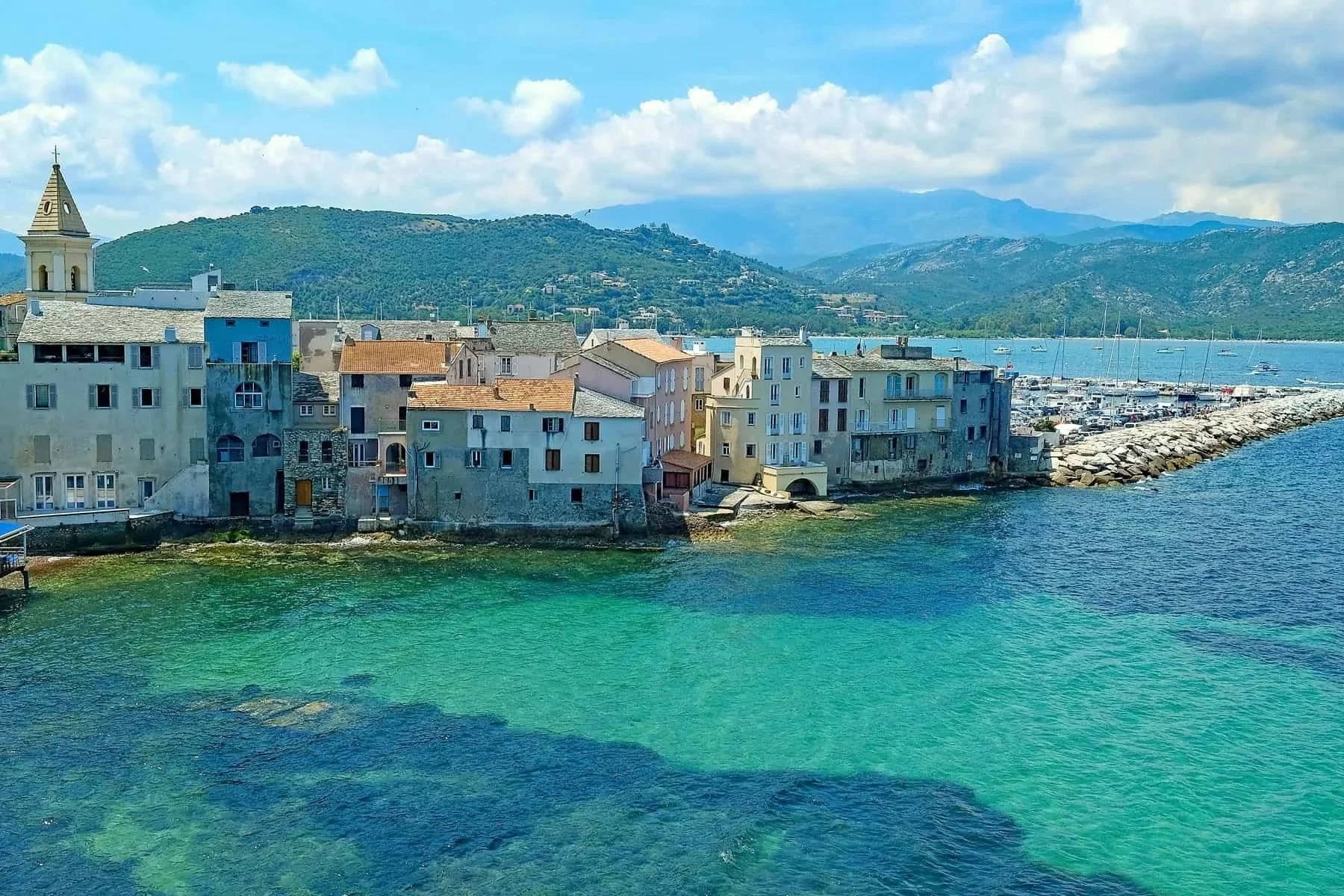
Which is surprising, because while much of the Mediterranean has been smoothed out or crowded over time, Corsica has stayed — not untouched exactly, but less altered. A little wilder around the edges, more open, and easier to settle into. The kind of place where days don’t need over-planning, beaches feel spacious rather than managed, and children fold into the rhythm of things without much resistance.
It’s a place that gets on with things quietly — and gets them right.
Beaches, Boats, and Days That Fall Into Place
Corsica’s landscape does a lot of the work. It’s not just the beaches — although they’re some of the clearest in the Mediterranean — it’s the way the island has resisted being overly shaped. Large stretches of its coastline fall within protected zones, including the Scandola Nature Reserve, where development is tightly controlled and the coastline still feels largely untouched.
“Corsica feels like the Mediterranean before it was overdone.”
That protection shows up immediately. The water is clearer, not just visually but in how alive it feels. Fish move close to shore, seabirds cut across the cliffs, and long stretches of sand remain exactly that — open, unstructured, and easy to settle into.
Mornings usually start at the beach. Around Calvi, the stretch below the citadel is wide, shallow, and forgiving — an easy first stop that doesn’t require much thought.
For something quieter, it’s worth heading further out. Plage de Saleccia is the one people talk about — pale sand, clear water, and just enough effort to reach that it still feels special. Nearby, Plage de Lotu is slightly easier and particularly good with children — calm, shallow, and easy to stay longer than planned. For something more exposed, Plage de l'Ostriconi has a different energy entirely — wilder, less polished, and worth it for that alone.
One of the easiest ways to experience the island properly is from the water. Boat trips along the coast — particularly towards the Scandola Nature Reserve — often come with unexpected moments: dolphins surfacing alongside the boat, seabirds overhead, and stretches of coastline that feel almost untouched.
Closer to shore, the clarity of the water does most of the work. A quick snorkel is usually enough — even for younger children — to spot fish moving through the shallows.
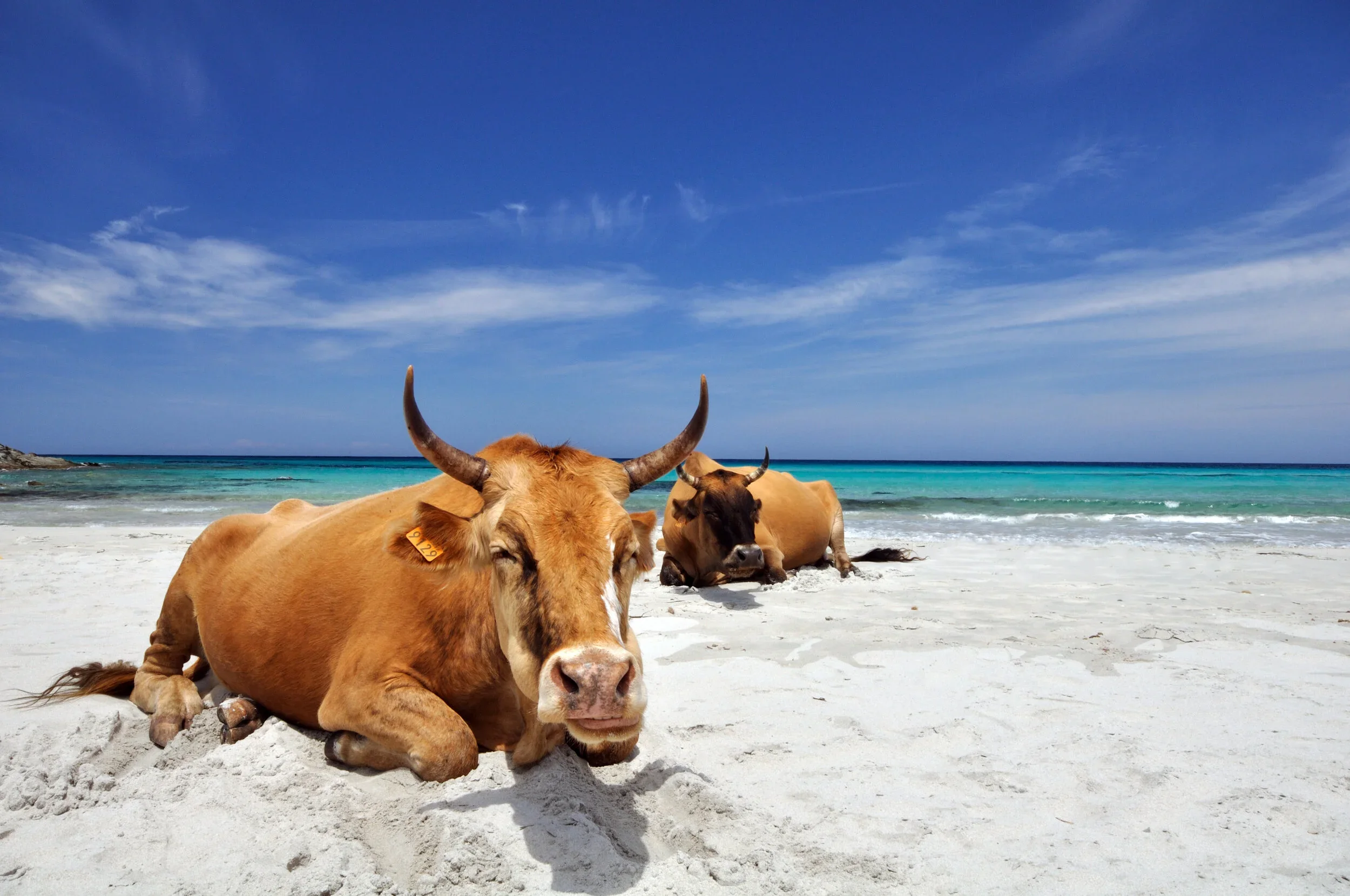
And then there are the quieter details. In the south, near places like Plage de Palombaggia, it’s not unusual to see cattle or horses wandering near the shoreline — not staged, just part of the landscape.
By early afternoon, everything softens slightly. Lunch isn’t rushed, and it isn’t overly designed either. At places like U Fanale or A Piazzetta, it’s simple Mediterranean cooking done well — grilled fish, seasonal vegetables, fresh pasta, good bread — the kind of food that suits the heat and doesn’t try too hard. Tables turn slowly, and no one minds if you stay longer than planned.
Evenings drift back towards Calvi. The old town is made for wandering — narrow streets, warm stone, no real plan. Ice cream, a slow walk, something to drink overlooking the harbour while children move just far enough ahead to feel independent. Dinner happens when it happens, usually somewhere unfussy where the atmosphere does most of the work.
It’s less about what you do, more about how the day unfolds — and somehow, that ends up being enough.
Where you stay in Corsica shapes everything — and a few places get it exactly right.
La Villa Calvi
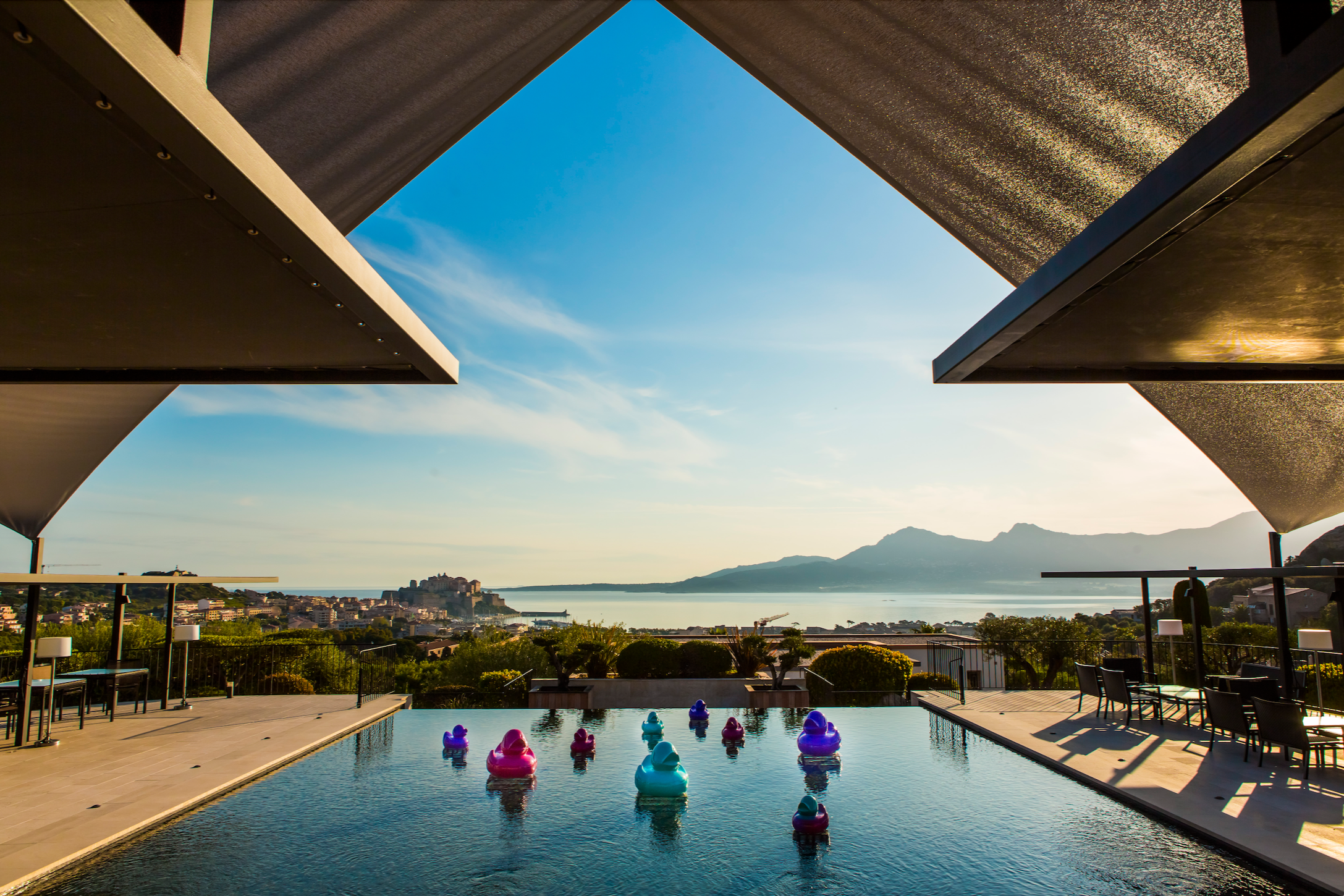
Set just above Calvi, La Villa is the one that feels immediately right. It’s refined without being formal, with a layout that quietly absorbs family life rather than pushing against it. Multiple pools, generous terraces, and that wide-open view across the bay mean everyone naturally finds their space.
This is the stay that makes everything feel easy. You can dip in and out of town, come back for a slower afternoon, and never feel like you’re juggling too much at once. The restaurant here is a real asset — light, seasonal dishes, well executed, and just polished enough that staying in for dinner feels like part of the experience rather than a fallback.
It suits families who want everything to work without overthinking it — space, structure, and a setting that carries the day for you.
Rooms from around £450 per night. Book via lavilla.fr
Domaine de Murtoli
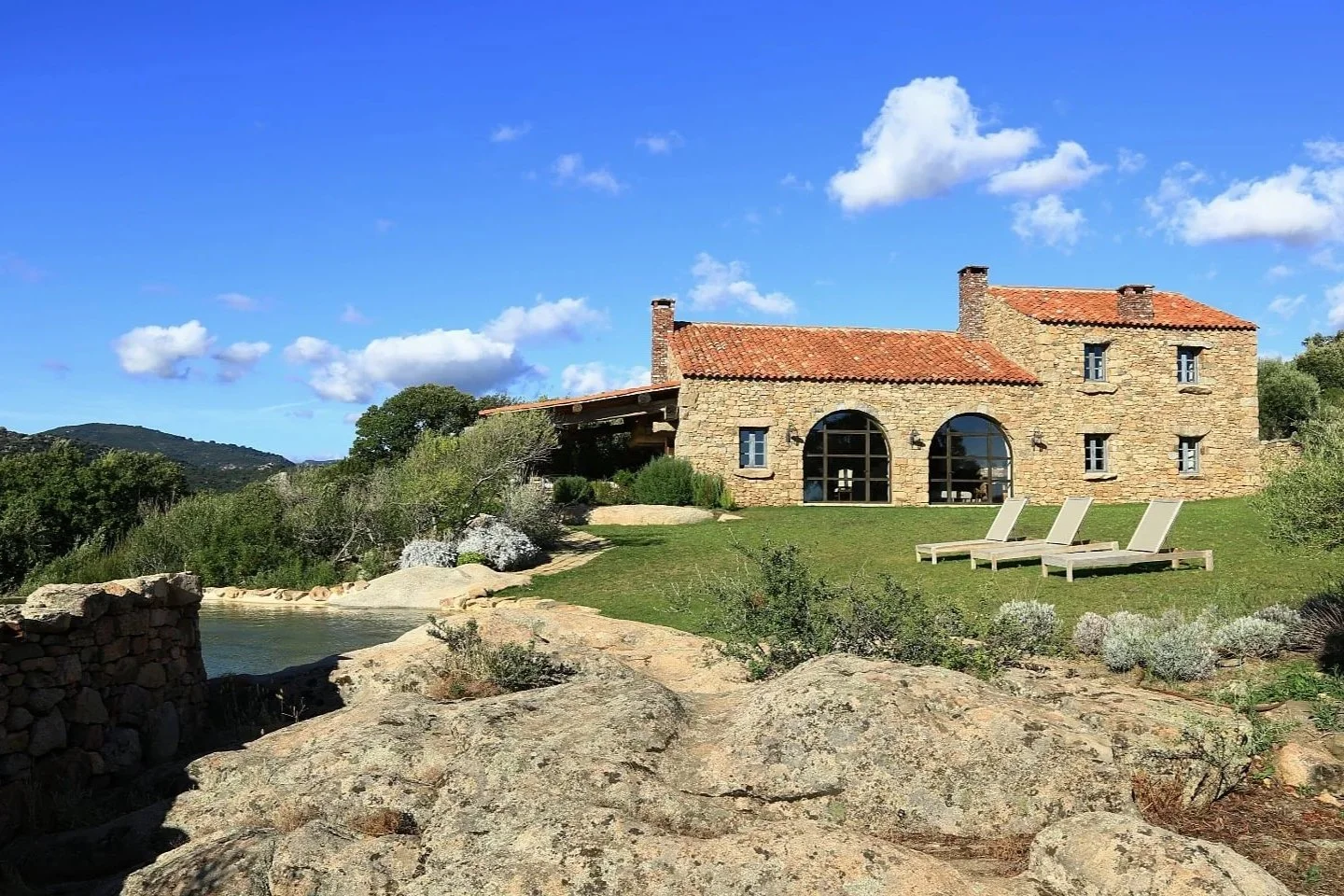
Murtoli is something else entirely. Spread across a vast private estate in the south of the island, it’s made up of restored farmhouses rather than traditional hotel rooms — each one set apart, giving families a level of space and privacy that’s hard to match.
There’s a similar sense of independence here to a cabin stay, but on a much larger scale. Houses sit across the landscape rather than tucked into it, with more room, more distance, and a stronger connection to the land around you.
This is where Corsica leans fully into its wilder side. Days are shaped by the surroundings — beaches that feel almost empty, long walks, open space — and a sense that you’re properly away from everything. Children disappear into the environment in the best possible way.
There are a handful of restaurants across the estate, each rooted in local, seasonal cooking, often using ingredients grown or sourced nearby. It’s thoughtful without being overdone — and, like everything here, designed to feel natural rather than staged.
It’s not the easiest option, but it’s one of the most memorable — the kind of place that stays with you long after you’ve left.
Houses from around £600 per night. Book via welcomebeyond.com
Hôtel Misincu
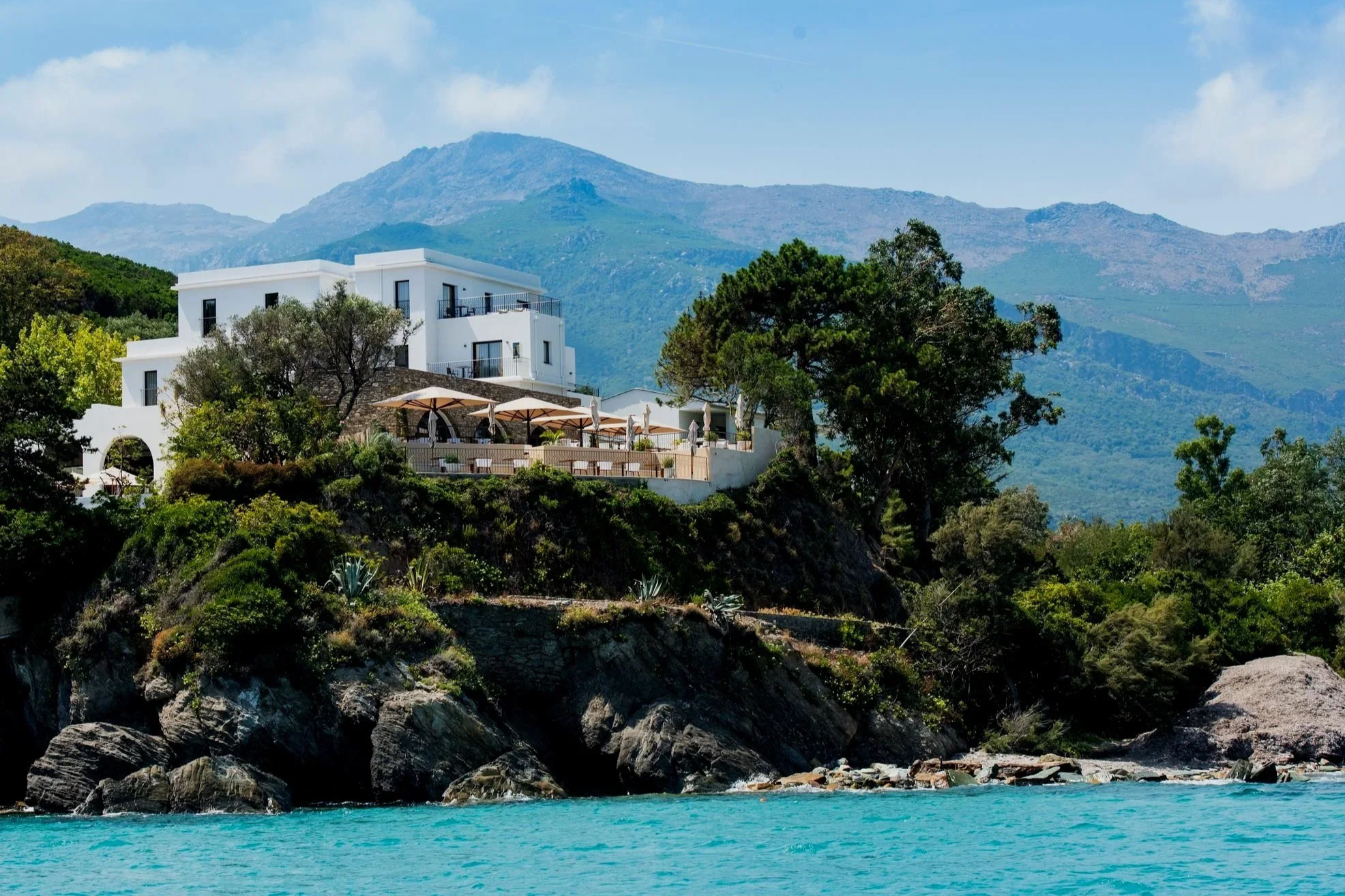
For something smaller and more characterful, Misincu sits at the quieter end of the island in Cap Corse, where things feel less visited and slightly more raw. It’s more intimate than the others, with a softer, more personal feel.
The setting does most of the work — close to the sea but removed enough that everything feels calmer. Days are simple: beach, pool, long lunches, and not much need to plan beyond that.
There’s a relaxed on-site restaurant that leans into local, seasonal cooking without overcomplicating things, making it easy to settle in for the evening rather than heading out.
It works well for families who want something that feels a little more individual — less structured, more personal, and slightly off the usual path.
Corsica doesn’t compete for attention in the way other Mediterranean destinations do. It simply gets the balance right — and once you’ve experienced it, that’s hard to ignore.
Rooms start from around £350 per night. Book via vertuhotelsandresorts.com/misincu
Hôtel Casadelmar
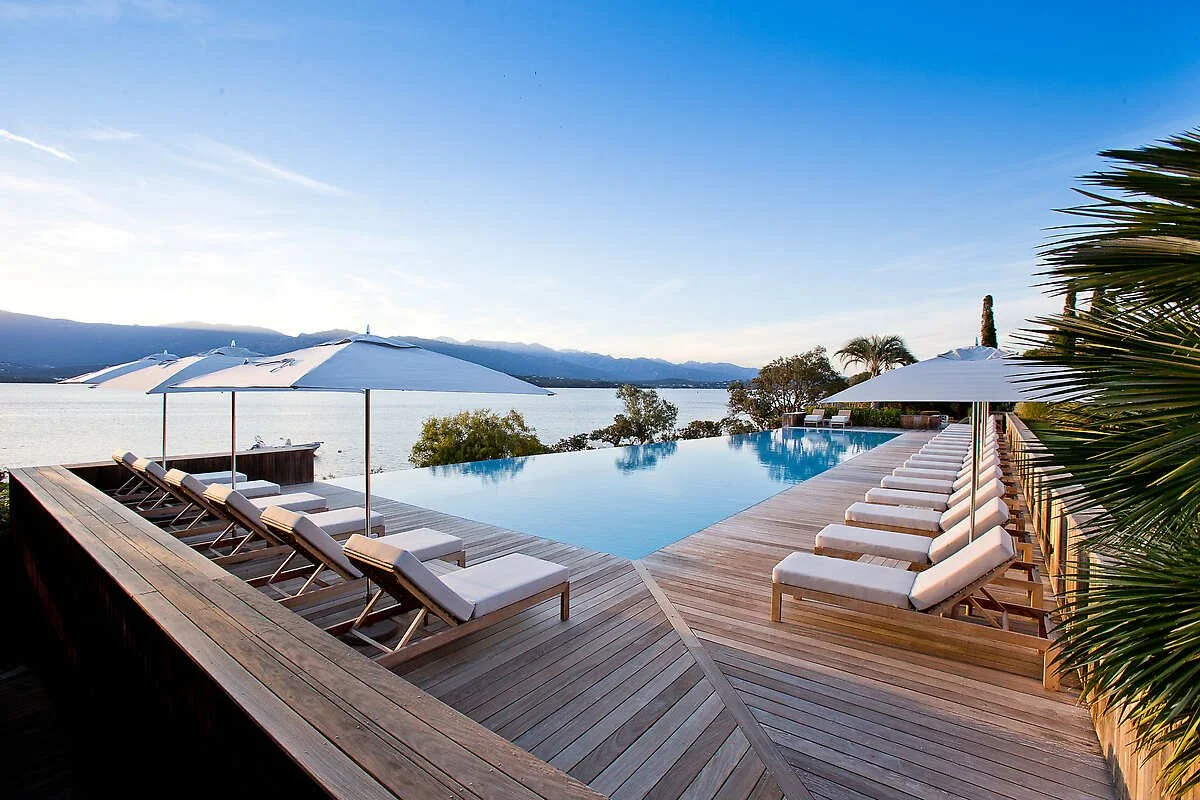
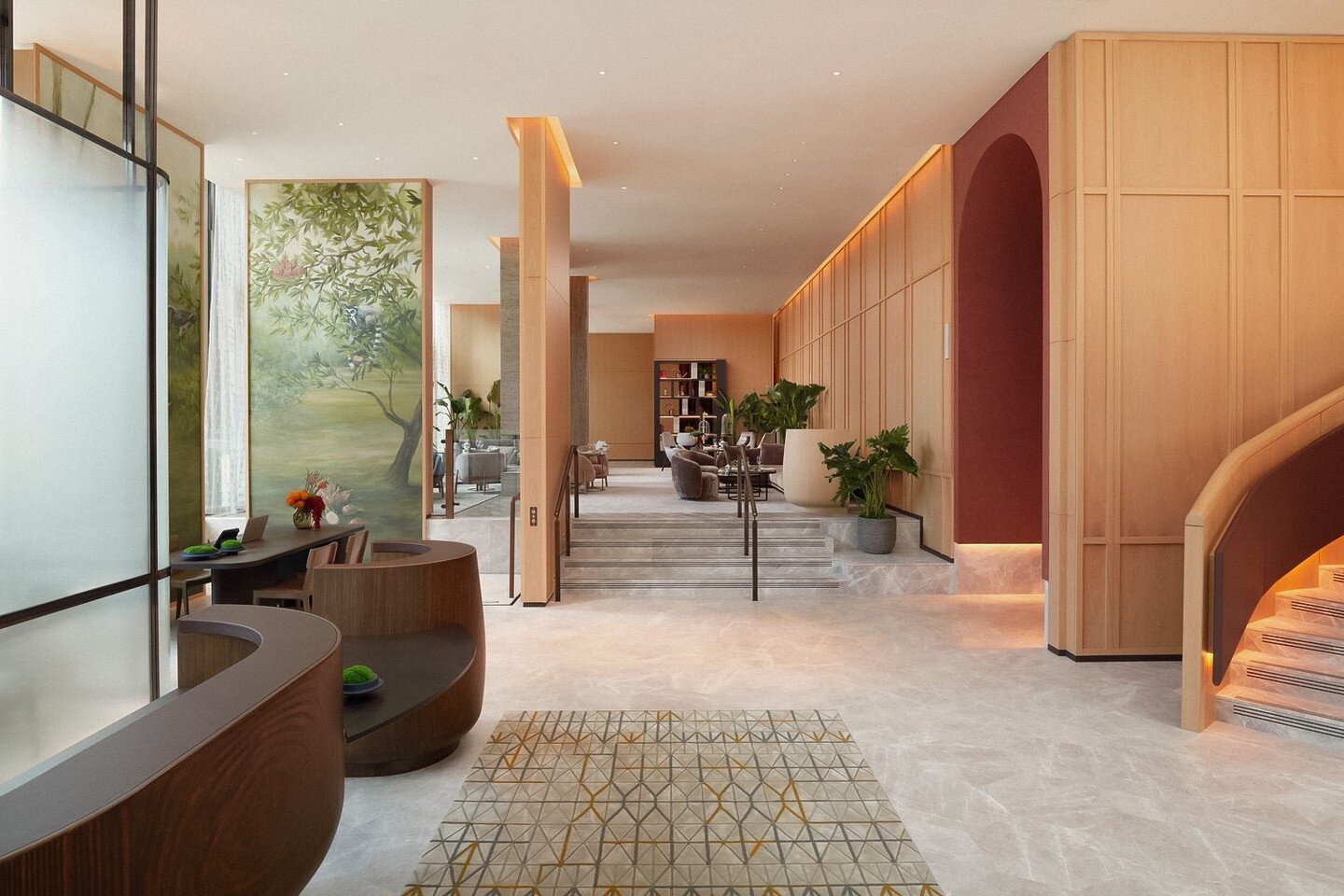
Casadelmar brings a more design-led perspective. Clean lines, strong architecture, and a setting that feels deliberately composed without becoming cold.
This is the one for families who still care about how a place looks and feels — where layout, light, and detail have been thought through properly. It’s calmer, more structured, and slightly more polished than the rest, but still relaxed enough that it works with children rather than against them.
The restaurant is a standout, with a more refined, chef-led take on Corsican ingredients, making dinner something to plan around rather than something to fit in. Evenings tend to centre here — long tables, slower pacing, and a setting that does most of the work.
It’s not about space or wildness — it’s about intention. Everything feels considered, and that’s exactly the appeal.
Rooms start from around £500 per night. Book via casadelmar.fr