Back to School, Without the Backlash
When your brain processes the world differently, going back to school means more than new shoes and timetables—it means navigating sound, light, structure, and uncertainty all at once.

September always arrives like a freight train—faster than you expected, noisier than you’d like, and full of other people asking if you’ve bought the new maths set yet. Some schools are already back, others are staggering start dates, and some parents are still searching for that one missing shoe. (It was in the garden. Under a plant pot.)
For many children, there’s excitement in the air—shiny pencil cases, lunchboxes that still have their matching lids, maybe even a quietly hopeful feeling about their new teacher. But for neurodivergent children, the return to school can feel very different.
The uniform might be itchy. The classroom, too bright. The hallway, impossibly loud. The teacher unfamiliar. The rules… not entirely clear. And then there’s the transitions, the smells, the bells, the sudden changes. It’s not “back to normal” at all—it’s sensory, social and emotional whiplash.
And while it may feel like you’ve run out of time to prepare, you haven’t. Whether your child starts tomorrow, Friday, or next week, it’s not too late to put a few quiet, regulating supports in place. You don’t need to overhaul everything. But small adjustments now—visual timetables, sensory tools, grounding rituals—can help your child walk back into the school routine feeling just a little more understood, and a lot more supported.
Because the goal isn’t perfection. It’s predictability. And that starts with us.
Before the Bell: Soften the Shift
Use Visual Timetables Beyond the School Day
Visual supports aren’t just for the classroom. At home, a simple image-based schedule—“wake up, eat breakfast, get dressed, brush teeth, pack bag”—can make mornings feel less chaotic and more manageable. For neurodivergent children, knowing what comes next is often the difference between cooperation and meltdown.
Printable schedules are available from Twinkl (search “morning routine visual schedule”), or you can buy ready-made kits like the TomTag My School Day Kit (£14.99), which uses colour-coded symbols that clip onto school bags or bedroom walls.
Let Drawing Speak for Their Feelings
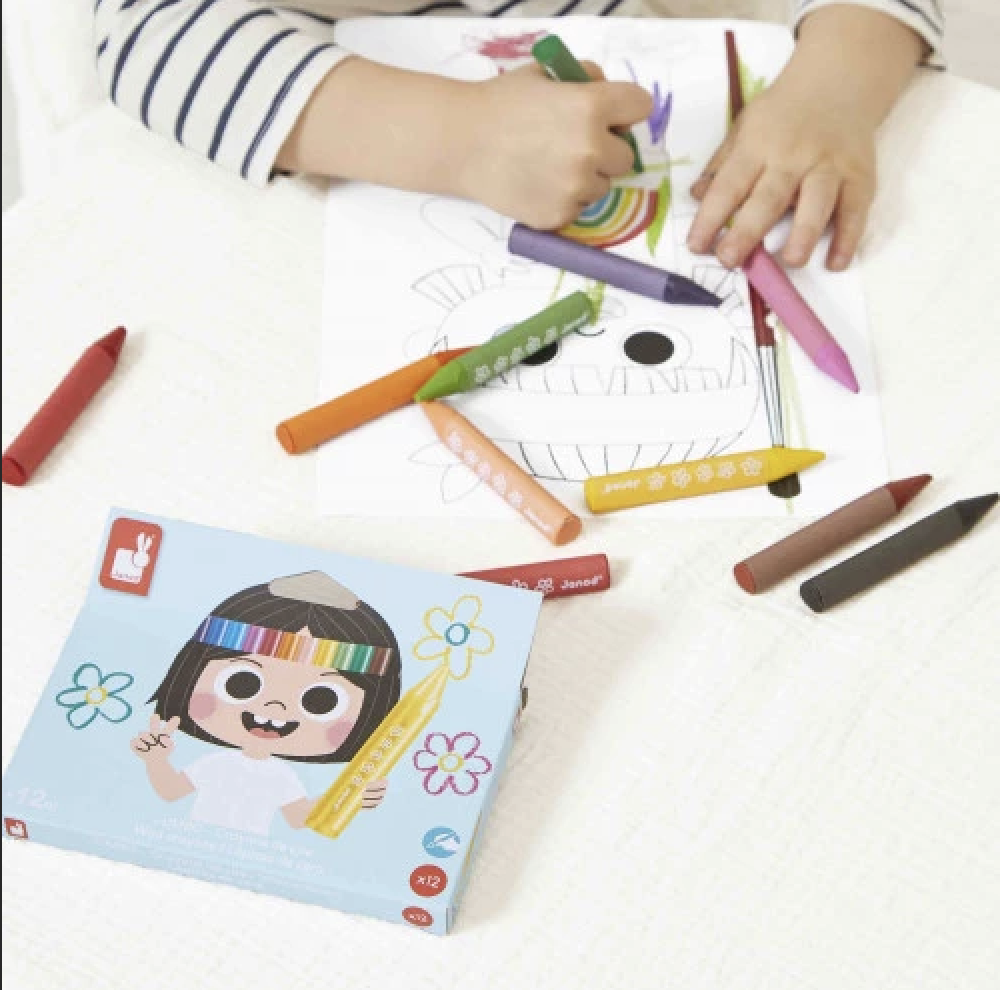
If your child struggles to say what they’re feeling, they may be able to draw it. Setting aside quiet time for open-ended art—no prompts, no praise, just space—can allow worries to emerge without pressure.
Try the Janod Colouring Box (£19.99) with wax crayons (£30) for little hands. It’s not about the artwork—it’s about creating a safe space to express emotions.
Practise Coping Strategies Proactively
Tools for managing overwhelm work best when taught before they’re needed. You might try:
A simple breathing technique: “Smell the flower, blow the candle.”
A small calm-down box with fidgets and soft textures
A pre-prepared script: “This is too loud,” or “Can I have a break?”
Even if your child doesn’t use the language straight away, simply knowing they have the option can lower anxiety.
During the Day: Tools That Help School Work
Emotional Anchors That Travel With Them
Having something familiar and comforting within reach can make all the difference—especially during unstructured times or transitions. A Kaloo comforter (19.99) can be tucked discreetly in a coat or bag.
Alternatively, sew a small square of familiar fabric into a school blazer or add a “worry button” to a cuff. These small gestures give children quiet access to regulation when they need it most.
Sensory-Friendly Stationery That Actually Helps
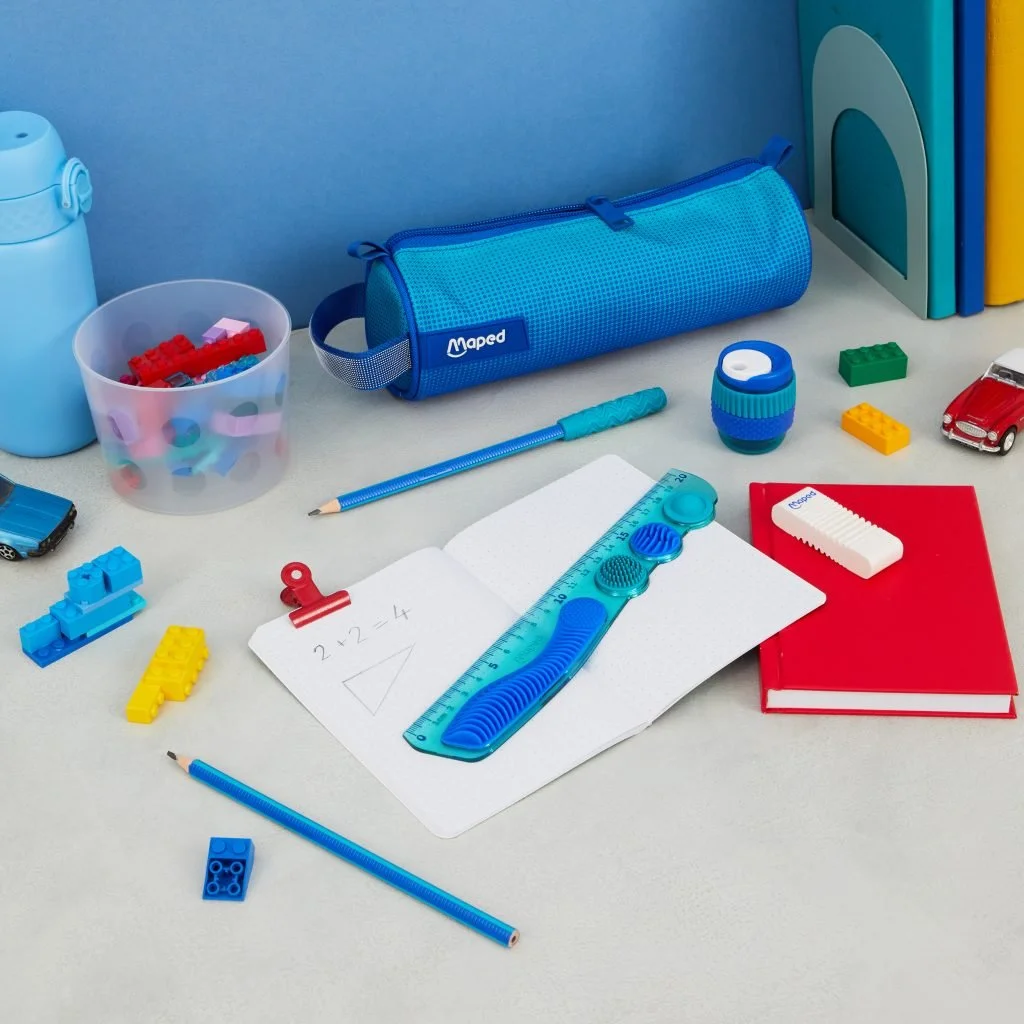
The Helix Kidy Learn Concentration Collection is a stationery set designed with neurodivergent children in mind. Available individually or as a set, it includes:
A chewable graphite pencil (food-grade silicone tip)
A ridged ergonomic eraser
A rotating ring pencil sharpener for sensory input
A ruler with tactile silicone grip zones
A textured pencil case for quiet stimming
Noise Regulation Tools
For children who are sensitive to sound, a busy classroom or echoing corridor can quickly become overwhelming.
Loop Quiet Earplugs (from £19.99) filter background noise while allowing voices through
Edz Kidz Over-Ear Defenders (£10.99) are great for younger kids during assemblies, lunch halls, or fire drills
If your child has a SEND plan, these can often be included as agreed supports.
Movement-Friendly Focus
Some children need to move in order to focus. Instead of seeing that as a distraction, try tools that support it quietly:
Wobble cushions ( from £19.99) allow safe, subtle movement
Chair bands (£22.99) help with leg movement under desks
Tangle Jr. fidgets (£6) are silent, discreet and easy to manage in a school setting

Support for Visual Stress
For children who struggle with reading or layout overwhelm, the Helix Vision Maths Set £7.99 includes simplified tools with colour overlays and high-contrast markings.
Coloured overlays or reading rulers are also worth considering for both visual stress and dylsexia, and are available via Crossbow Education.
Support for Time and Transitions
Time blindness or anxiety about transitions can often be soothed with visual cues.
Time Timer MOD (£49.84) shows time disappearing in a clear, visual way—no loud ticking, no guessing.
Visual task cards (£10.99)or first/then boards can also break down activities and help reduce uncertainty.
No matter when the start date lands, it’s never too late to put these supports in place. You don’t need a perfect routine or a behaviour chart on the fridge. You just need tools that make your child feel safer—and that help them get through the day with a little more ease.
And if they don’t use them all right away? That’s fine too. The message is in the offering: You are allowed to need help here. And I’ve got your back.