Curved Furniture — Why Everything Else Now Feels a Bit Rigid
We’ve spent years living with straight lines and sharp edges. Now, curves are taking over — and suddenly, everything feels different..
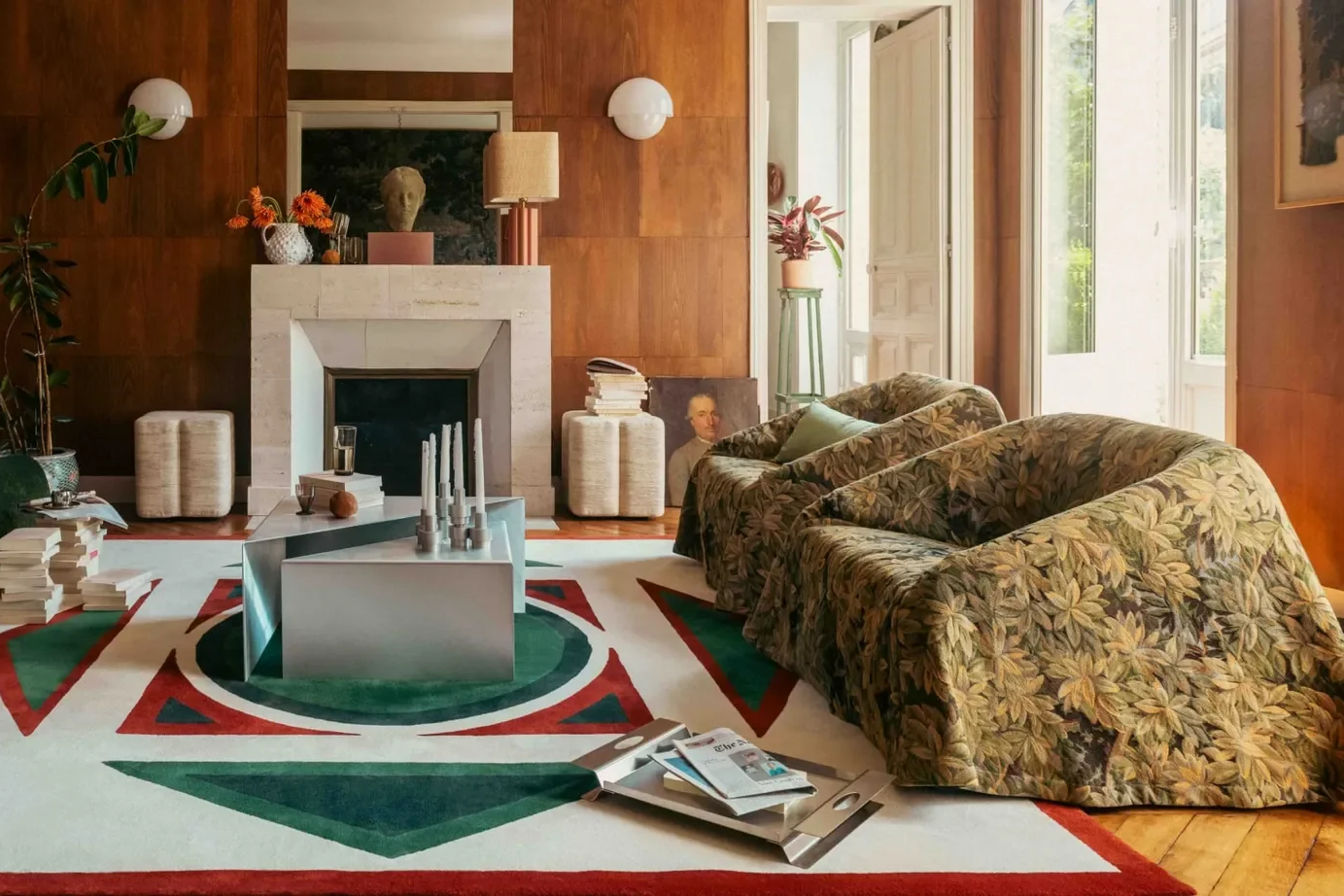
You know it the moment you walk in. Some rooms look exactly right. Everything in place, nothing out of line — and yet you find yourself hovering slightly. You perch on the edge of the sofa. You move your glass twice before deciding where it should go. You’re aware of the space in a way that makes you a little more careful.
And then there are the others.
The ones where you drop your bag without thinking. You sit properly, not just on the edge. Someone stretches out, someone else turns sideways to talk, and suddenly the whole room feels like it’s being used rather than observed.
It’s not about how styled they are. It’s about what they ask of you.
For a long time, interiors leaned into structure. Straight lines, defined edges, pieces that hold their shape and, in doing so, hold everything else in place. It looks good — clean, architectural, very put together.
“Curves don’t just change how a room looks — they change how you move through it, sit in it, and stay in it.”
But increasingly, something else is standing out. You notice it in the edges first. Sofas that don’t quite sit square. Tables that don’t cut across a room in the same way. Pieces that feel less fixed, more fluid.
There is a name for it, and this time it’s more specific. Curved furniture.
Not as a passing trend, but as something that changes how a space is experienced. A curve doesn’t stop you — it draws you in. It softens the way you move, the way you sit, the way you stay.
And that’s why even one piece can be enough.
The Curved Pieces We’re Loving Now
You can dip in, or you can go all the way.
A single piece can shift the feel of a room almost immediately — but lean into it properly and everything starts to loosen. Softer, easier, less like something you have to sit properly in.
This is the edit that does both. Pieces that stand on their own, and pieces that could carry the whole look — depending on how far you want to take it.
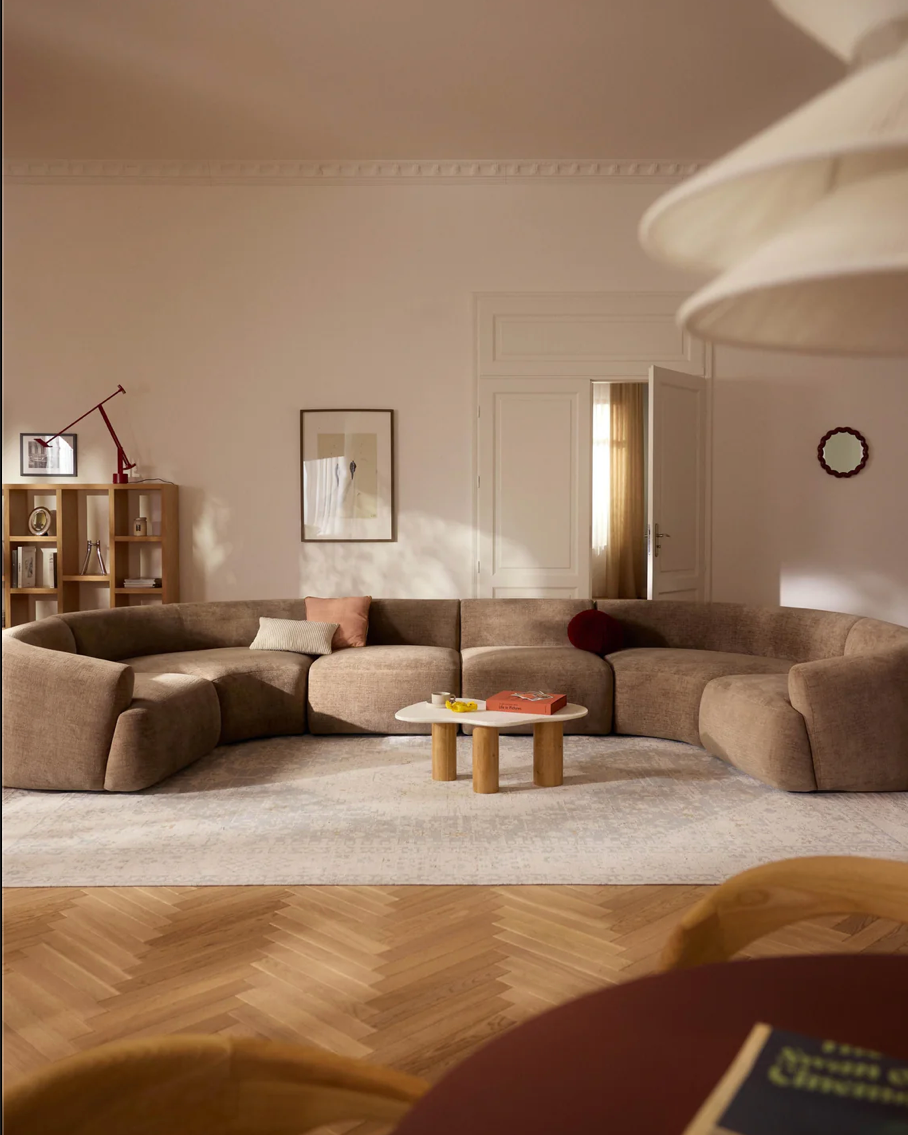
The sofa that invites social gatherings
‘Sofia’ XL Modular Sofa (£4949) — Westwing
This is what a sofa looks like when it’s designed for people, not just placement. The U-shape is key — it naturally turns everyone inwards, so you’re facing each other rather than sitting in a line. It removes that slight formality most sofas still have.
It also looks the part. The low profile and continuous curve give it presence without feeling heavy or over-designed. Your eye moves around it rather than stopping at a corner, which softens the whole room visually.
It’s the kind of sofa where one person sits down “just for a minute” and, before long, everyone else follows. Drinks end up on the arm, someone’s curled into the corner, and suddenly the room is doing what it’s meant to.
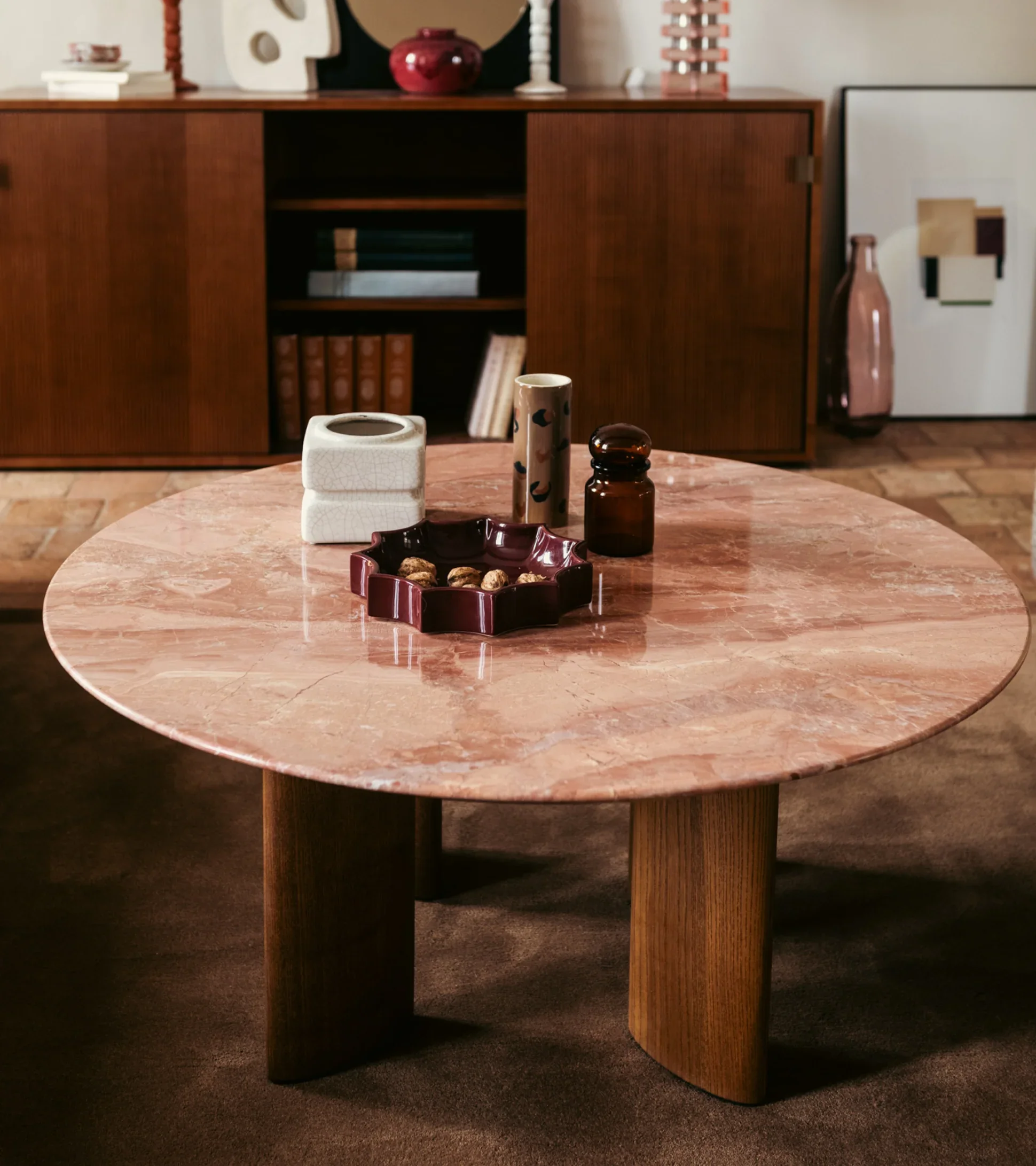
The table that softens everything around it
‘Carlotta’ Marble Coffee Table (€1,990) — The Socialite Family
It’s not just the round top — it’s the legs. They curve inward rather than dropping straight down, which removes that hard, architectural feel most tables have. Nothing cuts across the room too sharply.
And then there’s the marble. Not the expected black or white, but a warmer pink tone that shifts it completely. It still has ‘Carlotta’ Marble Coffee Tableweight, still feels substantial, but without that cold, formal edge.
You notice it in small ways. Walking past without clipping the corner. Setting things down without adjusting first. It holds the centre of the room, but it doesn’t control it.
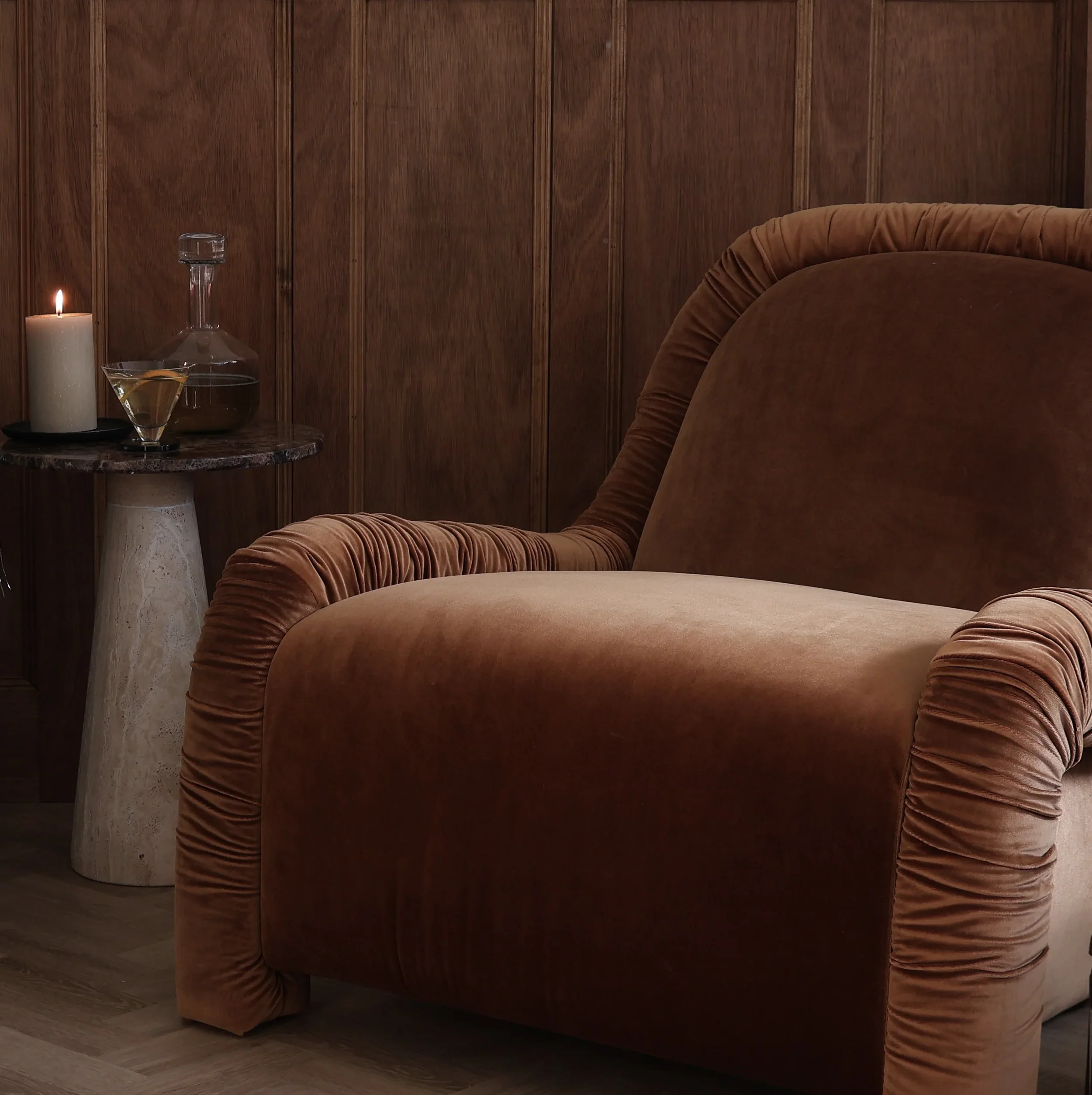
The chair you instinctively go to
Ruched Lounge Chair (£995)— Six The Residence
This is the one people choose without thinking. The curve wraps slightly, but it’s the softness that really defines it — there’s no sharp outline, no rigid edge telling you how to sit.
The ruching matters more than it seems. It breaks up the surface just enough to stop it feeling too perfect, too controlled.
It’s the chair someone drops into mid-conversation and doesn’t leave. One leg tucked under, phone in hand, half-watching, half-listening. It doesn’t hold you upright — it lets you settle.
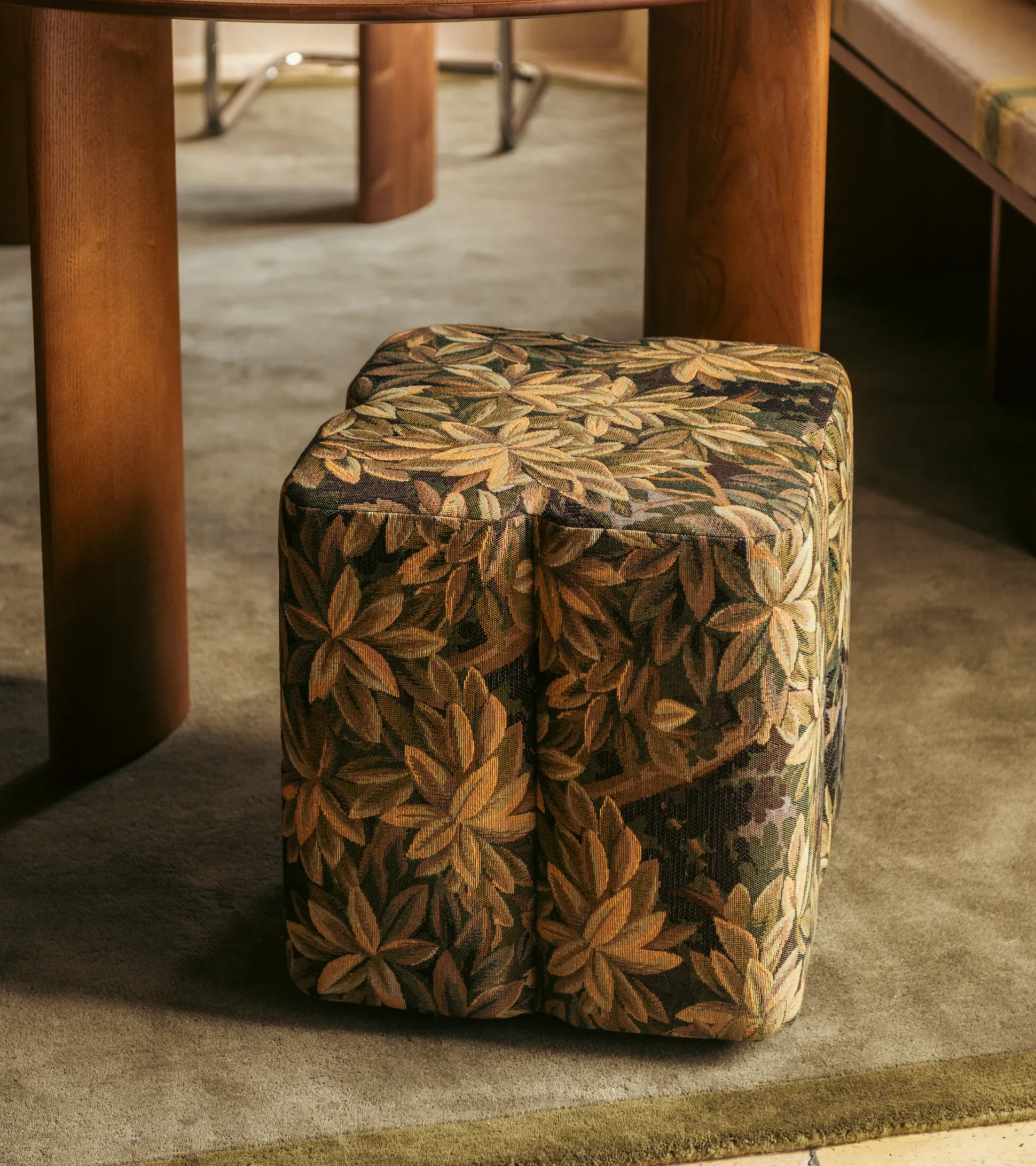
The pouf that holds its shape
‘Fiori’ Pouf (€510) — The Socialite Family
This is where form matters more than finish. The fabric can change — bouclé, jacquard, something smoother — but the shape is what defines it. More structured than a typical pouf, with a silhouette that curves rather than collapses.
That’s what gives it presence. It feels like a piece of furniture, not something you’ve added at the end.
It’s the one that ends up being used more than you expect. Pulled closer, leaned on, turned into an extra seat without much thought. It doesn’t disappear, but it doesn’t demand attention either.
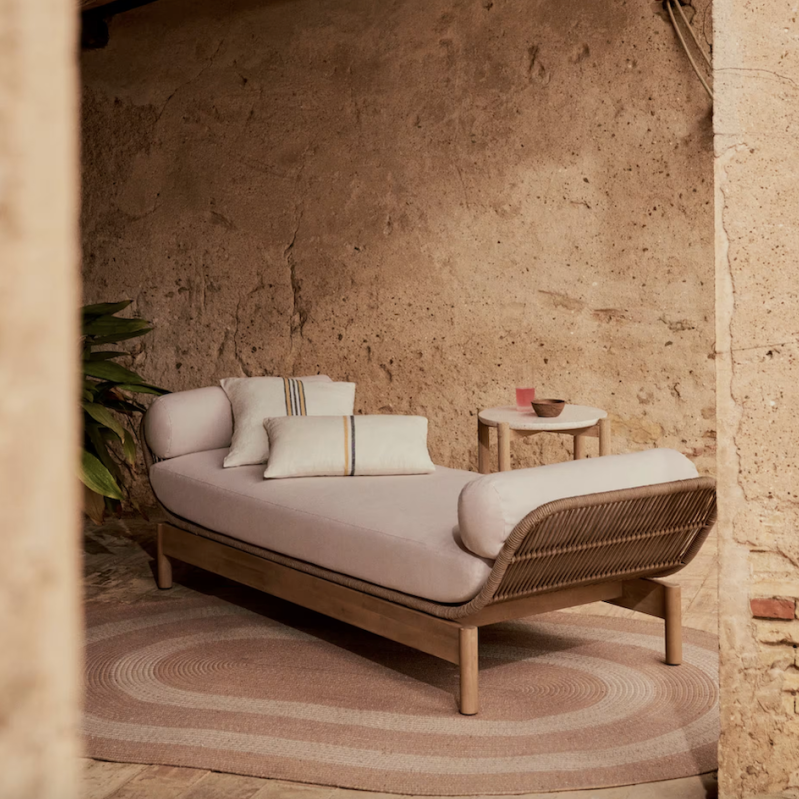
The lounger that makes doing nothing feel intentional
‘Catalina’ Sun Lounger (€875) — Kave Home
This is a quieter take on the curve. Less sculptural, more considered. The frame stays structured, but the cylindrical cushions at either end soften it — just enough to stop it feeling rigid.
That balance is what makes it work. It still looks clean, still holds its shape, but it doesn’t feel formal or overly designed. There’s an eas‘Catalina’ Sun Loungere to it.
You can picture it straight away — mid-afternoon, half-lying rather than sitting, book open but not really reading. It’s not about posture, it’s about staying there longer than you meant to.
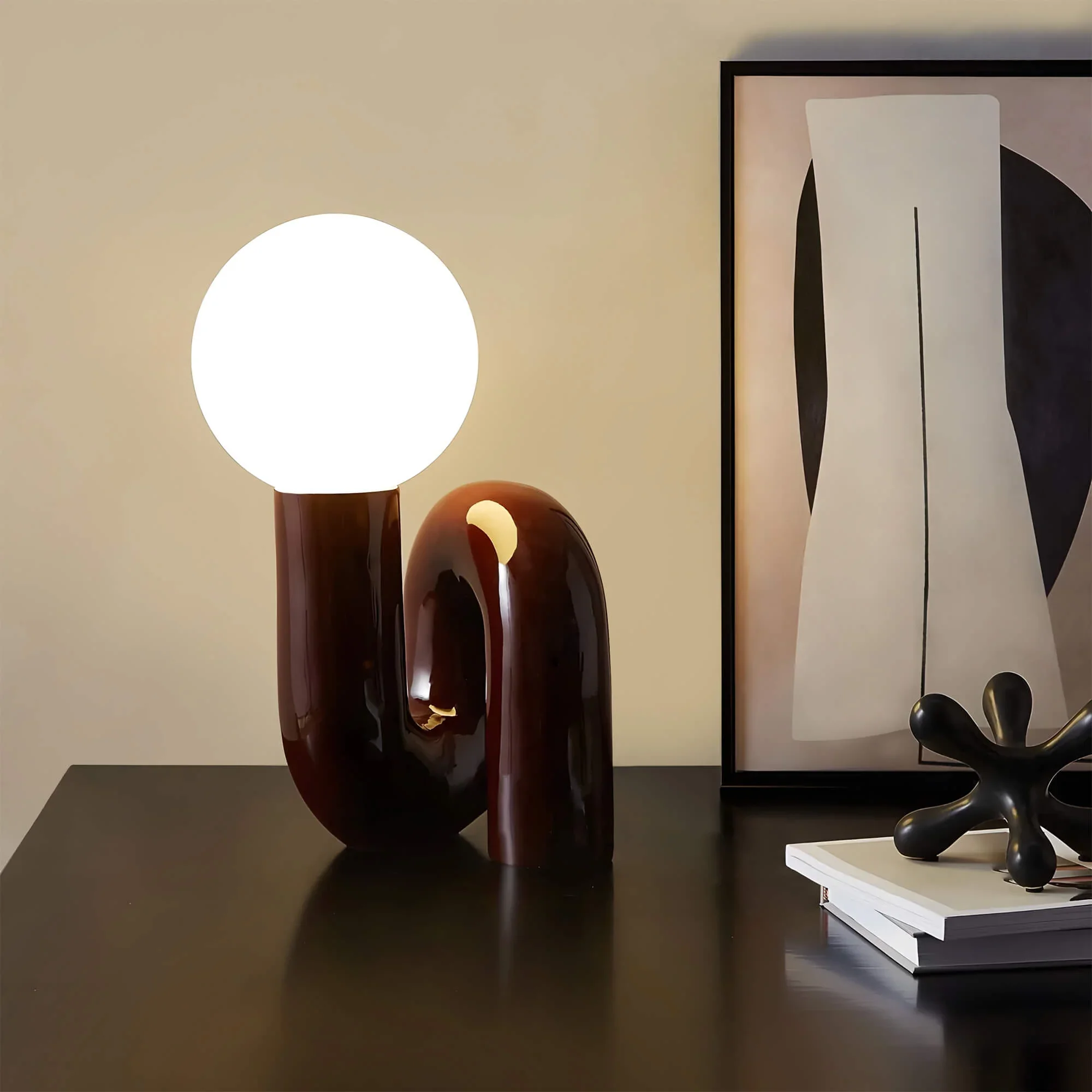
The object that shifts the mood entirely
Neotenic Table Lamp (£1,150) — Petite Friture
This is where the curves become more exaggerated. The glossy finish and almost inflated form push it closer to sculpture, but it still feels warm rather than stark.
It adds something different — a curve that isn’t about comfort, but about contrast. It lifts the edit slightly, stops everything feeling too grounded or predictable.
It’s the one you switch on in the evening and immediately notice. The light softens, the shapes feel rounder, and the whole room becomes somewhere you stay a little longer.
Dip in, or go all in. Either way, once the edges soften, everything else tends to follow.