The Quiet Shift Happening Inside Our Homes
A quieter way of living is taking shape at home — one defined by atmosphere, ease and spaces designed to absorb life rather than perform for it.
There was a time when interiors were expected to do something. Make a statement. Prove a point. Contain at least one feature you could explain to a guest before they asked. Homes were styled to be impressive — and slightly exhausting.
Lately, something else has taken hold.
The spaces people want to spend time in now are quieter — visually and emotionally. Rooms that don’t announce themselves, but reveal themselves slowly. Nothing shouting for attention. Nothing waiting to be admired. Just spaces that feel settled, considered, and easy to exist in.
“A home that doesn’t ask much of you has become quietly aspirational.”
This isn’t about minimalism or stripping everything back. It’s about editing the foreground. Fewer things are allowed to sit at the centre. More is pushed gently into the background. And that shift — subtle as it is — changes how a space feels almost immediately.
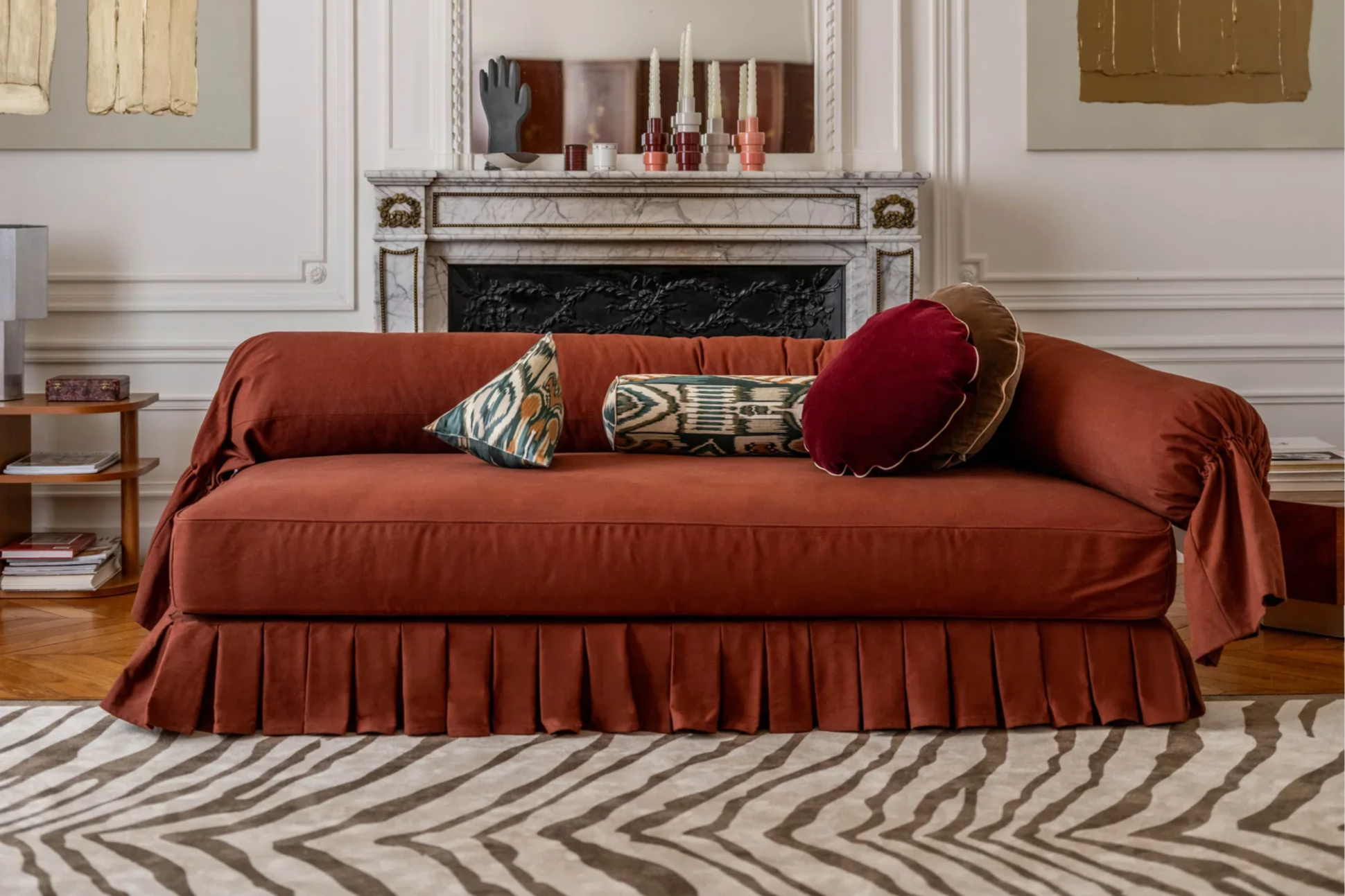
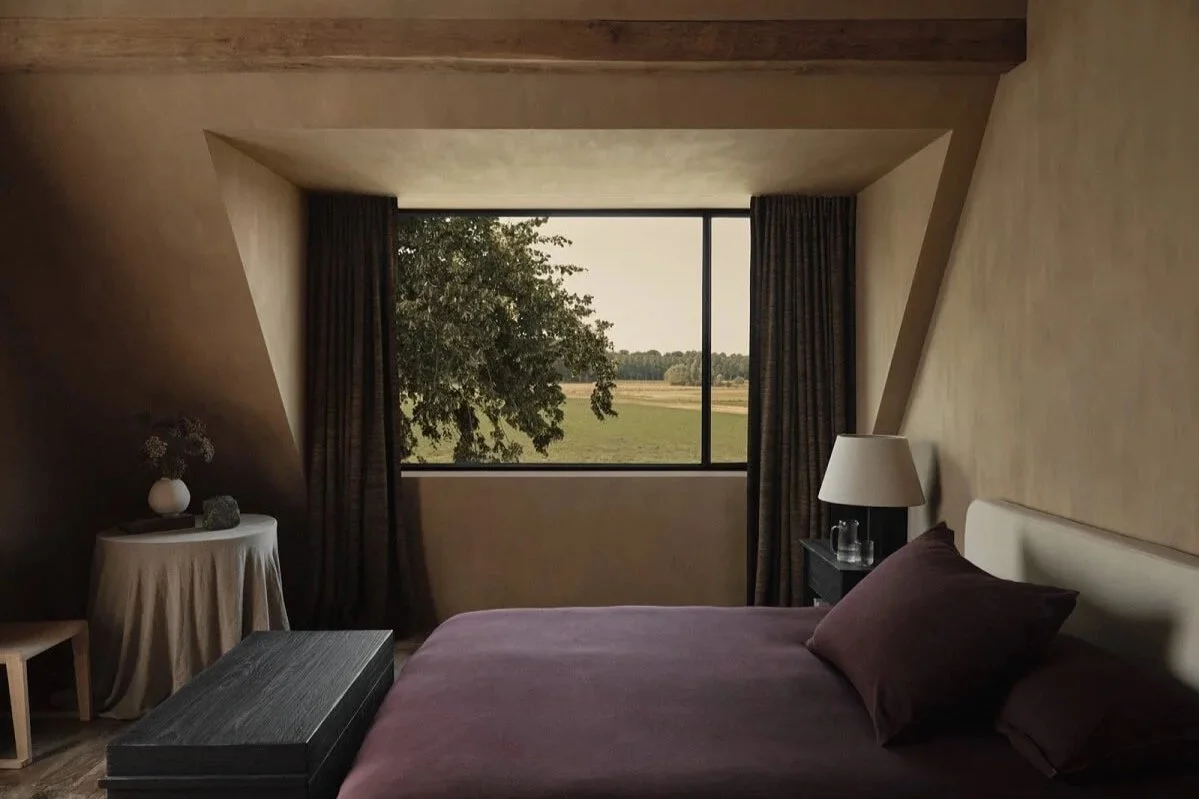
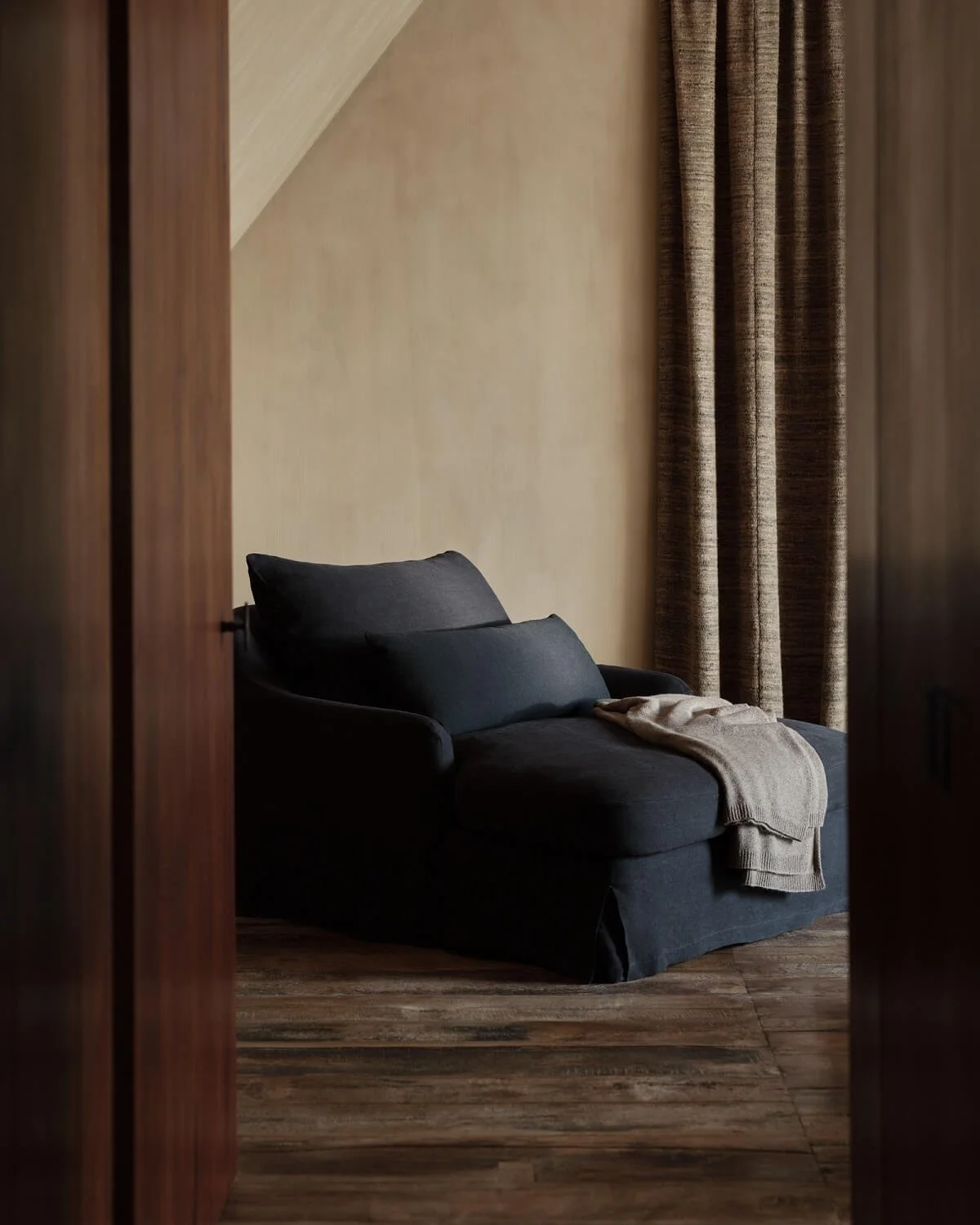
You see it in bedrooms wrapped in plaster-toned walls and heavy curtains that soften daylight instead of amplifying it. In living rooms where furniture sits low and grounded, upholstered in linen or wool rather than leather or lacquer. In homes where the palette barely changes, yet nothing feels flat because material does all the work.
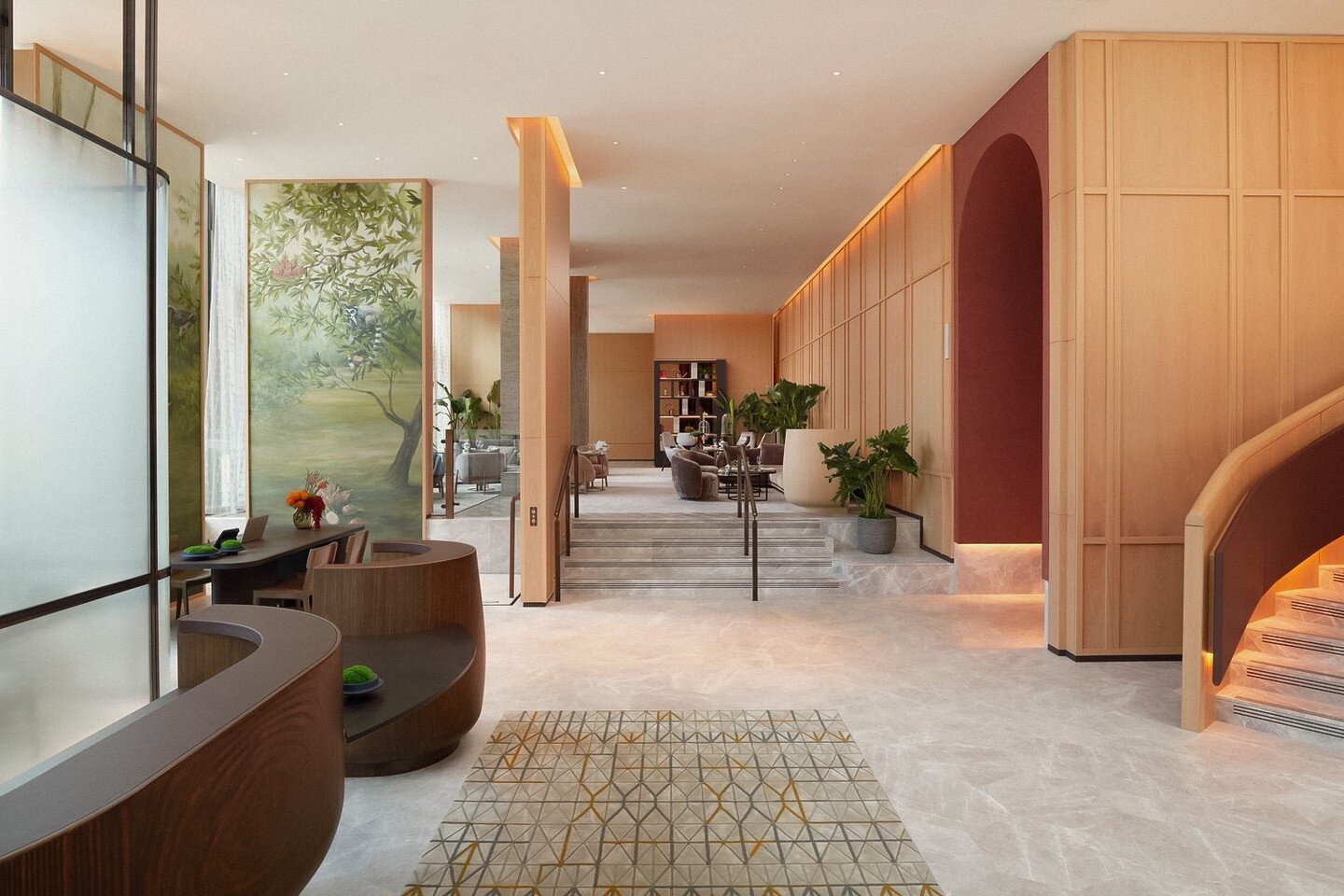
Once you notice it, you see it everywhere. It shows up first in architect-designed homes and remote hideaways — places that have long understood the value of restraint — and then, more recently, in the way brands such as Zara Home are styling their interiors. The emphasis has quietly shifted towards texture, softness and ease, rather than overt design statements. Even mainstream collections have stopped shouting. Atmosphere now carries more weight than impact, and rooms are increasingly designed to absorb life rather than compete with it.
How to Create That Quiet, Without Redecorating Everything
This look isn’t built through dramatic changes. It comes from a handful of quiet decisions — the kind that don’t announce themselves, but compound over time.
Lower the light before you change anything else.
Calm rooms are rarely brightly lit. Pull back overhead lighting, lean into lamps, let corners fall into shadow. Softness does more than brightness ever will.Repeat one tone, rather than adding contrast.
Choose a colour family — stone, oat, clay, warm grey — and let it run through walls, textiles and furniture. The eye relaxes when it doesn’t have to keep adjusting.Let furniture feel settled, not styled.
Pieces should look comfortable before they’re arranged. Sofas you want to sink into. Beds that don’t need perfect cushions. Nothing that needs explaining.Edit surfaces, but don’t empty them.
Fewer objects, left in place. A ceramic bowl that always lives on the table. Books that aren’t rearranged weekly. Space becomes part of the design.Use texture instead of decoration.
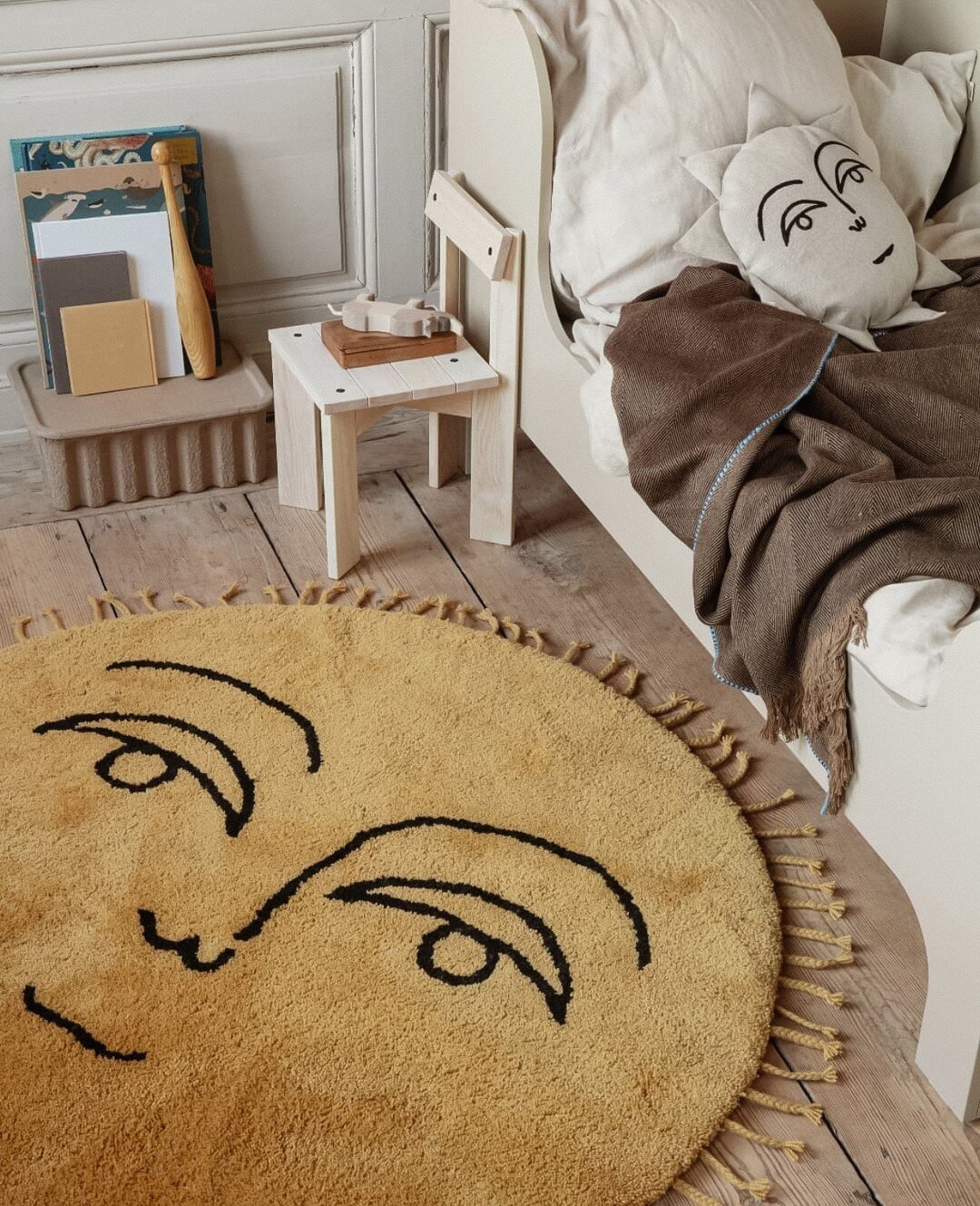
Linen that creases. Wood with visible grain. Matte finishes over gloss. Interest without noise.
It’s the same atmosphere-led thinking explored in our feature on creating warmth through small, intentional changes— where light, texture and restraint quietly do the heavy lifting instead of statement design.
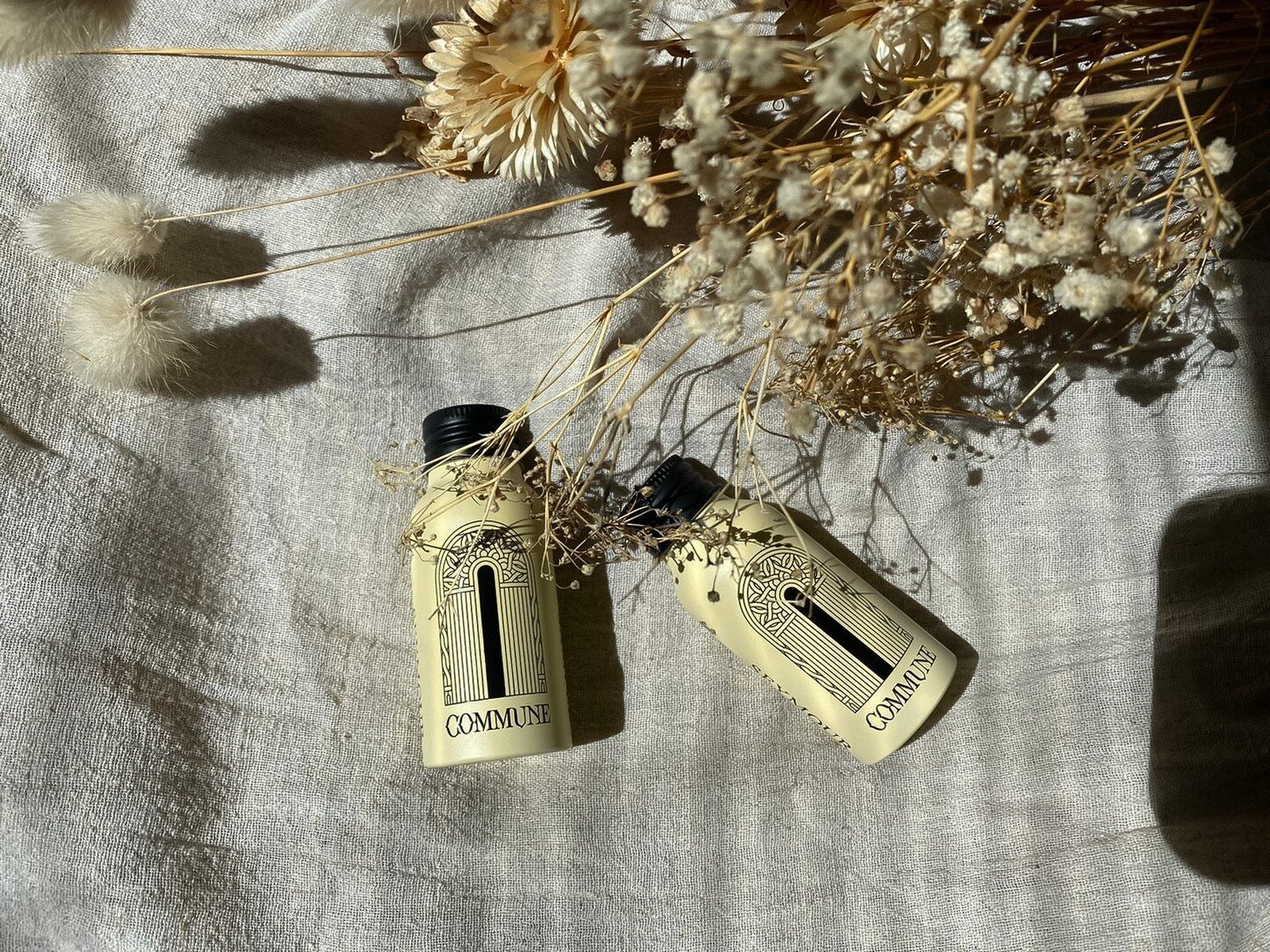
What often gets overlooked is the sensory layer that finishes the picture. Homes that feel calm tend to smell consistent rather than seasonal — one familiar note carried from room to room instead of a rotation of competing candles. Sound matters too. Music that sits in the background. Softer acoustics. Even silence, allowed to exist without being filled.
None of this requires a renovation. It’s built through subtraction, repetition and a willingness to let things fade into the background.
Which may be why it feels so appealing right now.
In a world that’s visually loud and permanently demanding attention, a home that doesn’t ask much of you has become quietly aspirational. Not empty. Not bland. Just resolved.
And once you’ve lived with that kind of calm, it’s very hard to go back to rooms that keep asking to be noticed.