The Supplements Experts Think Are Worth It — And The Ones They’d Skip
The science behind your supplement shelf may be shakier than you think.

Everywhere you look right now, somebody is telling women they should probably be taking another supplement.
Not sleeping properly? Magnesium. Bloated? Probiotics. Want better skin? Collagen. Feeling “sluggish”? Greens powders. Gym three times a week? Electrolytes. Worried your diet is not perfect? Multivitamins. Somewhere along the line, being a relatively healthy adult started to require the organisational system of a minor pharmaceutical warehouse.
Modern wellness has quietly normalised the idea that ordinary human experiences — stress, ageing, busy schedules, tiredness, occasional bloating — are all signs we are lacking something. And the supplement industry has become extraordinarily good at selling the solution.
Historically, supplements existed to solve fairly obvious nutritional problems. Vitamin D helped prevent rickets. Folic acid reduced birth defects during pregnancy. B12 became important for restrictive diets. They were targeted interventions for genuine deficiencies or specific life stages. Now, however, supplementation has drifted into something much bigger: a billion-pound optimisation culture where healthy people are encouraged to “stack” powders, capsules and gummies daily in pursuit of better sleep, better digestion, better hormones, better skin, better energy, better everything.
Yet behind the slick packaging and confident wellness claims, the science is often far less clear-cut.
Probiotics
Take probiotics. For years, they have been sold as the neat little solution to modern gut health: bloated, sluggish, inflamed, stressed? Add bacteria. Problem solved. The reality is considerably less straightforward.
The microbiome is not one fixed thing. It is deeply personal — shaped by diet, sleep, stress, antibiotics, environment, genetics, even the people you live with. Which is partly why many leading researchers remain cautious about the idea that one capsule can universally “optimise” gut health for millions of completely different people.
And that caution matters because probiotic supplements have exploded long before the science has fully caught up.
Professor Tim Spector, epidemiologist and co-founder of ZOE, has repeatedly spoken about the importance of plant diversity and fermented foods for gut health, while being notably more measured about probiotic supplements themselves. Some strains may help in specific situations. But for everyday gut health, many microbiome researchers still believe the stronger evidence sits with diverse plant intake and fermented foods rather than expensive capsules marketed as universal solutions.
The gut microbiome contains trillions of microorganisms interacting in ways scientists are still trying to fully understand. Which is partly why many researchers remain sceptical of one-size-fits-all probiotic claims. A supplement that may help one person could do very little for another.
In many cases, eating a wider variety of plants and fermented foods may currently have stronger evidence behind it than relying on expensive daily probiotic supplements.
Which raises a slightly awkward question for the wellness industry: if the strongest evidence still keeps circling back to varied diets and fermented foods, why are so many healthy people spending hundreds on capsules science itself is still trying to fully understand?
Multivitamins
If probiotics are the cool girls of the supplement world, multivitamins are the dependable beige Volvo estate permanently parked in Britain’s wellness culture. Not exciting. Not glamorous. Just quietly sitting there beside the kettle making people feel vaguely responsible.

The logic sounds sensible enough: modern diets are imperfect, life is busy, vegetables are expensive, therefore surely taking “a bit of everything” every morning can only help?
The reality is less convincing.
For the average healthy adult eating a reasonably varied diet, many experts believe multivitamins are often more reassurance than revolution. Unlike targeted supplementation for a diagnosed deficiency, a broad multivitamin can quickly become a kind of nutritional comfort blanket — something that feels productive without necessarily changing very much underneath.
Historically, multivitamins made more sense in situations where diets genuinely lacked nutritional variety. But increasingly, research has struggled to show dramatic long-term benefits from daily multivitamin use in otherwise healthy populations.
There is also the slightly chaotic reality of how many people now supplement. A multivitamin in the morning. Magnesium before bed. Electrolytes after reformer Pilates. Greens powder because lunch was beige. Suddenly people are consuming overlapping combinations of nutrients without really knowing what they actually need — or whether they need any of it at all.
And while many supplements are probably more wasteful than dangerous in moderate amounts, “wellness” does not automatically mean harmless. Some fat-soluble vitamins can accumulate in the body in excessive doses over time, while certain supplements can interfere with medications or cause digestive side effects when taken unnecessarily.
Somewhere along the line, wellness stopped asking what healthy people genuinely need and started quietly implying that more must always be better.
Creatine
Creatine has spent years trapped in a branding crisis. For a long time, it belonged almost exclusively to bodybuilders, elite athletes and men carrying alarming quantities of chicken breast in Tupperware. Which is precisely why many women ignored it. Creatine sounded less like wellness and more like something shouted across a gym floor by somebody called Brad.
That may have been a mistake. Because while large parts of the supplement industry are built on murky evidence and extremely confident marketing, creatine is quietly emerging as one of the few supplements where the science is becoming genuinely difficult to dismiss.
And unlike many trend-led wellness products, creatine is not new. It has been researched for decades.
Originally studied for athletic performance and muscle strength, creatine helps the body produce quick energy at a cellular level — particularly during high-intensity activity. But researchers are now looking far beyond bodybuilding. There is growing interest around creatine’s role in recovery, muscle preservation, healthy ageing, cognitive function and even hormonal health in women.
That matters because muscle is not just about aesthetics. It plays a major role in metabolic health, mobility, blood sugar regulation, bone protection and overall resilience as we age. Women naturally lose muscle mass over time, particularly during and after perimenopause, when hormonal changes can accelerate declines in strength, recovery and energy.
Which is partly why creatine is suddenly being discussed far outside gym culture. Some emerging research has also explored possible benefits around mood, brain health and cognitive resilience in women — particularly during periods of hormonal fluctuation, stress and sleep disruption.
There is also increasing interest in creatine’s potential role in brain ageing and neurodegenerative disease research. Scientists are now studying whether creatine’s effects on brain energy metabolism could eventually have implications for conditions involving cognitive decline, including Alzheimer’s disease and dementia. The research is still early and far from definitive — nobody sensible is claiming creatine is some sort of miracle anti-dementia supplement — but it is another example of how far the conversation has moved beyond simply “gym performance”.
Which makes the supplement’s recent wellness rebrand all the more interesting. Scientists have been researching creatine quietly for decades. The wellness industry, meanwhile, has suddenly rediscovered it through a very different lens: minimalist blush-pink packaging, “women’s wellness” messaging and prices that mysteriously double the moment a supplement becomes aesthetically acceptable to leave beside a Smeg kettle.
In reality, many experts point out that standard creatine monohydrate — the boring, unglamorous form used throughout most clinical research — is generally considered perfectly adequate for most people interested in trying it. Not the £68 “female wellness blend” with added mushroom powders and branding designed to look good on Instagram stories.
Collagen
Collagen is the supplement equivalent of a very expensive beige trench coat. Elegant branding. Soft lighting. Women stirring it into coffee as though they are one scoop away from reversing 15 years of stress, children and central heating.
Unlike some supplements sold almost entirely on vibes and wellness buzzwords, collagen is a real structural protein. It helps support skin, joints, tendons, bones and connective tissue, and natural collagen production does decline with age — particularly in women during and after menopause.
The problem is that collagen supplements are often marketed as though drinking a powder somehow sends fresh collagen directly to your face like an internal injectable appointment.
Biology, unfortunately, is less obliging. Once consumed, collagen is broken down into amino acids during digestion. The body then decides where those building blocks are needed. There is no internal memo reading: “Urgent priority: nasolabial folds.”
And while some studies have suggested collagen supplementation may modestly improve skin hydration and elasticity over time, many experts point out that the results are often less dramatic than the wellness industry would prefer — and importantly, not necessarily permanent.
Because even where people do notice improvements, the effects are generally linked to continued supplementation. Stop taking collagen and those benefits may gradually disappear too. This is not a one-time renovation project. It is more like renting slightly glowier skin by subscription.
Interestingly, many researchers and clinicians actually seem more persuaded by collagen’s potential role in joint support, recovery and healthy ageing than by some of the more extravagant beauty claims surrounding it.
Magnesium
Magnesium has become wellness culture’s answer to almost everything. Can’t sleep? Magnesium. Stressed? Magnesium. Anxious? Magnesium. Tired? Magnesium. Headache? Magnesium. Breathing incorrectly during Mercury retrograde? Somebody on TikTok is probably already recommending magnesium glycinate for that too.
At this point, the supplement has developed the sort of reputation normally reserved for a trusted family solicitor.
Unlike many wellness trends, however, magnesium is at least grounded in something real. Magnesium is an essential mineral involved in hundreds of processes throughout the body, including muscle function, nerve signalling, energy production and sleep regulation.
“The body is not a handbag you can endlessly stuff with extra products in the hope of improving it.”
The problem is that somewhere along the line, magnesium moved from “potentially helpful in certain situations” to “universally required by every exhausted woman with WiFi”.
Some evidence does suggest magnesium supplementation may help support sleep quality and relaxation in certain people, particularly those with low intake or mild deficiency. But the internet has a habit of taking “there is some promising evidence here” and transforming it into “everyone urgently needs three sachets before bed”.
Most people buying it also have absolutely no idea there are different forms doing different things. Magnesium citrate? Often associated with digestion. Magnesium glycinate? Typically marketed more around sleep and relaxation. Magnesium oxide? Cheap, common and not always especially well absorbed.
And despite the wellness mythology surrounding it, magnesium is not universally calming. Some people genuinely find it helpful for sleep and muscle relaxation. Others report feeling restless, wired or experiencing digestive side effects depending on the form and dose. Which is partly why the increasingly simplistic “everyone needs magnesium” narrative starts falling apart fairly quickly in real life.
Electrolytes
Electrolytes may be the supplement world’s fastest modern glow-up. A few years ago, they were largely associated with marathon runners, elite athletes and people recovering from stomach bugs. Now they are somehow being stirred into Stanley cups by perfectly healthy adults sitting at laptops in air-conditioned kitchens.
Wellness culture has managed to rebrand basic hydration into a personality trait. Minerals like sodium, potassium and magnesium genuinely help regulate fluid balance, nerve signalling and muscle function. If you are running marathons, exercising intensely for long periods, sweating heavily or recovering from illness, replacing electrolytes absolutely matters.
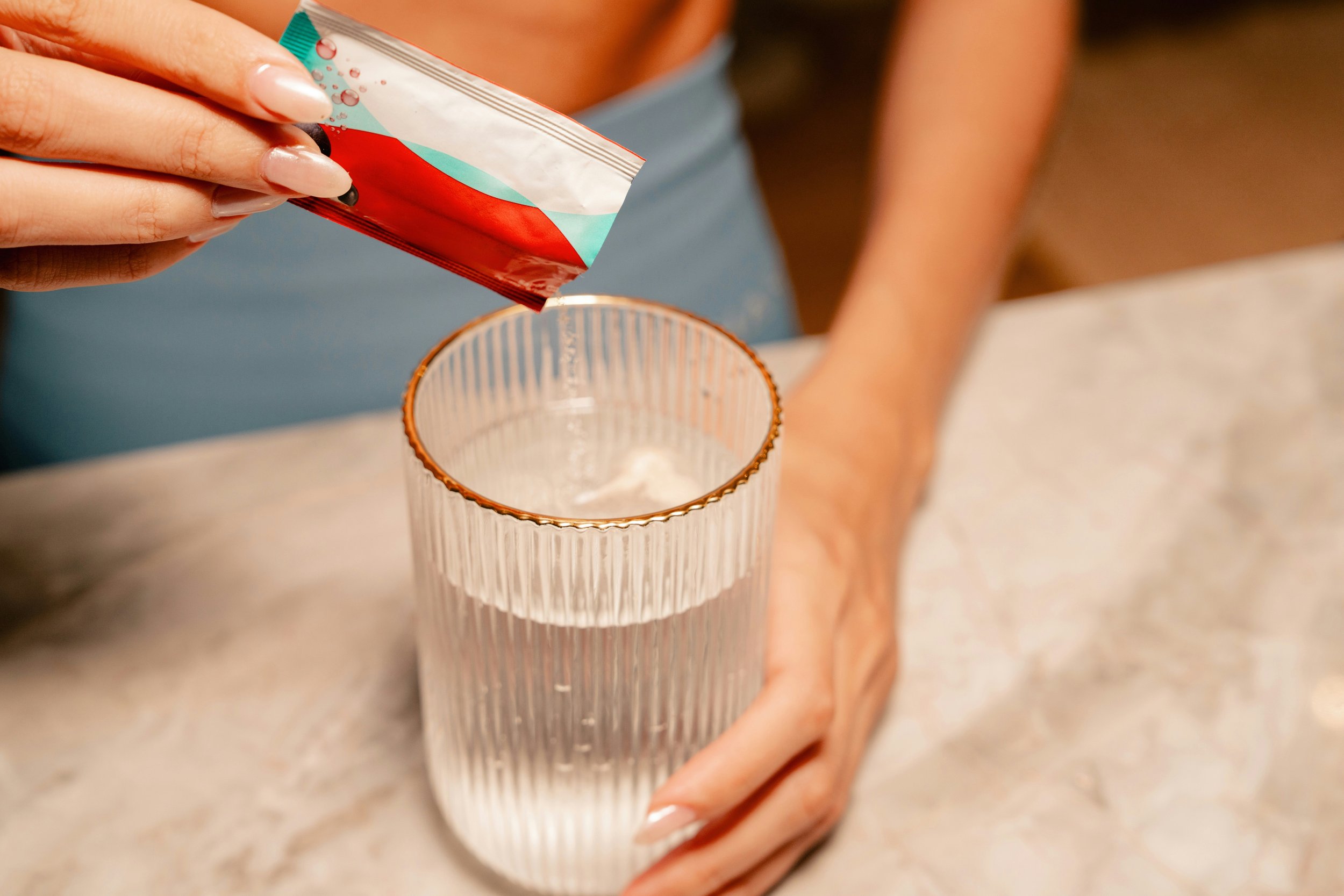
The problem is that the average person doing a moderately aggressive reformer Pilates class has somehow been convinced they require fluorescent hydration sachets with the urgency of an endurance cyclist crossing the Sahara.
And lately, electrolyte marketing has evolved again. It is no longer just about workout recovery. Now the promise is “beauty hydration” too — glowing skin, plumper skin, “hydrated from within”. Somewhere along the line, drinking water quietly stopped being enough on its own.
There is some logic underneath this. Proper hydration absolutely matters for skin function overall. But wellness culture has a habit of taking a fairly ordinary biological truth and escalating it into the idea that everyone requires daily designer electrolyte sachets for “skin optimisation”.
Vitamin C
Vitamin C has somehow achieved the wellness equivalent of diplomatic immunity. Unlike trendier supplements that come and go with the speed of a TikTok aesthetic, vitamin C has maintained a permanent reputation as something that simply must be good for you. Feeling run down? Flying? Somebody in the office sneezed vaguely in your direction? Suddenly people are dry-scooping orange tablets like Victorian sailors preparing for sea.
Vitamin C genuinely matters. It supports immune function, collagen production and cellular protection, and historically severe deficiency caused scurvy — which remains one of history’s more dramatic nutritional PR disasters.
But modern supplement culture rarely deals in moderation. Many healthy adults are now unknowingly stacking vitamin C repeatedly throughout the day: multivitamin in the morning, greens powder at lunch, electrolyte sachet after reformer Pilates, extra vitamin C “for immunity” before bed. Nutritional Russian dolls.
And unlike some vitamins, vitamin C is water-soluble, meaning the body generally excretes excess amounts once basic needs are met. Which is partly why many experts remain unconvinced that high-dose daily supplementation is doing very much for otherwise healthy people eating reasonably balanced diets.
The evidence around vitamin C is also far less dramatic than wellness marketing sometimes suggests. While it may slightly reduce the duration of colds in some situations, research has not consistently shown that mega-dosing healthy adults suddenly turns them into biologically superior winter survivors.
Fibre Supplements
Fibre has now undergone the full wellness rebrand. Once associated mainly with digestive health leaflets in GP waiting rooms, it is now discussed on TikTok under terms like “fibre maxxing”, usually by people aggressively stirring beige powders into water while explaining that most adults are “critically under-fibred”.
And to be clear, fibre genuinely matters. Adequate fibre intake is linked to gut health, digestion, blood sugar regulation, cholesterol management and broader metabolic health.
The slightly ironic part is that modern wellness trends may be partly responsible for why so many people are lacking fibre in the first place.
For years, large parts of diet culture aggressively demonised carbohydrates while simultaneously glorifying ultra-high protein intake. Keto, low-carb eating and endless protein-focused products quietly pushed many people away from fibre-rich foods like oats, beans, lentils and whole grains — precisely the foods gut health researchers now keep enthusiastically recommending.
Now, having spent years fearing sourdough, people are being sold expensive fibre supplements to compensate for diets wellness culture itself helped create.
And while fibre supplements absolutely can have legitimate uses in certain medical or digestive situations, many experts would argue that for the average healthy person, regularly needing a fibre supplement may actually be a sign to look more closely at the diet itself.
There is something surreal about an industry spending years convincing people to fear oats and lentils, only to later sell them fibre back in minimalist packaging.
Greens Powders
Greens powders are what happen when wellness culture decides chewing has become inefficient. Once upon a time, people simply ate spinach. Now adults are spending £85 a month on powdered “daily greens” that taste faintly like someone blended lawn clippings with monk fruit sweetener and hope.
The pitch is undeniably seductive: all the nutrients, plants and antioxidants of an aggressively healthy lifestyle compressed into one aesthetically pleasing scoop.
Many contain vitamins, minerals and plant compounds. Some may help fill nutritional gaps for people whose diets are genuinely lacking in variety. The problem is that wellness marketing increasingly presents them as equivalent — or even superior — to actual vegetables. Because despite the branding language around “gut support”, “cellular nutrition” and “detoxification”, greens powders are not magical concentrated forests. They cannot fully replicate the complexity of eating diverse whole plants containing fibre, water, textures and thousands of interacting compounds researchers are still trying to understand.
Perhaps the real genius of the greens powder industry is not convincing people to eat more vegetables. It is convincing people that vegetables themselves are somehow no longer sufficient unless they have first been dehydrated, pulverised and transformed into something called “Daily Cellular Greens”.
Vitamin D
Vitamin D is probably the supplement wellness culture least invented out of thin air. Unlike collagen powders and “metabolic greens”, there are genuine public health reasons why vitamin D supplementation became widespread — particularly in countries like the UK, where sunlight disappears for half the year and everybody develops the emotional complexion of Victorian literature by February.
Vitamin D plays an important role in bone health, calcium regulation and immune function, and low levels are relatively common in populations with limited sunlight exposure. Severe deficiency can absolutely cause real health problems, particularly around bone weakness and conditions like rickets.
Which is why vitamin D sits in a more medically legitimate category than many trend-led supplements.
But even here, the science becomes murkier once wellness culture starts oversimplifying it.
Because over the past few years, vitamin D has increasingly been marketed almost as a universal wellness upgrade — linked online to everything from immunity and mood to fatigue, longevity and disease prevention. And while correcting a genuine deficiency may absolutely improve symptoms in some people, researchers remain far less convinced by the idea that high-dose vitamin D automatically transforms healthy adults into biologically superior humans.
There has also been growing debate around overtesting, oversupplementation and whether low vitamin D is sometimes being treated as the cause of poor health rather than simply a marker of it.
Because perhaps the strangest part of modern supplement culture is how quickly “wellness” became psychologically associated with harmlessness. More magnesium. More vitamin D. More powders. More optimisation. More stacks.
But the body is not a handbag you can endlessly stuff with extra products in the hope of improving it. Supplements are still biologically active substances — and increasingly, experts are warning that the assumption that “more can’t hurt” is not always as benign as wellness culture likes to suggest.