Have We Been Expecting Too Much From Turmeric?
Turmeric became wellness's golden child. But does the science support its reputation?

If wellness culture could design the perfect ingredient, it would probably look a lot like turmeric.
Ancient enough to feel wise. Natural enough to feel virtuous. Backed by enough scientific studies to sound convincing, yet complex enough that most of us would never dream of reading them. Add in a history stretching back thousands of years and a starring role in one of the world's oldest systems of medicine, and turmeric had all the makings of a wellness superstar long before it found its way into a supplement bottle.
Over the past decade, it has been credited with helping everything from inflammation and aching joints to brain fog, heart health and healthy ageing. It has appeared in capsules, powders, gummies, shots and lattes. At times, it has felt less like an ingredient and more like a wellness celebrity, acquiring a new benefit every few months and attracting the sort of attention usually reserved for a blockbuster skincare launch.
The appeal was obvious. Here was something that appeared to offer the best of both worlds: thousands of years of traditional use alongside a growing body of modern scientific research. For consumers increasingly interested in natural approaches to health, it was an irresistible story. The question is whether the science ever promised quite as much as the marketing suggested.
To answer that, it helps to understand why scientists became interested in turmeric in the first place.
“Somewhere between Ayurveda, the laboratory and a billion-pound supplement industry, turmeric acquired a reputation few ingredients could realistically live up to.”
Much of the excitement centres on curcumin, one of turmeric's most studied active compounds. Researchers discovered that curcumin appeared capable of interacting with some of the body's inflammatory signalling pathways. That might sound rather technical, but the reason it generated so much excitement is surprisingly simple.
Inflammation has become one of wellness's favourite buzzwords, often spoken about as though it is something we should eliminate altogether. In reality, inflammation is one of the body's most important defence mechanisms. It helps us fight infection, repair injuries and respond to threats. Without it, we'd be in serious trouble.
Problems arise when inflammatory activity becomes excessive or remains elevated for long periods of time. Researchers found that curcumin appeared capable of influencing some of the chemical signals involved in these processes, raising the possibility that it could help regulate inflammatory responses in certain circumstances.
The implications were potentially enormous. Chronic inflammation has been linked to conditions ranging from osteoarthritis and cardiovascular disease to type 2 diabetes and cognitive decline. If curcumin could influence some of these pathways, researchers wondered whether it might have applications across a surprisingly broad range of health concerns.
Study after study followed. Turmeric was investigated for joint pain, metabolic health, cardiovascular health, brain function and healthy ageing. If wellness culture loves anything, it is the possibility that one ingredient might help several things at once. Turmeric was practically irresistible. Unfortunately, biology has a habit of ruining a good wellness story.
Where The Story Gets More Complicated
One of the biggest challenges facing turmeric research is that curcumin is notoriously difficult for the body to absorb. Scientists call this bioavailability. In simple terms, a compound can look incredibly impressive in a laboratory, but if very little of it reaches circulation after being consumed, translating those findings into meaningful real-world benefits becomes considerably more difficult.
This is where the story starts to split in two. On one side sits traditional turmeric use. For thousands of years, turmeric has been used throughout India, both in cooking and within Ayurveda, one of the world's oldest systems of medicine. Importantly, Ayurveda never viewed turmeric as a miracle cure capable of solving every health concern on its own. It was one component within a much broader philosophy that included diet, movement, sleep, digestion, herbs and lifestyle practices. On the other side sits the modern supplement industry.
As scientific interest in curcumin grew, so did efforts to increase its absorption. Black pepper extract, often listed as piperine, became a common addition because it can dramatically increase bioavailability. New delivery systems followed. Concentrated extracts became increasingly sophisticated.
The irony is that turmeric may have become less straightforward the moment we started trying to improve it. That does not mean supplements are ineffective. In fact, some of the strongest evidence surrounding turmeric remains genuinely encouraging.The most convincing research currently exists around osteoarthritis and joint pain. Multiple reviews and meta-analyses suggest that certain curcumin formulations may help reduce pain and improve physical function in people with osteoarthritis. This is one of the reasons researchers remain interested in turmeric despite the ongoing debates. Beyond that, however, the picture becomes considerably less clear.
Turmeric has been investigated for everything from blood sugar regulation and cardiovascular health to cognitive function and healthy ageing. Some studies have produced promising findings. Others have found little effect. Many are relatively small or use different formulations, making comparisons difficult.
Supporters point to the growing body of research and argue that turmeric's long history of use, combined with modern scientific interest, suggests there is clearly something worth paying attention to. Critics counter that laboratory findings are frequently presented as proven health benefits and that some claims have travelled considerably further than the evidence itself.
What makes turmeric so difficult to judge is that both arguments are often looking at different versions of the same ingredient. One is talking about turmeric as it has traditionally been used for centuries. The other is talking about highly concentrated curcumin supplements designed to maximise a specific compound. They are related, but they are not quite the same thing.
There is also another question that receives far less attention than whether turmeric works. Can you have too much?
For most people, turmeric used in cooking is considered very safe. Concentrated supplements are a different discussion. High-dose curcumin supplements can cause digestive upset, may interact with medications including blood thinners and, in rare cases, have been linked to liver injury. Turmeric also contains oxalates, which may be a consideration for those prone to kidney stones. This is where modern wellness's favourite habit comes into view.
We have a tendency to assume that if something is beneficial, more must be even better. More protein. More collagen. More exercise. More supplements.Yet health rarely works that way.
Too little exercise is not ideal. Too much exercise is not ideal either. Rest matters. Spending your entire life on the sofa is not the answer. The same principle applies to many aspects of wellbeing. Somewhere along the line, wellness stopped asking how something might support health and started asking how much of it we could fit into a capsule.
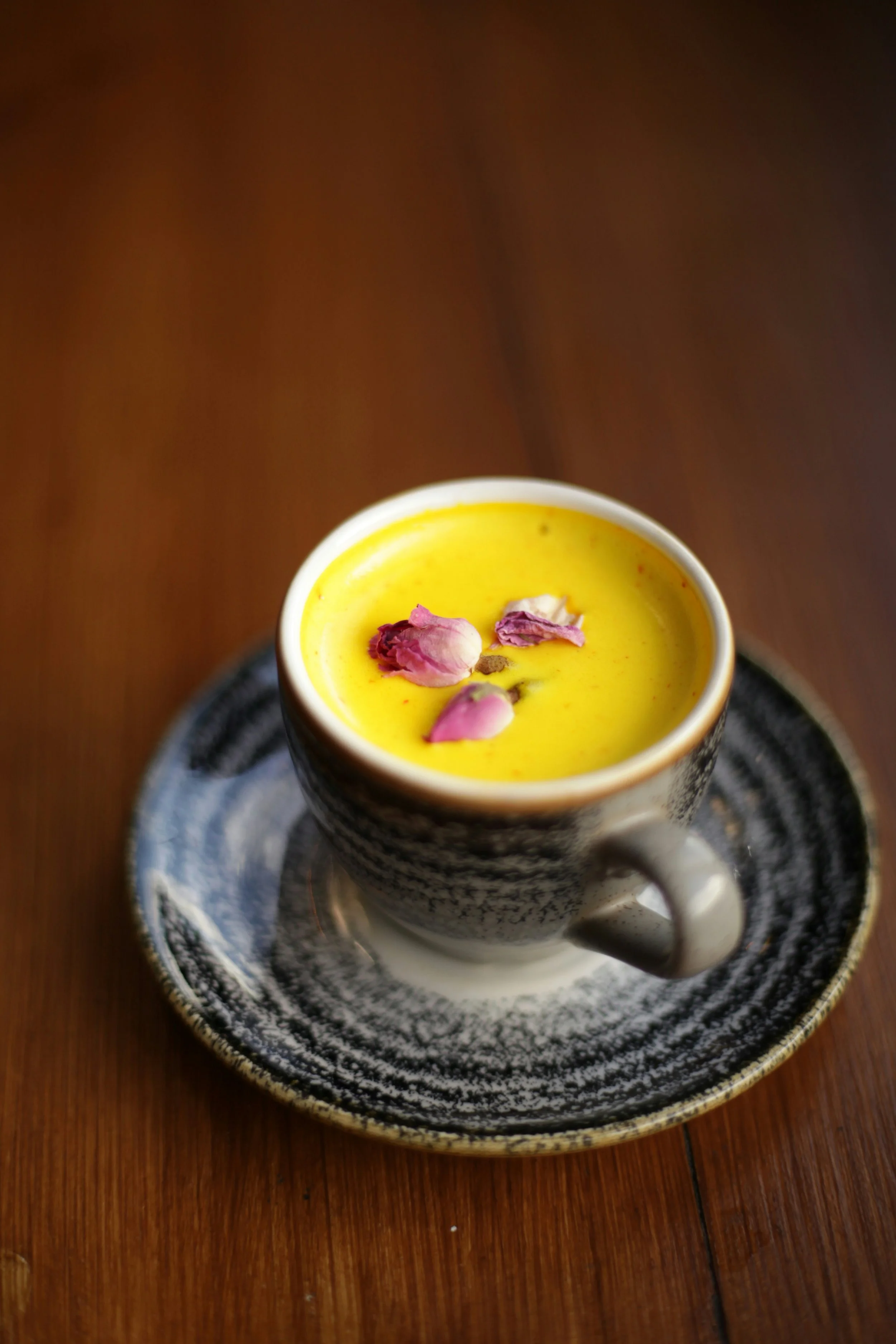
So, should you take turmeric? If you enjoy cooking with it, there is little reason not to. It adds flavour, colour and antioxidant compounds to the diet, and forms part of food traditions that have endured for centuries.
If you are interested in Ayurvedic approaches to wellbeing, turmeric has a long history worth exploring. What is often forgotten is that Ayurveda never treated turmeric as a miracle ingredient. It was one component within a broader approach to health that also considered diet, lifestyle, movement, sleep and digestion.
This is where turmeric's traditional history and its modern supplement story begin to diverge. For people interested in joint health and osteoarthritis, certain curcumin supplements appear genuinely promising. For many of the broader claims surrounding brain health, longevity and disease prevention, the science is considerably less convincing.
After all the headlines, supplement launches and increasingly ambitious health claims, the answer may be surprisingly ordinary. Turmeric appears to be beneficial in much the same way many antioxidant-rich foods are beneficial. Not because it performs miracles, but because it may support health as part of a wider pattern of habits. That may not be the story the wellness industry wanted. It is, however, the one the evidence currently supports.