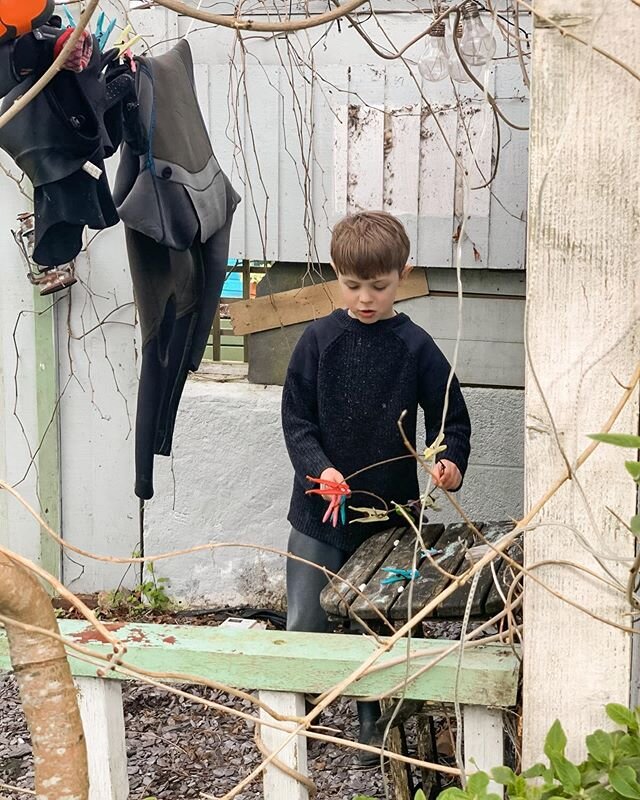
When a child will only accept one person, it changes everything.
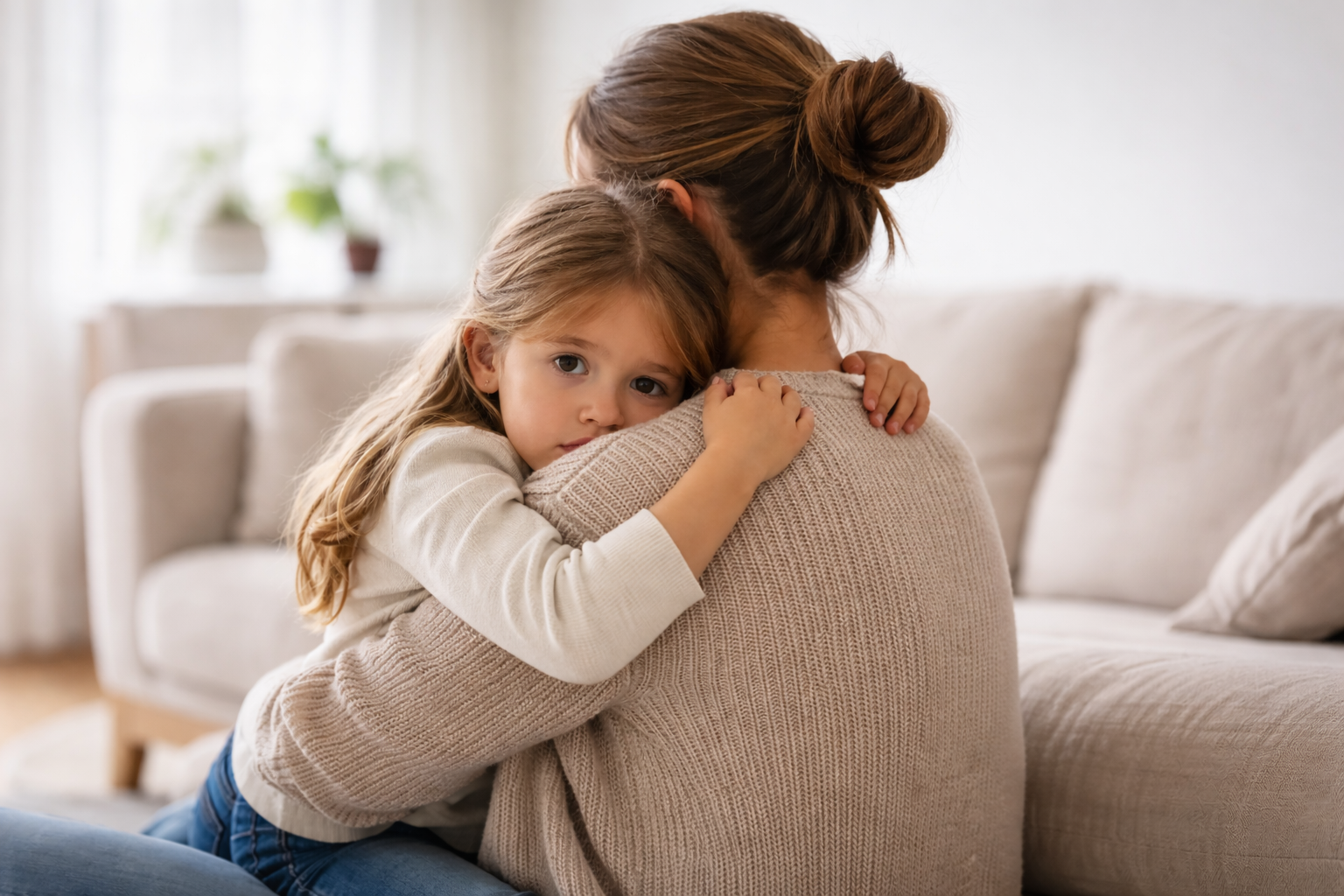
There’s clingy — and then there are Velcro kids. The ones who don’t just want comfort, but want you. Who might cope perfectly well as long as you’re the one nearby, but won’t entertain a babysitter, a handover, or the idea that someone else might step in. Sometimes it looks physical — wanting to be close, attached, present. Sometimes it’s emotional — refusing comfort from anyone else, holding it together only if you’re still the anchor. More often, it’s a shifting mix of both, depending on the moment.
What defines a Velcro child isn’t proximity. It’s exclusivity. This kind of exclusive attachment rarely appears in isolation. It often sits alongside quieter signs of emotional overload — the kind we explored in The Soft-Signs Guide: How to Spot When Your Child Is Reaching Their Limit — long before behaviour becomes disruptive or obvious.
And that exclusivity comes with consequences that are rarely acknowledged. One parent becomes the constant. The default. The one who doesn’t really get a break. Attempts to widen the circle don’t result in mild protest, but real distress — the kind that makes “being firmer” feel not just ineffective, but actively cruel.
“What defines a Velcro child isn’t closeness. It’s exclusivity.”
From the outside, it’s often misunderstood. People assume boundaries haven’t been strong enough. That independence hasn’t been encouraged. That a tougher approach would sort it out. Parents living inside this dynamic know the opposite is often true: pushing harder doesn’t build resilience here — it escalates anxiety.
This is what people mean when they talk about Velcro kids. Not babies doing what babies are meant to do — but older children who are articulate, capable, bright, and still deeply reliant on one specific person to feel safe.
When Clinginess Stops Being a Phase
Most children move through clinginess in waves. It flares around change, peaks, then fades as confidence catches up. What feels different for many families now is the lack of resolution. The phase doesn’t pass. The reassurance doesn’t stick. Separation remains something to endure rather than tolerate.
Psychologically, this isn’t about behaviour or defiance. It’s about separation tolerance. Some children can feel secure even when a parent isn’t immediately available. Others find distance — even safe, ordinary distance — genuinely dysregulating.
For a growing number of children, that regulation has also become person-specific. One parent becomes the only acceptable anchor. Everyone else is rejected, not out of preference or manipulation, but because the child’s nervous system hasn’t yet learned that safety can exist in more than one place.
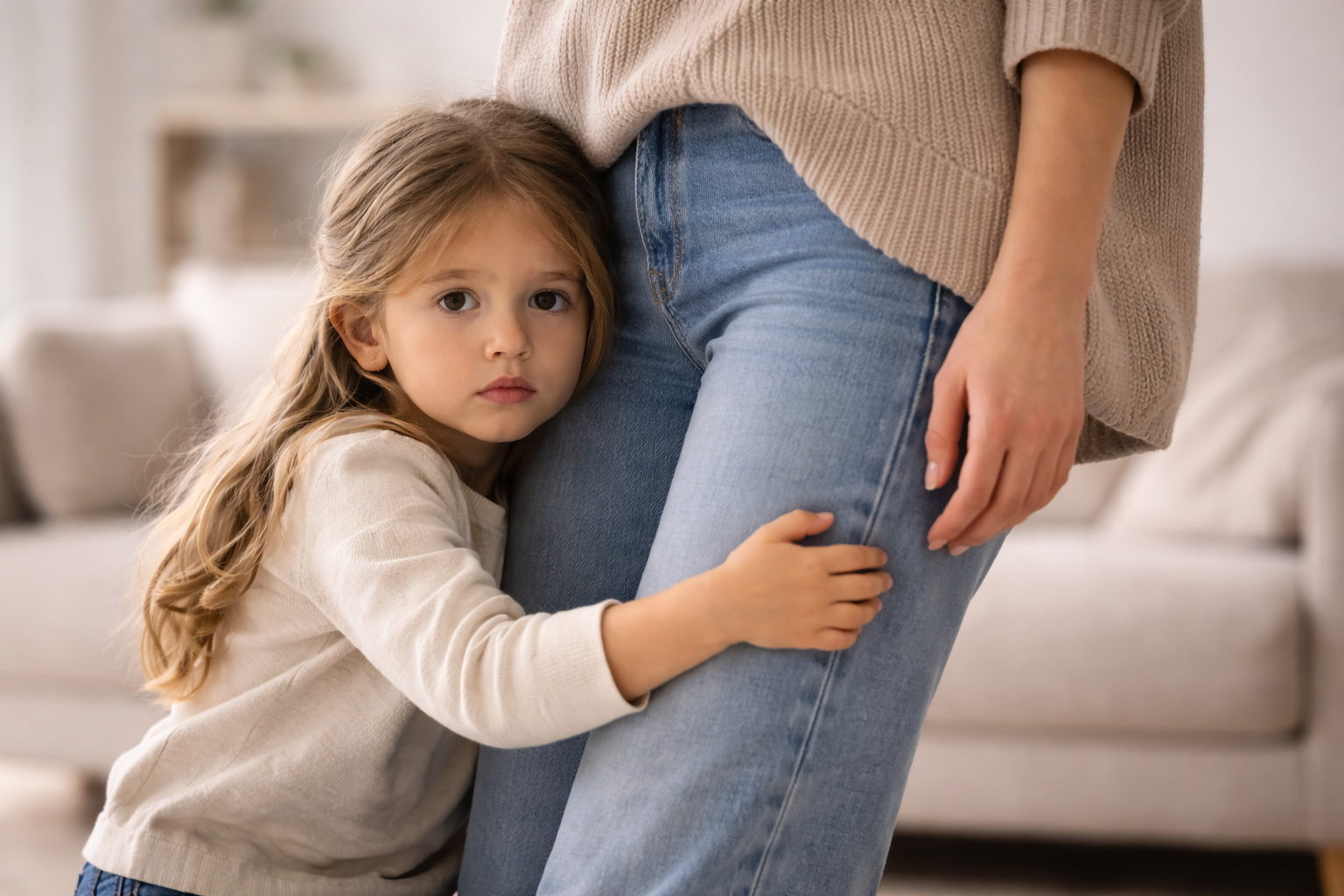
Context matters. Children born around the start of the pandemic experienced early years that were unusually narrow. Fewer caregivers. Fewer handovers. Less practice moving in and out of environments without a parent close by. Home wasn’t just the base — it was the whole world.
At the same time, adult stress was high. And children don’t need anxiety explained to absorb it. Nervous systems are shaped relationally long before they’re shaped rationally. None of this creates damage, delay, or a “COVID personality type” — but it does help explain why some children now struggle more than expected with separation. Certain developmental muscles simply had fewer chances to stretch.
This is also why framing Velcro kids as a school issue misses the point. When a child won’t accept a babysitter, won’t settle with another parent, won’t tolerate you leaving the room, the issue isn’t routine. It’s regulation.
What Helps — Without Making It Worse
The instinct, understandably, is to push. Firmer boundaries. Bigger separations. A sense that by six, this should already be sorted.
But Velcro kids don’t loosen their grip when closeness is threatened. They loosen it when safety widens.
What tends to help isn’t removal, but transfer:
practising separation in small, predictable doses, rather than emotional leaps
letting other adults share comfort before responsibility
being explicit that your bond isn’t at risk — “I come back” matters more than “be brave”
framing others as additional safe places, not replacements
And just as importantly, resisting the urge to see this as something you’ve created. Children who cling intensely aren’t failing to grow up. They’re asking for proof — repeated, lived proof — that distance doesn’t mean disconnection.
Some children scatter their attachments early. Others anchor deeply before they branch out. That difference isn’t a verdict. It’s temperament meeting timing.
And for parents carrying the quiet weight of being the only acceptable person: this phase is exhausting, yes — but it is also responsive. With patience, predictability, and time, Velcro kids do loosen.
Not because they’re pushed.
But because they finally believe it’s safe to let go.