When a Child Won’t Go to School, It’s Rarely the Whole Story
For many children, school refusal isn’t about school at all — it’s about feeling unsettled somewhere else.
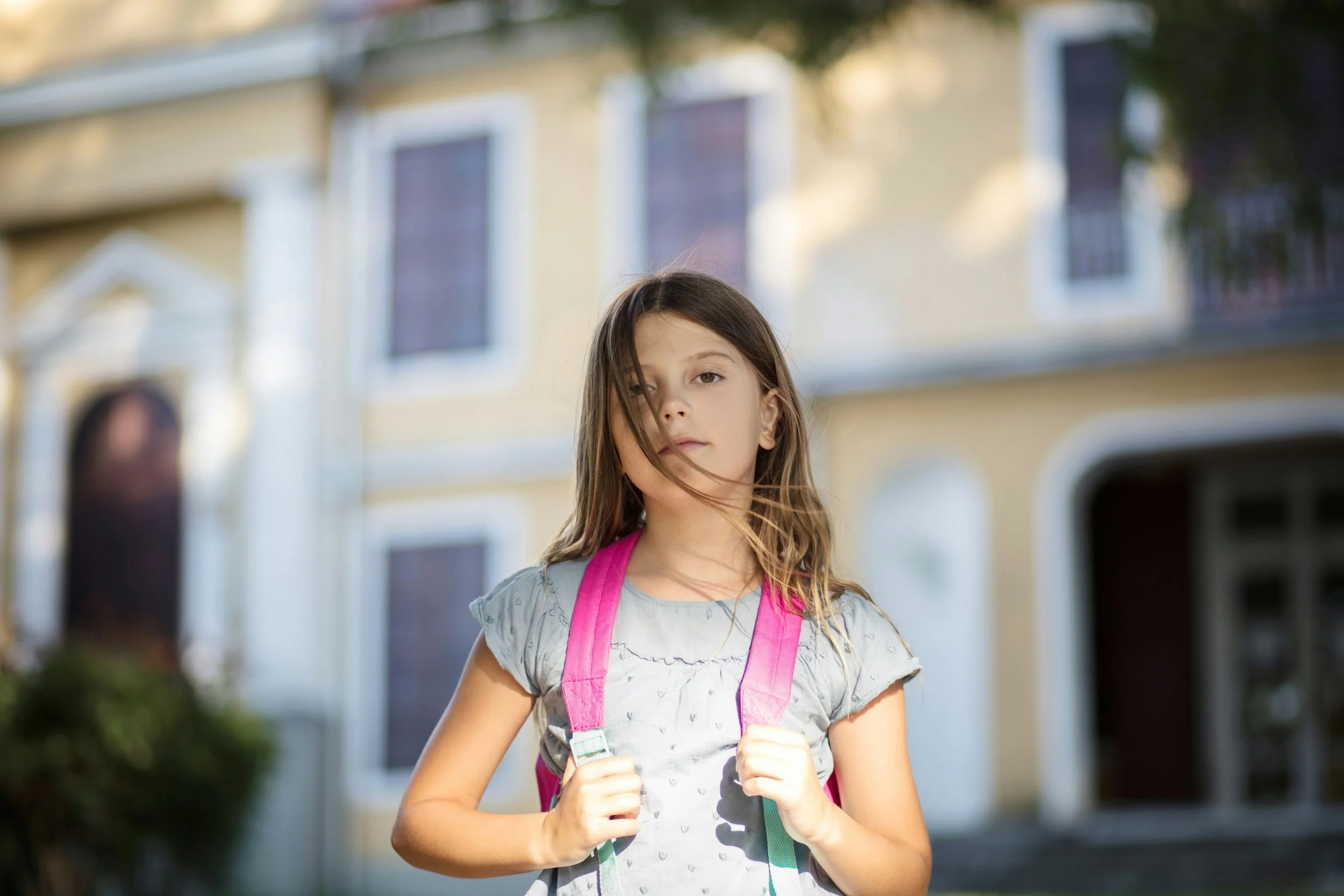
Some mornings, nothing makes sense. Your child was fine yesterday. They went in, coped, even seemed happy enough. And today they’re on the floor, sobbing, unable to put their shoes on — or still in bed, saying they simply can’t go.
You run through the mental checklist at speed. Too much screen time? Not enough sleep? A fall-out with friends? Something you missed? And underneath it all, the quiet fear: if I handle this wrong, I’ll make it worse.
This is the moment many parents find themselves in long before they ever hear the term school refusal.
When a child won’t go to school, it’s natural to assume school is the problem. It’s the visible pressure point — the place that demands separation, performance and coping; the thing that turns a manageable morning into a crisis. And sometimes, that instinct is absolutely right.
“School refusal isn’t a diagnosis. It’s a signal.”
Unmet needs, social pressures, sensory overload, bullying, academic stress, or an environment that doesn’t feel safe can all make school genuinely unmanageable for a child. When that’s the case, it matters — and it needs addressing.
But school isn’t always the origin of the distress. Often, it’s simply where something else finally surfaces.
School refusal isn’t a child being naughty, manipulative, or difficult. It isn’t a lack of resilience. And it isn’t a parenting failure. More often, it’s a signal that a child’s internal world feels out of balance — and school is where that overwhelm lands because it’s where the demand is clearest.
Children don’t experience life in neat categories. They don’t separate home stress from school stress, or emotional strain from daily routine. They absorb everything quietly, then react where the pressure feels sharpest. Which is why refusal can follow things parents don’t always connect to school at all.
For many families, refusal appears after a period of cumulative strain rather than a single, obvious trigger — house moves or prolonged periods of living in transition, ongoing uncertainty, and big changes that adults are managing but children are still absorbing.
Sometimes it’s the arrival of a new sibling, a parental separation, or the death of a grandparent. Sometimes it’s ongoing building work, financial pressure, or months of not quite knowing what’s next. Changes that may feel manageable — even minor — to adults can feel enormous to a child whose sense of safety is still forming.
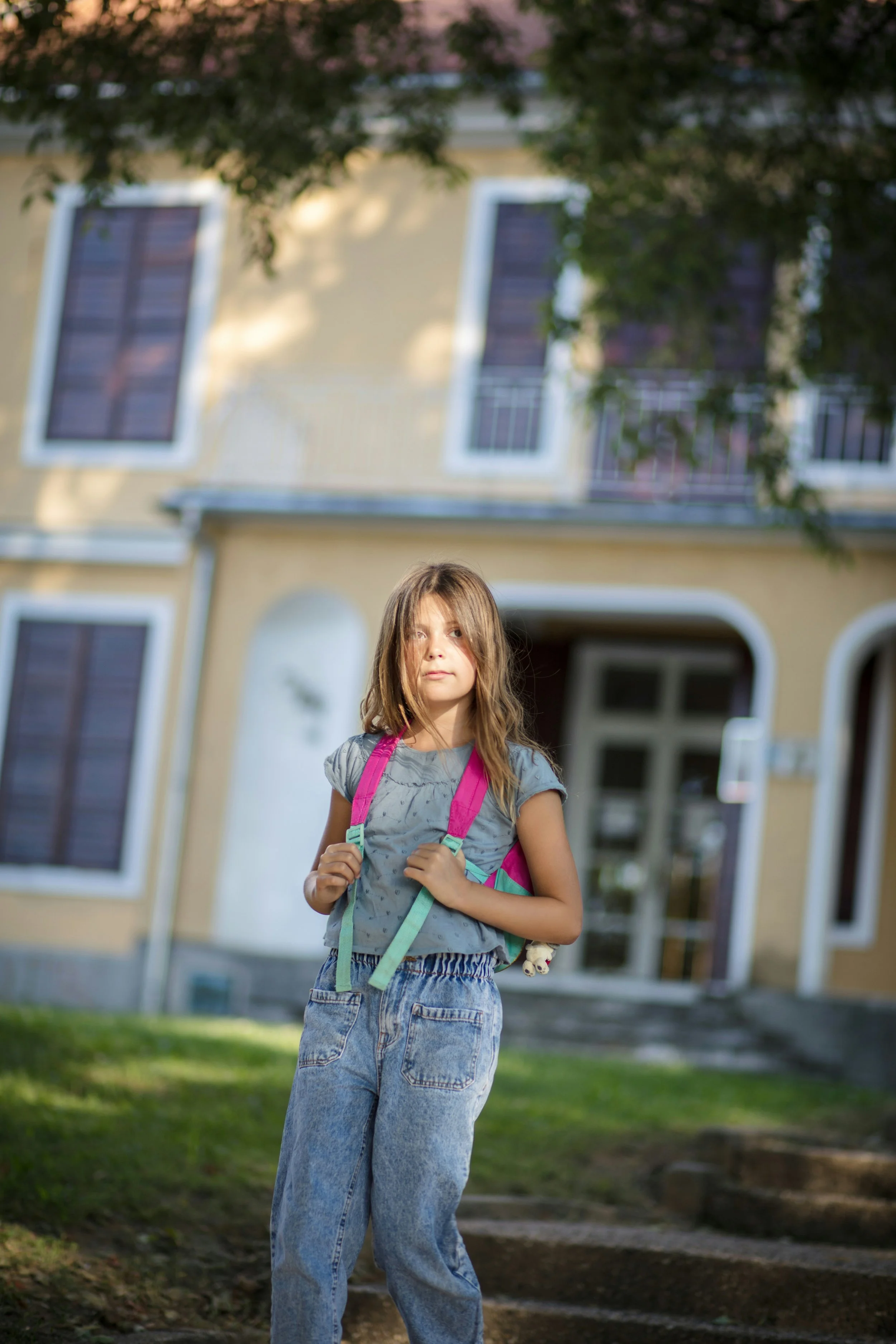
Often, parents are coping — functioning, managing, keeping things moving — even when something underneath has quietly shifted, a dynamic we explored in Are You Parenting Through a Functional Freeze?
Until it does.
Children are also exquisitely attuned to what’s happening beneath the surface. Tension between parents. Unspoken conflict. A household carrying stress while trying to function as normal. Children pick up on atmosphere long before they understand context.
They don’t have the language or understanding to make sense of it. They just register that something feels different — unsettled, uncertain. Without an explanation their nervous system can hold onto, that feeling becomes a low-level, constant alertness.
Anxiety, in this sense, isn’t about a specific fear. It’s about ambiguity. Something feels wrong, but they don’t know what it is or where it’s coming from. School, with its separation and demands, becomes the place where that underlying unease finally has somewhere to attach itself.
Last year, my then eight-year-old went through six months of school refusal. At its peak, he wasn’t just refusing school — he was refusing to leave the house at all, sometimes not even getting out of bed. Mornings unravelled into panic, distress that spilled over into kicking, screaming, even self-harm.
From the outside, it would have been easy to assume school was the problem. But it wasn’t.
At the time, we were building a house, moving between places, living with prolonged uncertainty about when — or if — we would finally be able to settle. Home didn’t feel fixed. Nothing felt predictable. And for a child, that kind of instability can quietly erode a sense of safety.
School became the place he could point to. What he was really struggling with was leaving — separation from us, stepping away from the one place that still felt steady when everything else was in flux.
When we finally moved into our home, something shifted. Not overnight, not neatly — but gradually. As life became more predictable, his distress softened. The refusal eased. The fear no longer needed a place to land.
What made this harder to recognise at the time was that he was a high-masking child. Calm. Capable. The one who seemed to cope — the child we worried about less. In hindsight, he wasn’t unaffected by the instability around him; he was containing it, holding it together quietly until he couldn’t anymore.
“Force can change behaviour briefly. It rarely resolves what caused it.”
And that’s the part parents so often miss: school refusal doesn’t always come from the child who struggles most loudly. Sometimes it comes from the one who appears to be coping best.
When a child refuses school, adults panic — understandably. Attendance matters. Patterns matter. No one wants avoidance to harden into something more entrenched. So force can feel like the responsible option.
And in the short term, it can work. It can get a child through the gates, create compliance. But force addresses behaviour, not fear.
Anxiety that isn’t understood or regulated doesn’t disappear — it gets suppressed. The body remembers. Pressure accumulates. And eventually, refusal resurfaces, often louder and more frightening than before.
Understanding refusal doesn’t mean never encouraging attendance, or keeping children at home indefinitely. It means recognising that regulation has to come before expectation. A nervous system that doesn’t feel safe can’t comply its way into calm.
School refusal isn’t a diagnosis. It’s a signal. And signals don’t always point where we expect them to.
Sometimes the most effective response isn’t fixing school, tightening routines, or doubling down on firmness — but gently stabilising the wider world first. Creating predictability. Reducing uncertainty. Rebuilding trust that leaving doesn’t mean losing what matters.
Children don’t refuse because they don’t care. They refuse because something feels too risky to step away from.
And when that fear is understood — not overridden — most children do find their way back. Not because they were pushed, but because they felt safe enough to go.