Polynucleotides are everywhere. Technique is the clever bit.

Polynucleotides have become one of those treatments everyone suddenly seems to know about.
The collagen boost, the fresher skin, the tiny bumps, the salmon DNA jokes — by now, the shorthand is familiar. What is less talked about is how much the treatment itself can vary depending on what you are actually trying to improve.
Because “better skin” is not one concern. Crepiness is not hollowness. Dark circles are not simply fine lines in worse lighting. And the neck, under-eyes, décolletage and lower face all come with their own anatomy, tissue quality and particular set of problems.
Which means the most useful conversation around polynucleotides is no longer simply whether they work, but how they are being used — and whether the treatment plan actually matches the skin in front of the practitioner.
Two Concerns, Two Approaches
Having already had a good experience with polynucleotides under my eyes, I decided to revisit the treatment — this time with a slightly more ambitious brief.
I booked a course of three treatments with Dr Jessica Western at Dr Leah’s clinic on Glentworth Street, just off Baker Street in London, with two very different concerns in mind.
The first was my neck, specifically the skin directly beneath the chin where things had started to feel less firm, a little drier and noticeably more crepey. Nothing dramatic, but enough to make me suddenly aware of an area I had previously given very little thought to.
The second was my under-eyes. I had already treated them around a year earlier using the traditional micro-papule technique, when the aim was mainly to improve the fine, crepey quality of the skin itself. This time, I wanted to tackle something different: the darker, slightly hollow look beneath the eyes that can make you appear permanently tired, even when you have managed the rare luxury of a decent night’s sleep.
I had tried tear-trough filler in the past and had no desire to repeat the experience, so I was interested in whether polynucleotides could improve the area without simply adding volume.
After talking through what I wanted to improve, Dr Western recommended two different approaches. For the neck, we decided on the traditional micro-papule method, placing multiple tiny injections directly into the skin. Under the eyes, she recommended a cannula instead, using a single entry point to distribute the product through the area in a different way.
Same injectable family, but a different route depending on the job.
What Happens in the Chair
Before anything starts, there is the inevitable numbing cream. Mine sat on for around 30 to 40 minutes, which is not the chicest part of the appointment but does make everything that follows considerably easier to tolerate.
The under-eye treatment itself was surprisingly quick. Dr Western made a small entry point on the upper cheek, then guided the cannula beneath the eye from there, distributing the product as she worked across the area.
There were a few moments when I could feel the pressure and movement under the skin — slightly strange, occasionally uncomfortable, but never enough to make me question my life choices. Because she was working through one access point rather than repeatedly injecting the area, the whole thing was over fairly quickly.
The neck had a completely different rhythm. Here, Dr Western used the micro-papule technique, placing multiple tiny injections across the neck, with particular focus beneath the chin. You feel more of the individual pricks, particularly in the more sensitive spots, but generally I found it very tolerable.
The difference between the two techniques is perhaps most obvious when you look in the mirror afterwards. Under my eyes, the cannula left me with some bruising and swelling, but nothing I felt particularly self-conscious about. I was perfectly happy to go out like that. Having previously had the micro-papule technique under my eyes, I can say with some confidence that I was considerably less keen to be seen in public then — raised bumps beneath both eyes are not especially responsive to concealer.
My neck wore the treatment rather more openly. The micro-papules leave those familiar raised dots and some redness, but the location makes the downtime surprisingly easy to manage. Hair down, a scarf, a polo neck — suddenly nobody needs to know you spent part of the morning being injected across your neck.
So while both techniques come with visible downtime, the type of downtime is very different. Bruising and swelling can usually be disguised; raised skin has its own agenda.
Why the best result starts with where the product goes
Sometimes the best things take a little longer to show up. Polynucleotides are not filler. There is no instant plumping, no dramatic before-and-after moment as you leave the clinic. Their appeal is slower and rather more sophisticated.
Once injected, they act within the tissue as a kind of supportive biological framework, helping create an environment in which fibroblasts — the cells responsible for producing collagen and elastin — can work more effectively. They also bind water, support the extracellular matrix and encourage the sort of repair and remodelling processes that gradually translate into skin looking firmer, smoother and generally better behaved.
In other words, nothing is being plumped into submission. The idea is to improve the quality of the skin itself, which is precisely why placement matters.
“The question is not which technique wins, but what you are actually asking it to do.”
With the micro-papule technique, tiny amounts are deposited directly into the dermis in a series of precise injections. Think of it as treating the skin point by point. It is particularly useful when the concern lives very much in the skin itself — crepiness, dehydration, fine texture and loss of elasticity.
The neck is a good example. The skin is thin, constantly moving and notoriously quick to advertise any drop in collagen. By placing the product directly into that superficial layer, the practitioner can target the skin itself very evenly and very deliberately.
The trade-off is fairly obvious once you have seen it in the mirror: those little deposits sit visibly beneath the skin for a while afterwards. Effective, yes. Discreet, absolutely not.
A cannula takes a different route. Rather than entering the skin again and again, the practitioner uses one small access point and guides a fine, blunt-ended tube through the tissue, allowing the product to be distributed more broadly across the area.
The important difference is not that a cannula is somehow stronger, more advanced or the deluxe version of the treatment. It is that it can work through a different tissue plane and spread the product across a wider area rather than concentrating it in lots of small superficial deposits.
That becomes useful when the concern is not simply the quality of the skin sitting on the surface.
Under the eyes, for example, what we casually call “tired” can actually be a rather complicated mix of thin skin, visible vessels, shadowing, hollowness and changes in the tissue beneath. If the main concern is fine crepiness, placing small amounts directly into the dermis makes sense. If the issue is more about hollowness, shadowing or treating a broader area beneath the eye, a cannula can allow the practitioner to work through a different plane and distribute the product more evenly through that space.
It is a little like tailoring: the fabric may be the same, but where you cut, shape and place it changes the result entirely. That is why the same area can quite legitimately be treated in two different ways at different times. The question is not which technique wins, but what you are actually asking it to do.
The verdict
Recovery was mercifully low-drama. By the following day, my neck had already settled considerably, with only a few small bruises marking some of the injection points. My face was a little puffier than it had been immediately afterwards, with some under-eye bruising, but nothing a decent concealer couldn’t negotiate with. By day four, everything was essentially back to normal.
We had planned to space the three treatments around six weeks apart, which was all very sensible until I broke my leg skiing between sessions two and three and temporarily lost the ability to walk. The final appointment therefore had to wait until I was mobile enough to get back to London, leaving closer to three months between the second and third treatments. Not the schedule we had planned, but hardly a deal-breaker.
However, it was during that rather unglamorous recovery period, after the second session, that I really started to notice the results. I was on crutches, recovering from surgery and generally feeling considerably less than my best, yet people kept commenting on my glow and asking what I had been doing to my skin — which, given what I do for a living, is not an entirely unusual question.
The funny thing was, I genuinely couldn’t place it. I had been hauled up on the sofa recovering and doing very little beyond the basics, so I kept thinking, I haven’t done anything. Then I remembered the polynucleotides.
That was probably the moment it clicked. The change had been gradual enough that I had not been watching for some dramatic reveal, but noticeable enough that other people were spotting it before I had properly joined the dots.
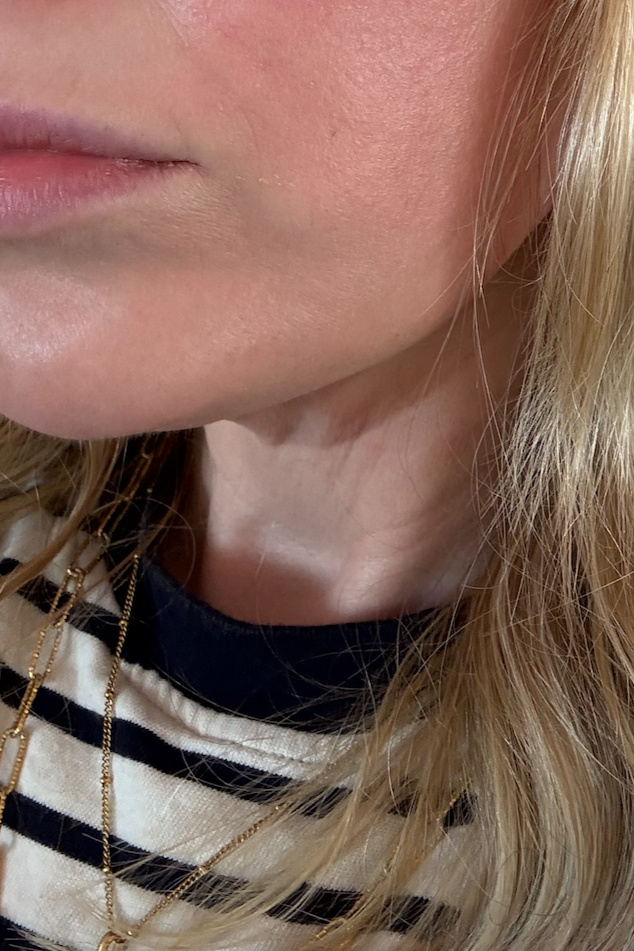
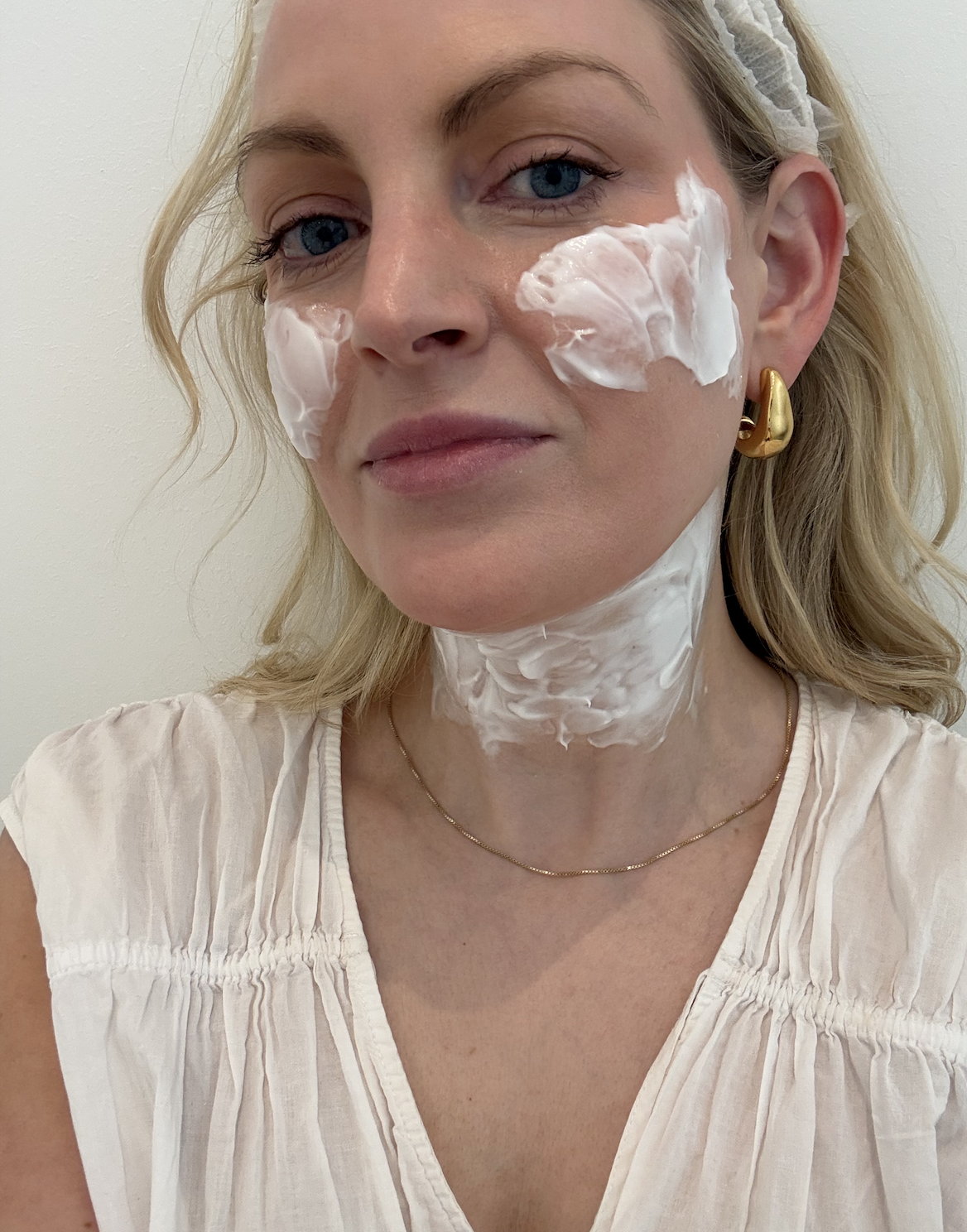
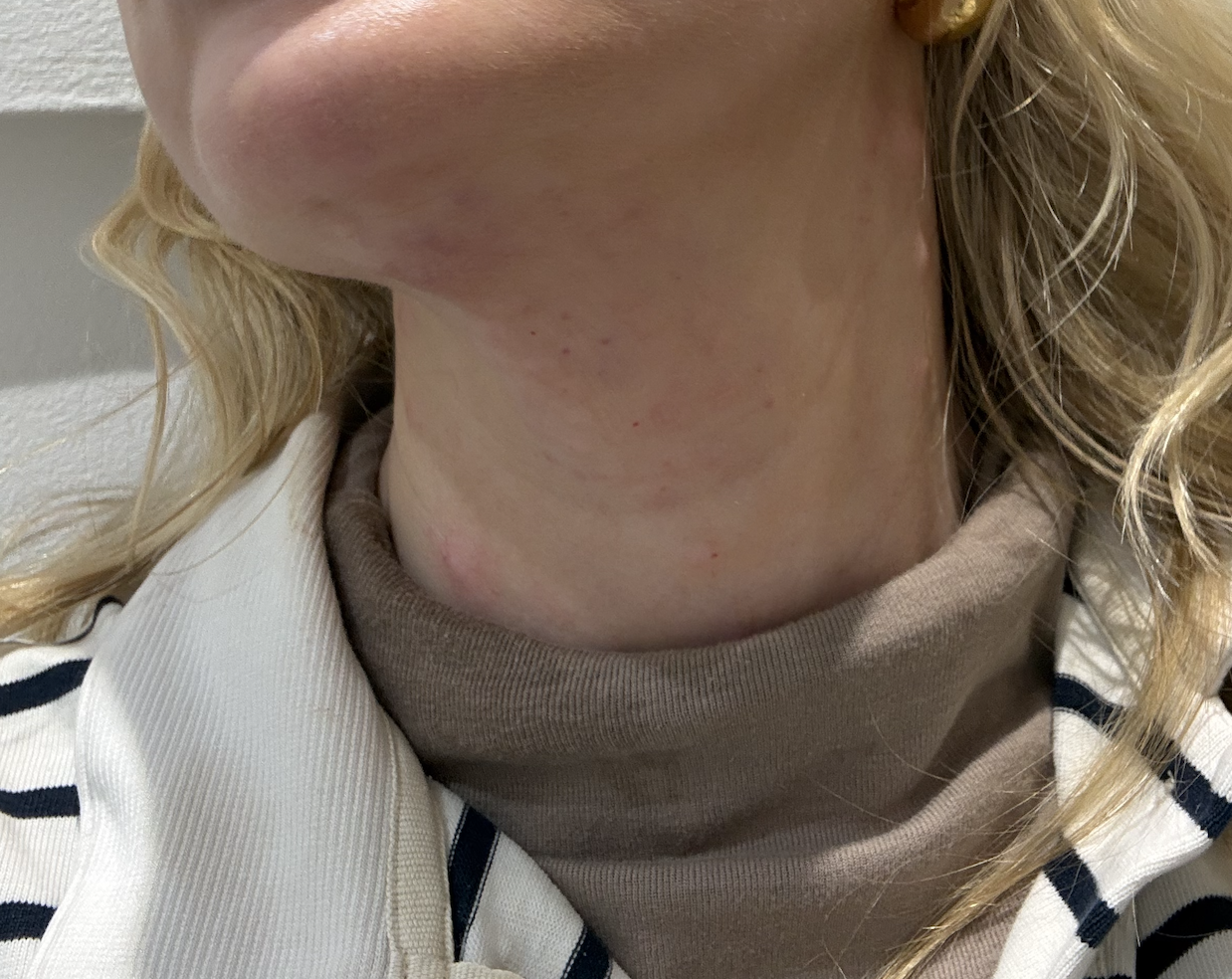
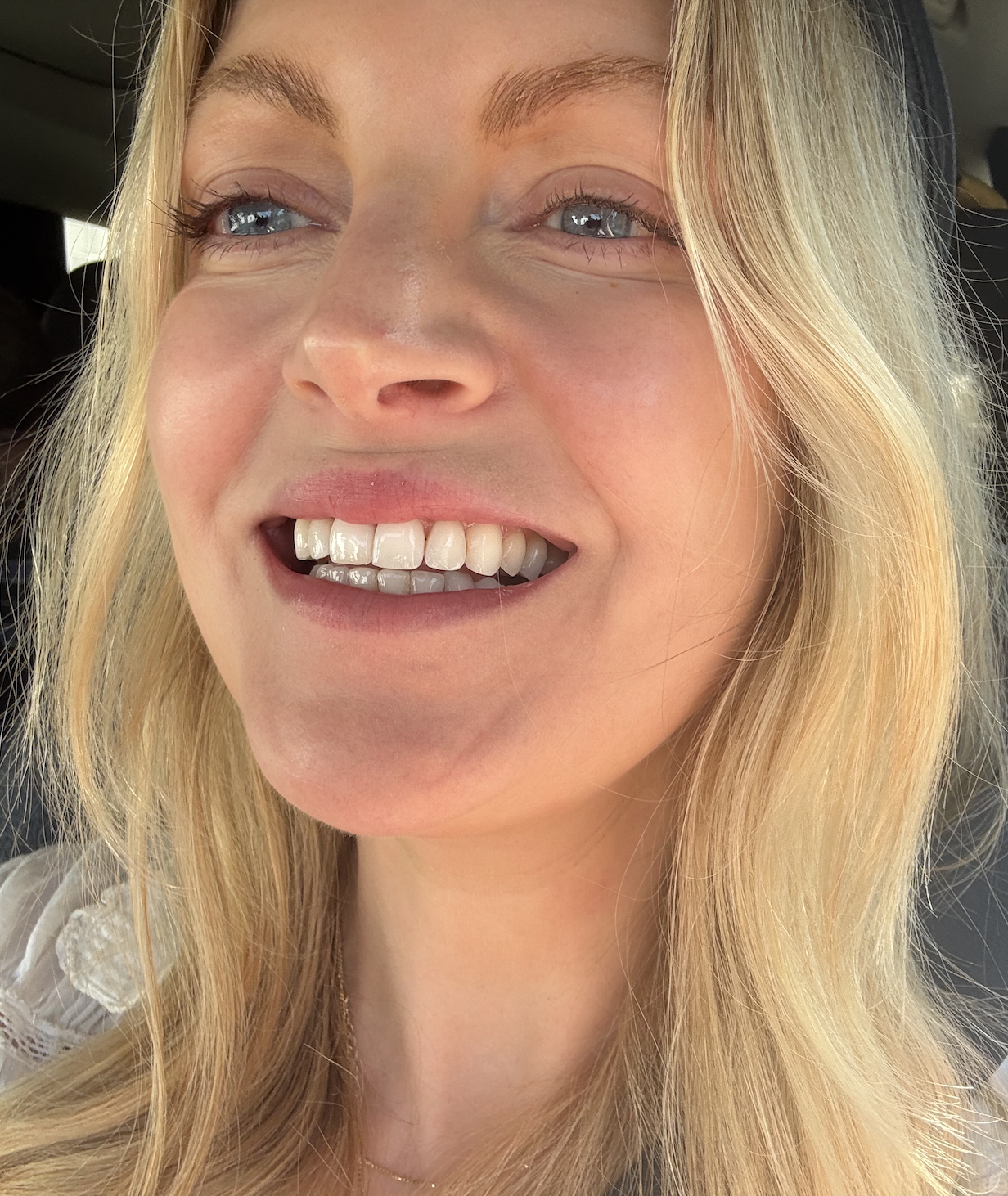
The neck was less likely to attract unsolicited compliments, for obvious reasons. Nobody is especially prone to stopping you mid-conversation to admire the skin beneath your chin. But this was actually where I saw the most impressive improvement.
The crepiness beneath my chin looked smoother, firmer and noticeably healthier — and I do not say that lightly. I have thrown a fairly serious treatment wardrobe at my neck over the years, from RF microneedling and laser to Profhilo, all with varying degrees of success. Yet for that stubborn patch of crepey skin, polynucleotides have made the biggest visible difference.
Under-eyes may be where polynucleotides get most of their beauty-column airtime, but in my case the neck rather unexpectedly stole the show.
There is one test I find particularly useful when reviewing treatments for a living: would I book it again if nobody was offering it to me?
I am fortunate enough to try a lot of treatments as part of my job, which makes spending my own money on one again a rather good measure of how much I genuinely rate it. In this case, the answer is very easy: yes.
Prices start from £850 for two vials of polynucleotides. To book a consultation or treatment, visit drleah.co.uk