Before You Buy Another Peptide Serum, Read This
Confused by peptides? Start with what you want your skin to do better.

From softening expression lines to supporting firmness, resilience and tired eyes, the peptide on the label matters rather more than the word splashed across the front.
Peptides have become the skincare equivalent of ordering wine in a restaurant: everyone nods knowingly, very few people really know what they’ve chosen, and the label is doing quite a lot of heavy lifting.
“Matrixyl and Argireline may share a family name, but they are doing very different jobs.”
Matrixyl, Argireline, copper peptides, signal peptides — suddenly your serum sounds less like skincare and more like something being tested in a lab with restricted access. Yet “contains peptides” is now treated as shorthand for firmer, smoother, younger-looking skin, as though they’re all quietly getting on with the same job. They aren’t. Different peptides are used for very different things, from helping skin retain its structure to softening the look of expression lines, helping the skin barrier or targeting specific signs of ageing.
And this is where the category gets far more useful. Rather than buying “a peptide serum” because the bottle sounds impressively scientific, it makes much more sense to look at the peptide itself and ask whether it matches what your skin needs. Loss of firmness, crepey under-eyes, deeper expression lines, a weakened barrier — they don’t all call for the same ingredient.
Consider this your peptide cheat sheet: what the main ones do, which skin concerns they make the most sense for, and the products that use them particularly well.
The Peptides Worth Knowing
Peptides are simply short chains of amino acids, the building blocks your skin uses to make proteins including collagen and elastin. In skincare, different peptides are designed to send different signals, which is why seeing the word “peptide” on a bottle doesn’t tell you very much. One might be there to help skin feel more substantial, another to soften expression lines, another to help with puffiness or resilience. Same family, very different personalities.
The trick is knowing which name to look for — because Matrixyl and Argireline may both be peptides, but they are not interchangeable.
Matrixyl — for firmness and fine lines
If your skin has started doing that deeply irritating thing where it looks perfectly fine until a rogue bathroom light catches a little more softness around the jawline than you remember signing up for, Matrixyl is worth knowing about. It belongs to a family of signal peptides designed to encourage the skin processes involved in maintaining collagen, making it particularly relevant when definition is slipping and fine lines are becoming rather more committed than they used to be.
This is not an overnight party trick. Matrixyl is far more about helping skin look smoother, firmer and better held over time — the sort of ingredient that quietly gets on with the job while flashier actives take all the credit.
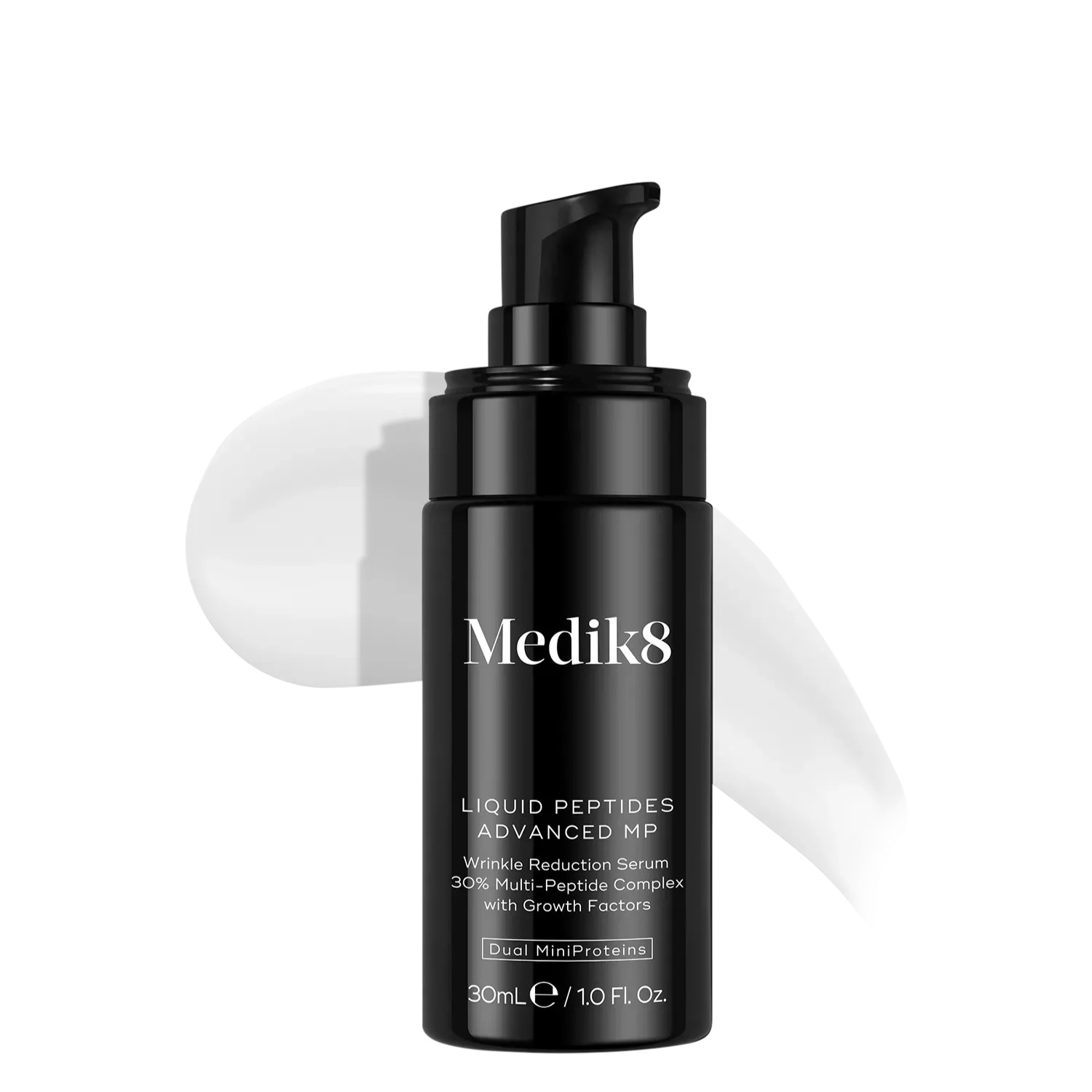
The one to try: Medik8 Liquid Peptides (£79)
Ten peptides in a 30% blend sounds faintly excessive, which in this case is part of the appeal. Matrixyl 3000 is joined by copper peptides and an expression-line peptide, so the formula is tackling fine lines, elasticity and overall skin quality rather than throwing everything behind one star ingredient. It also has none of the heaviness that can make serious skincare feel like a chore: silky, light and very easy to slot in between the products already fighting for bathroom-shelf space.
Argireline — for expression lines
Some lines arrive because collagen gradually declines. Others are essentially a running record of every smile, frown, squint and incredulous eyebrow raise you have made since your twenties. Argireline — acetyl hexapeptide-8, if we are using its Sunday name — belongs firmly in the latter camp.
It has long been associated with the slightly overexcited “Botox in a bottle” claim, although no serum is going to freeze a muscle in the way an injectable neurotoxin does. What Argireline does do is target the mechanisms linked with repeated facial contraction, which is why it tends to turn up in formulas aimed at forehead lines, crow’s feet and the creases that become increasingly reluctant to disappear when your face relaxes.
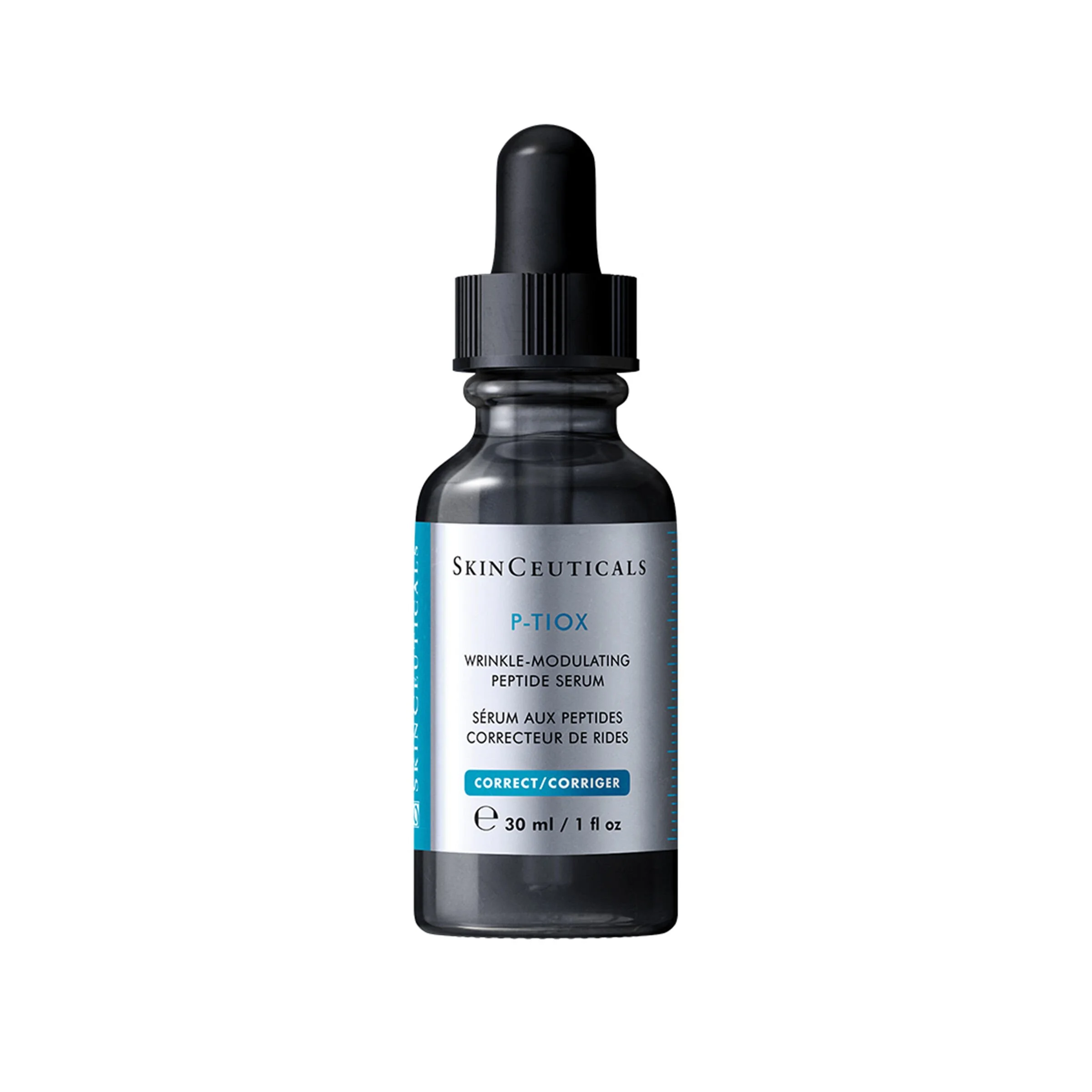
The one to try: SkinCeuticals P-TIOX (£135)
P-TIOX takes the expression-line idea and gives it considerably more polish. Acetyl hexapeptide-8 is paired with dipeptide diaminobutyroyl benzylamide diacetate — another peptide aimed at contraction lines — then PHA and niacinamide come in to tackle texture and radiance while they are there. The result feels less like chasing the fantasy of topical Botox and more like a clever serum designed for skin that moves, creases and would simply prefer those creases not to linger quite so enthusiastically.
Copper peptides — for resilience, elasticity and skin that is feeling a little tired
Copper peptides have developed the sort of cult following usually reserved for discontinued lipsticks and French pharmacy creams. Most commonly seen as GHK-Cu or a related form, they are used in skincare for their links with repair, regeneration and skin resilience, which makes them especially interesting when the issue is less one specific wrinkle and more an overall loss of strength, elasticity and that annoyingly youthful ability to bounce back from everything.
They also bring something slightly different to the peptide conversation. Rather than focusing purely on smoothing lines, copper peptides are more about improving the quality of the skin itself — particularly useful when it has started looking thinner, flatter or generally less robust than it once did.
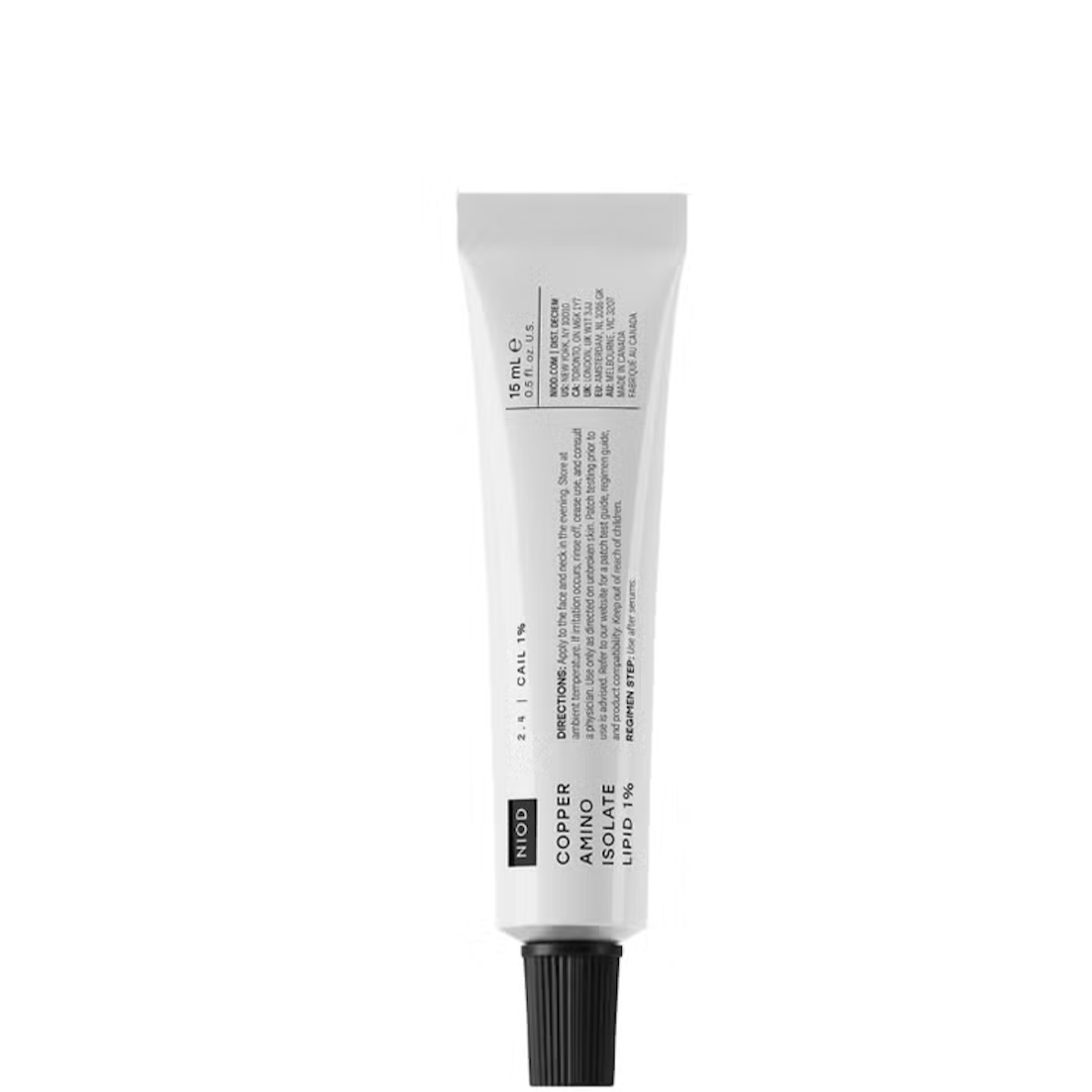
The one to try: NIOD Copper Amino Isolate Lipid 1% (£78)
NIOD does not exactly specialise in making skincare sound simple, but this one rewards the effort. Its Pal-GHK-Cu copper peptide is carried in a lipid-friendly gel designed to work with the skin barrier, while the richer texture gives mature or drier skin the sort of cushioning watery peptide serums can lack. It is very much an evening treatment rather than a quick splash-and-go serum, and has the satisfying feel of something doing rather more than looking pretty on the dressing table.
Palmitoyl tripeptide-5 — for firmness and density
Palmitoyl tripeptide-5 may not have Matrixyl’s name recognition or copper peptides’ blue-serum glamour, but it crops up in some seriously considered formulas aimed at skin density. Another signal peptide, it is used to encourage pathways associated with collagen production, making it particularly relevant when skin is beginning to look a little softer, less substantial or less defined around the edges.
Think of it as the peptide for the stage before you start studying your jawline from three different angles in the mirror. It is not there to create instant lift, but to help maintain the scaffolding that keeps skin looking firmer and more substantial over time.
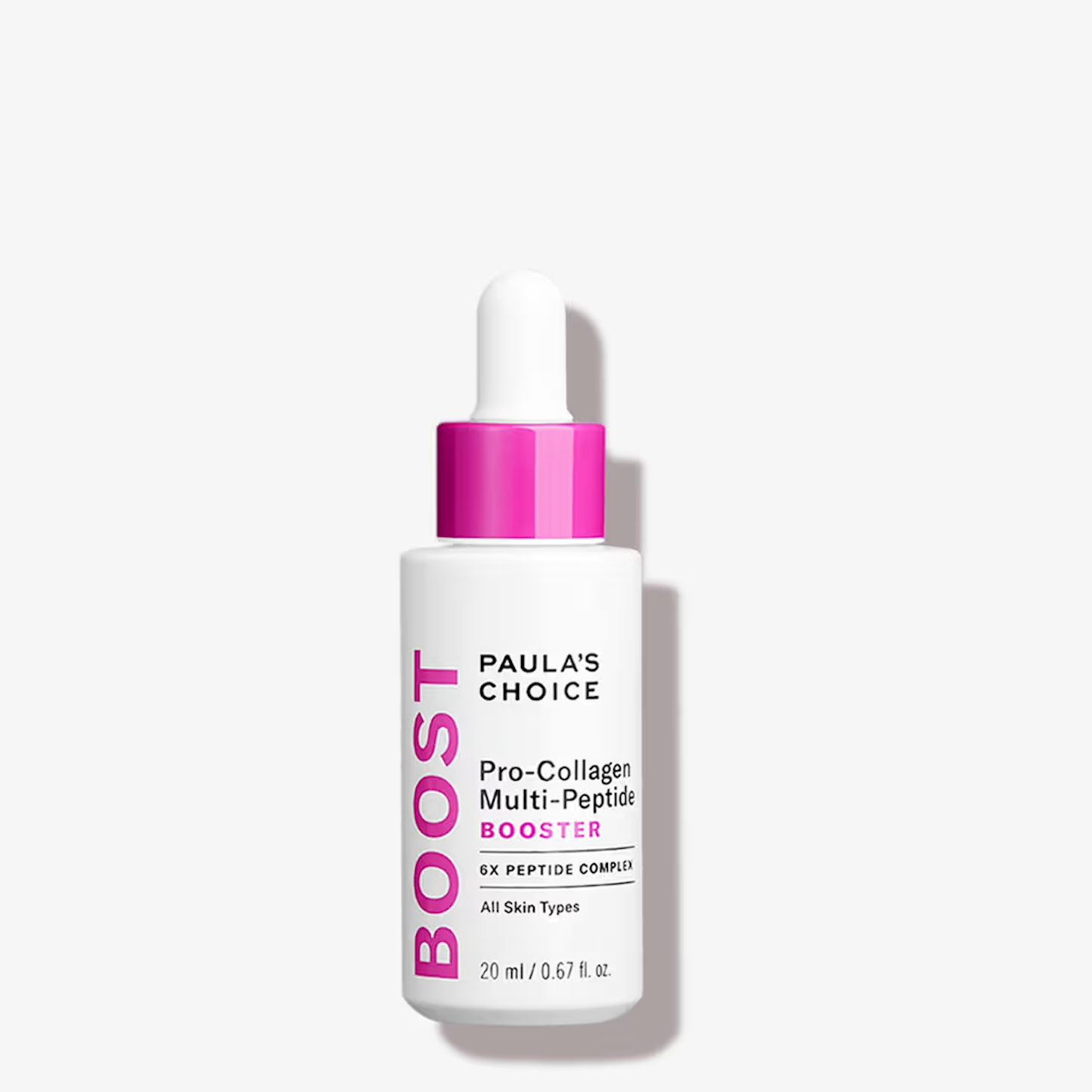
The one to try: Paula’s Choice Pro-Collagen Peptide Booster (£58)
There are six pro-collagen peptides in here, including palmitoyl tripeptide-5, backed up by amino acids and hyaluronic acid — useful, because skin rarely objects to looking plumper and better hydrated at the same time. The gel texture is light enough to layer without turning the routine into admin, while the clinical results give all that peptide talk something more convincing to sit on.
Acetyl tetrapeptide-5 — for puffiness and tired-looking eyes
There are mornings when fine lines are the least interesting thing happening under the eyes. Acetyl tetrapeptide-5 is more commonly used in formulas aimed at puffiness and under-eye bags, making it worth looking for when the face in the mirror appears to have had a considerably later night than the rest of you.
Eye formulas often pair it with other peptides because the area rarely sticks politely to one problem at a time. Puffiness, creasing, dark circles and dehydration have a habit of arriving together, usually just before an important meeting or dinner.
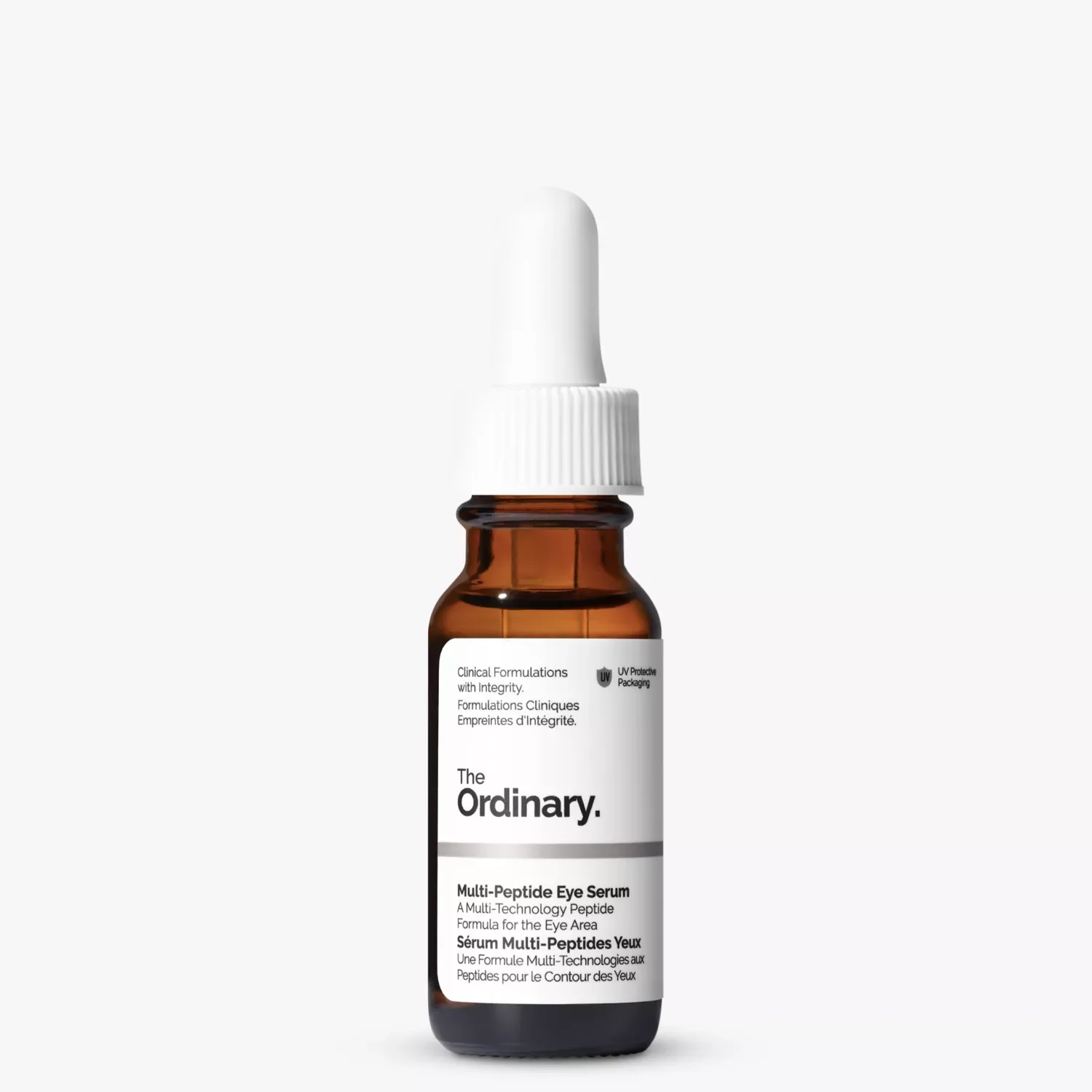
The one to try: The Ordinary Multi-Peptide Eye Serum (£19.90)
This is much more ambitious than its sub-£20 price suggests. Acetyl tetrapeptide-5 is joined by palmitoyl tripeptide-38, myristoyl nonapeptide-3, an expression-line peptide and caffeine, giving it plenty to work with across puffiness, fine lines and dark circles. Better still, the water-light texture behaves properly under make-up — because an eye serum that turns concealer into crepe paper by 10am has rather missed the point.