Why Germany's Black Forest Is About To Become Europe's Next Must-Visit Destination
Fairytale forests, mountain adventures and stylish stays. Germany's Black Forest is having a moment.
Forget Berlin's nightlife and Munich's beer halls. Germany has another side, and it might just be the European escape you didn't know you were looking for.
“Why are you going to Germany?” was my mother's reaction when I mentioned our summer holiday plans. We'd already booked a month in France, and with the German border within reach, spending a little time exploring its eastern neighbour seemed like a rather good idea. Our eldest son had developed a genuine enthusiasm for learning German, and my school years in Austria had left me with fond memories of occasional trips across the border. My mother, however, remained unconvinced.
It's a reaction that probably says quite a lot about how the British view Germany as a holiday destination. Berlin for a weekend of questionable sleep and excellent nightlife? Absolutely. Munich for Oktoberfest? Naturally. But a summer holiday among mountains, lakes and forests? That's usually when people start suggesting Austria, Switzerland or the Italian Lakes instead.
“Germany’s most famous forest has been hiding in plain sight. The rest of Europe is finally catching on.”
Which makes what we found in the Black Forest all the more surprising. After weeks of travelling through a sun-baked France, where much of the surrounding greenery had been scorched by the summer heat, crossing into southwestern Germany felt like someone had turned the colour saturation back up. The forests were impossibly green, the mountains rose above deep wooded valleys and the lakes looked inviting enough to abandon the day's plans altogether. It was still wonderfully warm, just without the oppressive heat that had made exploring elsewhere feel like a test of endurance. The scenery brought back memories of my teenage years in Austria, with that same irresistible mix of mountain scenery and outdoor living. My husband and children were experiencing it all for the first time, but even I hadn't anticipated quite how much we'd love it. By the time we left, all five of us were wondering why we hadn't come sooner.
We may not have been the only ones asking that question. While Germans have been holidaying in the Black Forest for generations, the region is attracting increasing attention from international travellers. Visitors from southern Europe are discovering the pleasures of its mountain summers, while stylish hotels, ambitious restaurants and exceptional wellness retreats are introducing a more sophisticated side to a destination traditionally associated with cuckoo clocks and cherry-laden cakes. Germany's most famous forest appears to be finding a whole new audience.
The Alpine Holiday You Didn't Know Germany Had
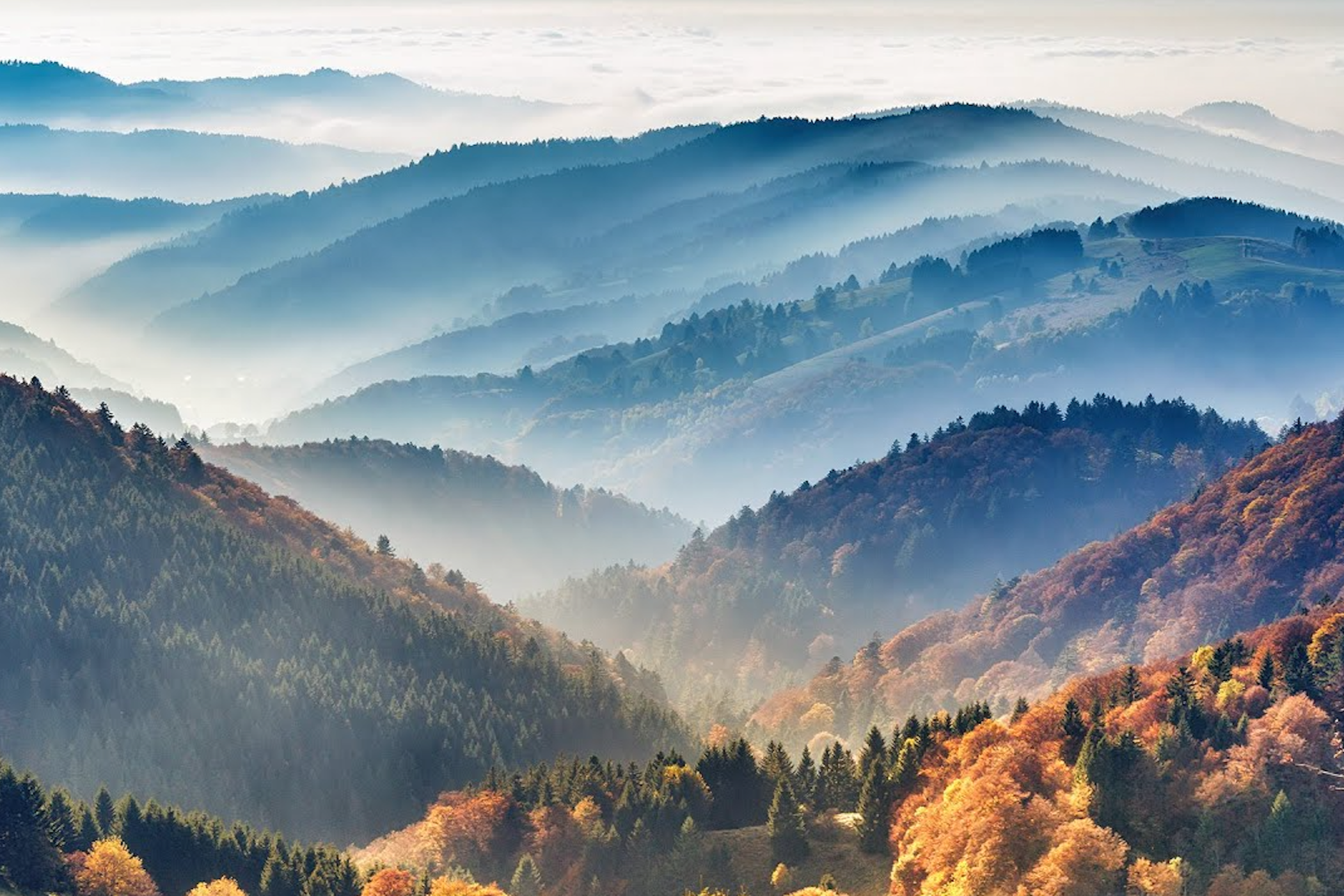
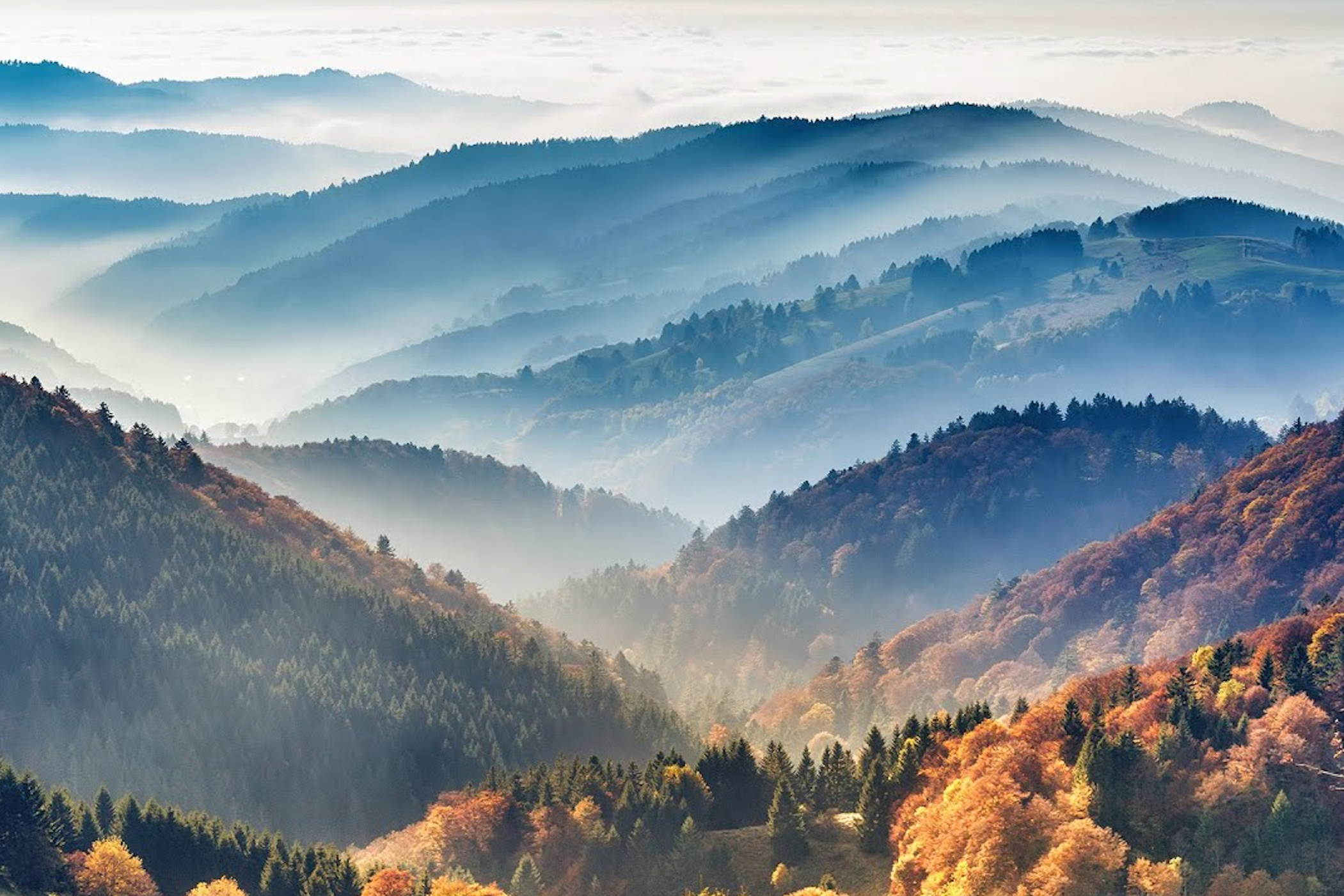
Stretching roughly 160 kilometres through southwestern Germany, between the Rhine Valley and the Swiss border, the Black Forest is a spectacular landscape of wooded mountains, deep valleys, traditional farmhouses and villages that appear to have wandered out of a beautifully illustrated storybook. Despite its slightly foreboding name, the scenery is anything but gloomy. Dense forests give way to open meadows, flower-filled balconies and mountain panoramas that feel remarkably familiar to anyone who has spent a summer in the Austrian Alps.
The similarities extend beyond the scenery. Summer here revolves around being outdoors, whether that means cycling through valleys, heading into the mountains or commandeering a lakeside terrace for an afternoon that somehow turns into evening. Around Lake Titisee, one of the region's best-known beauty spots, sailing boats drift across blue-green water framed by wooded hills, while waterfront cafés and walking trails make it easy to lose track of time. Nearby Schluchsee has a quieter, more spacious feel, with little swimming beaches and clear water perfect for paddleboarding, sailing and kayaking.
Away from the lakes, an enormous network of trails opens up the mountains to everyone from occasional walkers to serious hikers. Feldberg, at 1,493 metres, is the highest peak in the Black Forest, with panoramic views and a cable car for those who prefer to reach the top without quite so much effort. The Wutach Gorge offers something altogether wilder, its narrow paths winding between steep rocky ravines and dense woodland, with rushing water never far away.
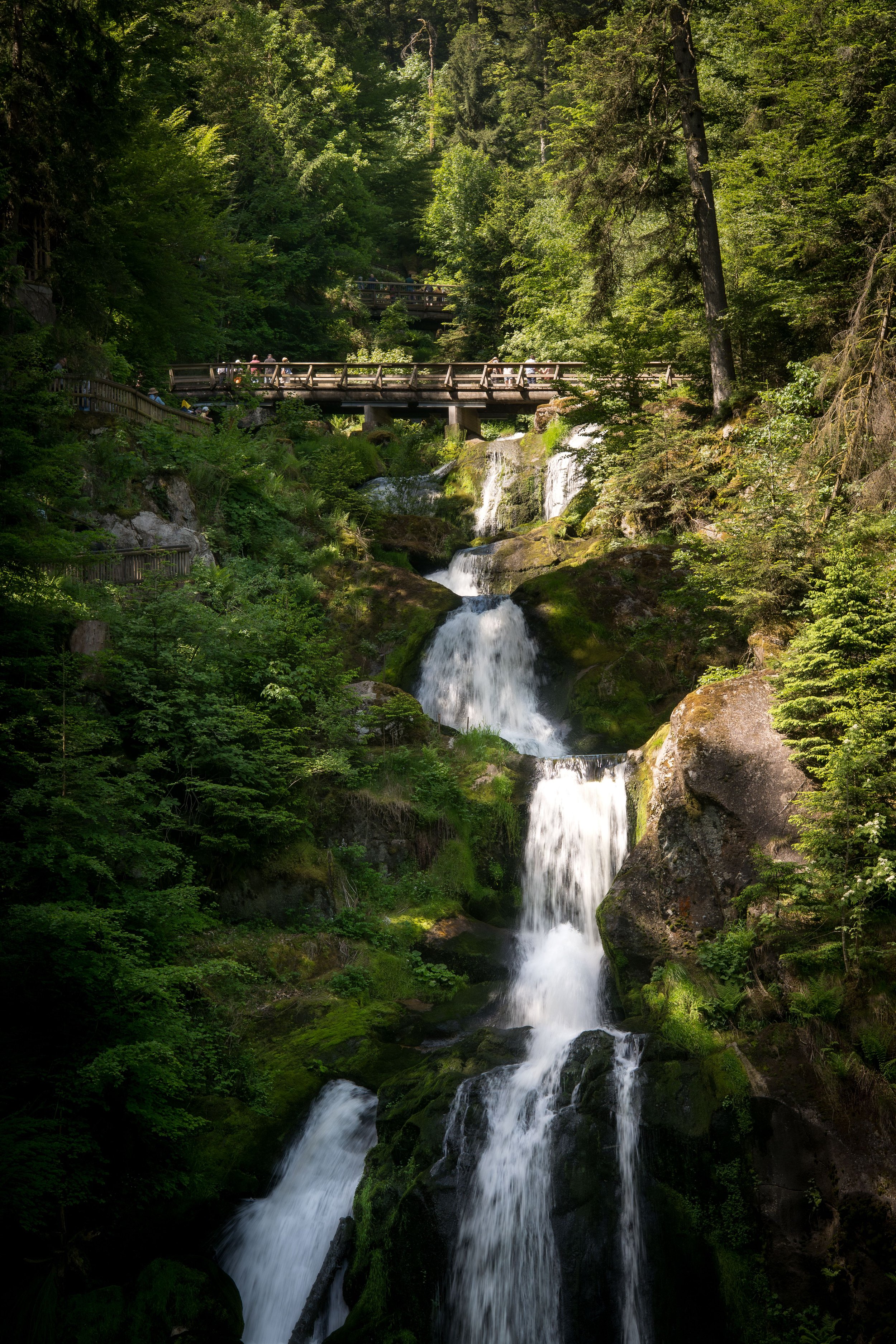
That abundance of water is part of the region's charm. Triberg's famous cascades tumble through the forest, while Todtnau's waterfall drops into a dramatic wooded valley where the Blackforestline suspension bridge hangs 380 metres across the landscape. Suspended high above the trees, it's a spectacular place to admire the scenery, assuming you're not too busy questioning your decision to step onto it in the first place.
For those whose appetite for adventure extends beyond a scenic walk, the Black Forest has a few surprises. At Todtnau, the Hasenhorn Coaster sends visitors hurtling down almost three kilometres of mountainside on individual rail-mounted sledges. You control the speed yourself, although whether the children share your enthusiasm for braking is another matter entirely. Treetop walks, climbing parks, mountain biking and cable cars add to the possibilities, making it remarkably easy to fill an entire week without repeating the same activity.
Families with a weakness for rollercoasters have an even bigger incentive to explore the region's western edge. Near Rust, Europa-Park is Germany's largest theme park, with more than 100 attractions and shows set across elaborate European-themed areas. The spectacular Voltron Nevera rollercoaster is among its headline attractions, while neighbouring Rulantica offers an enormous Nordic-inspired water world complete with slides, pools and lagoons. Between the two, it's quite possible to exhaust the entire family before anyone has even considered another mountain hike.
Fortunately, the Black Forest is equally accommodating when everyone decides they've had quite enough excitement. A day of mountain adventures can end with a swim in the lake, a long lunch in a traditional inn or an afternoon doing very little at all. It's this easy balance of activity and relaxation that makes the region work so well for different ages, without anyone feeling as though they've compromised on their holiday.
Beyond The Cuckoo Clocks
The Black Forest's villages are every bit as captivating as its landscapes, although the region's traditional image only tells part of the story. Gengenbach is a picture of pastel-coloured timber-framed houses, cobbled streets and charming squares, while Schiltach has some of the best-preserved medieval architecture in southern Germany. In Gutach, the Vogtsbauernhof open-air museum offers a glimpse into centuries of rural life, its historic farmhouses and workshops providing a fascinating introduction to the traditions that shaped the region.
Those traditions sit surprisingly comfortably alongside a more contemporary Germany. Freiburg, on the western edge of the southern Black Forest, has all the energy of a thriving university city, with independent boutiques, bustling markets and cafés filling the streets around its magnificent Gothic cathedral. It's also a lovely place to discover another side of the region that British visitors don't always associate with Germany: wine.
The vineyards of Baden stretch along the Black Forest's western foothills, producing excellent Pinot Noir and white wines in a landscape of rolling hills and picturesque villages. With sun-drenched terraces, family-run wineries and some rather good places to stop for lunch, it's an area that could easily hold its own against better-known European wine destinations.
Continue north and the atmosphere becomes altogether grander. Baden-Baden has spent centuries perfecting the art of indulgence, attracting European aristocracy and fashionable society to its thermal springs, beautiful gardens and elegant Belle Époque buildings. The historic Friedrichsbad baths remain an extraordinary experience, with their traditional bathing ritual, while the legendary Brenners Park-Hotel & Spa represents the sort of established luxury that needs very little introduction.
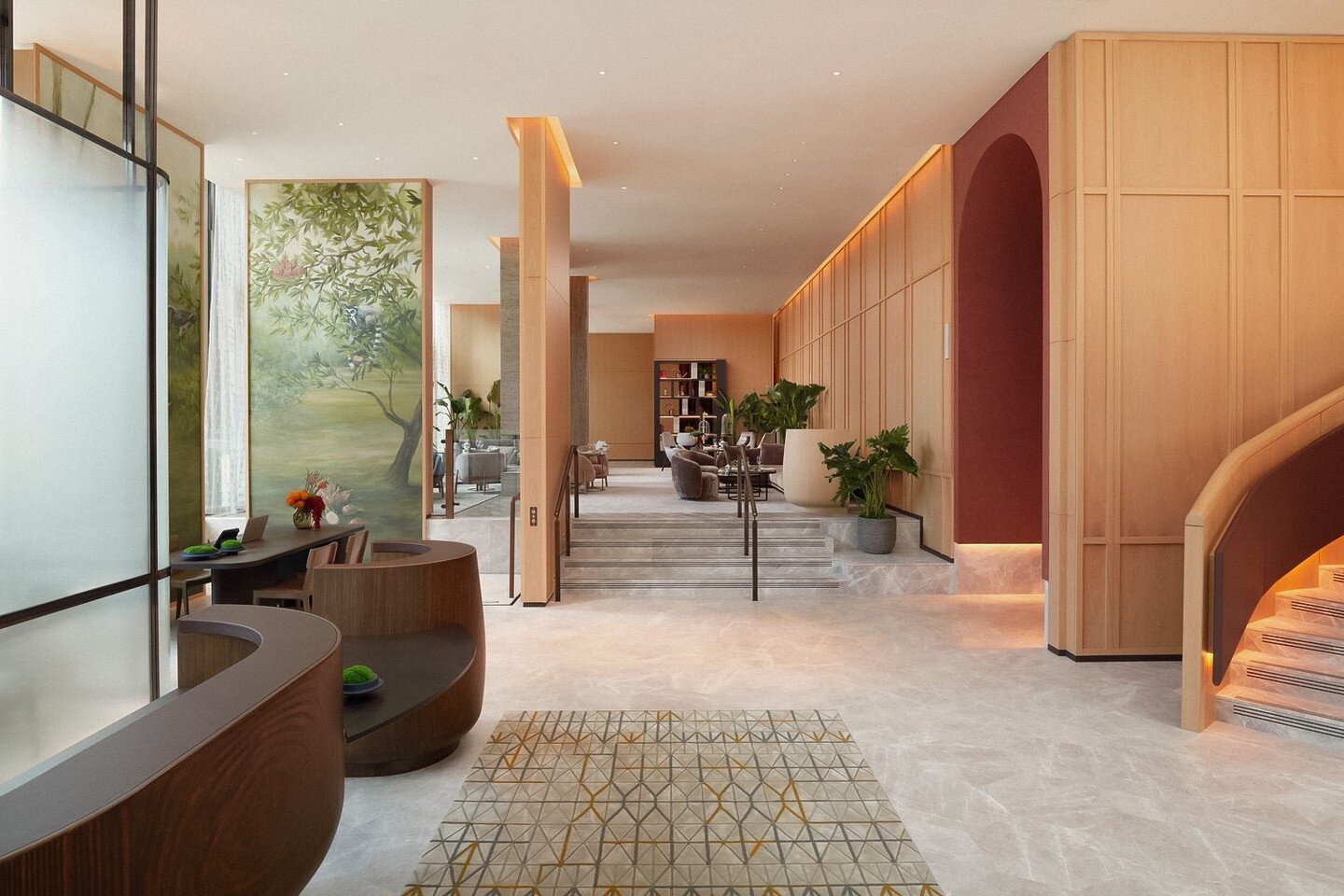
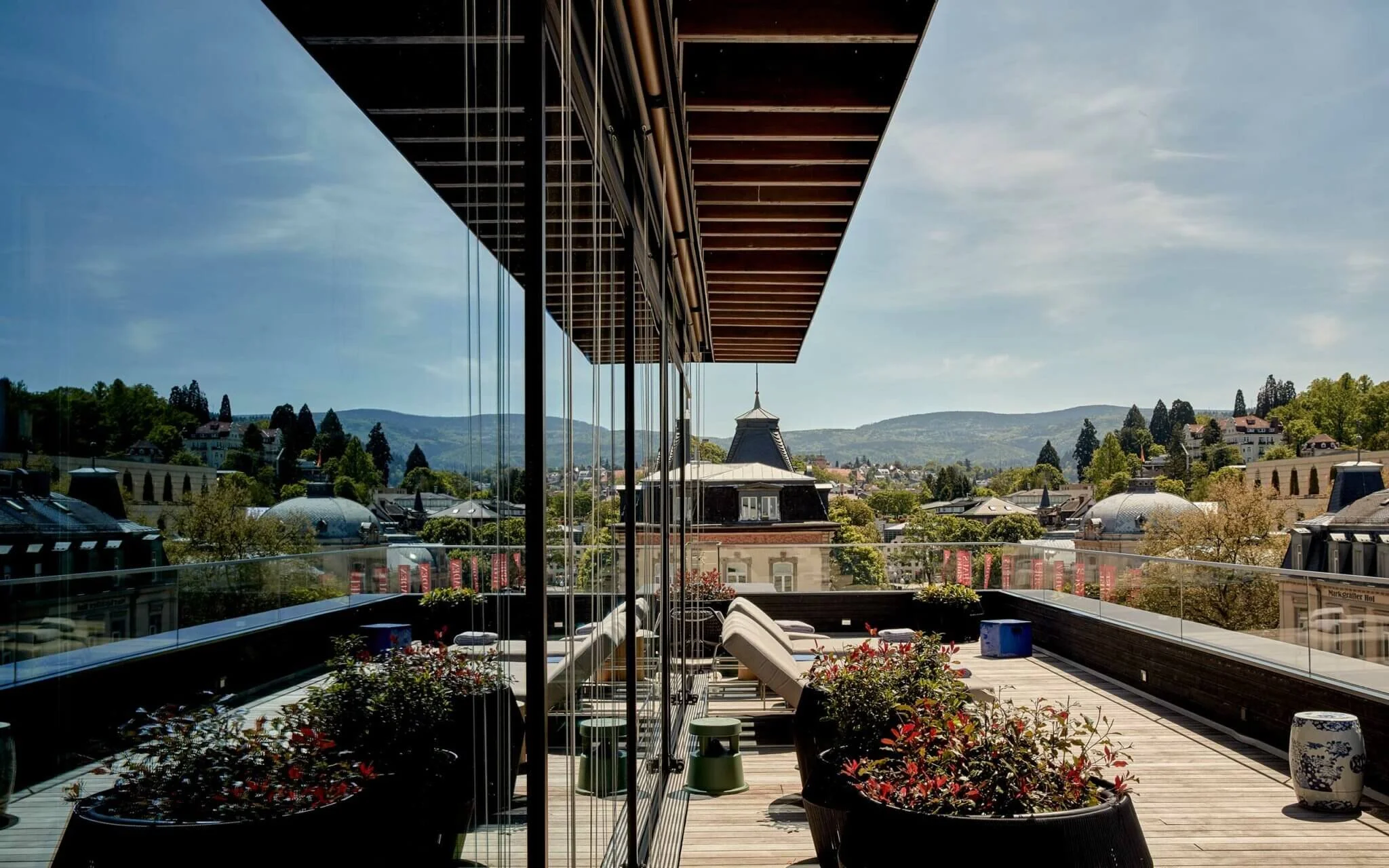
The region's hospitality scene is no longer confined to traditional grand hotels and rustic guesthouses, either. Roomers Baden-Baden takes a distinctly more contemporary approach, with sleek interiors, a rooftop pool, Asian-inspired dining and a spa featuring Dr Barbara Sturm treatments. Just outside Freiburg, Luisenhöhe brings a more contemporary edge to the traditional forest retreat, its curved architecture following the contours of the hillside, with floor-to-ceiling windows, sweeping views and an expansive wellness spa.
The result is a destination where you can spend the morning tramping through muddy woodland trails and the afternoon enjoying a sauna overlooking the mountains, without having to choose between authentic local character and a beautiful place to stay.
The same combination of tradition and ambition extends to the food. Black Forest gâteau may have done an excellent job of advertising the region internationally, but there's far more to its culinary reputation than cherries and whipped cream. Traditional inns celebrate the produce of the surrounding forests and farms, while the small town of Baiersbronn has established an extraordinary reputation for fine dining. Its acclaimed restaurants include the three-Michelin-starred Schwarzwaldstube, making this quiet corner of Germany an unlikely but thoroughly deserving destination for serious food lovers.
If the idea of spending the morning in hiking boots and the evening enjoying an elaborate tasting menu sounds appealing, you'll be very much at home here.
A Forest For All Seasons
Summer may be the Black Forest at its most inviting, but limiting a visit to the warmer months would mean missing some of its most enchanting moments. As the leaves turn copper and gold, the forest trails become quieter and the vineyards along the western foothills celebrate the harvest. It's an appealing time to trade swimming lakes for long walks, cosy inns and leisurely afternoons discovering the smaller villages.
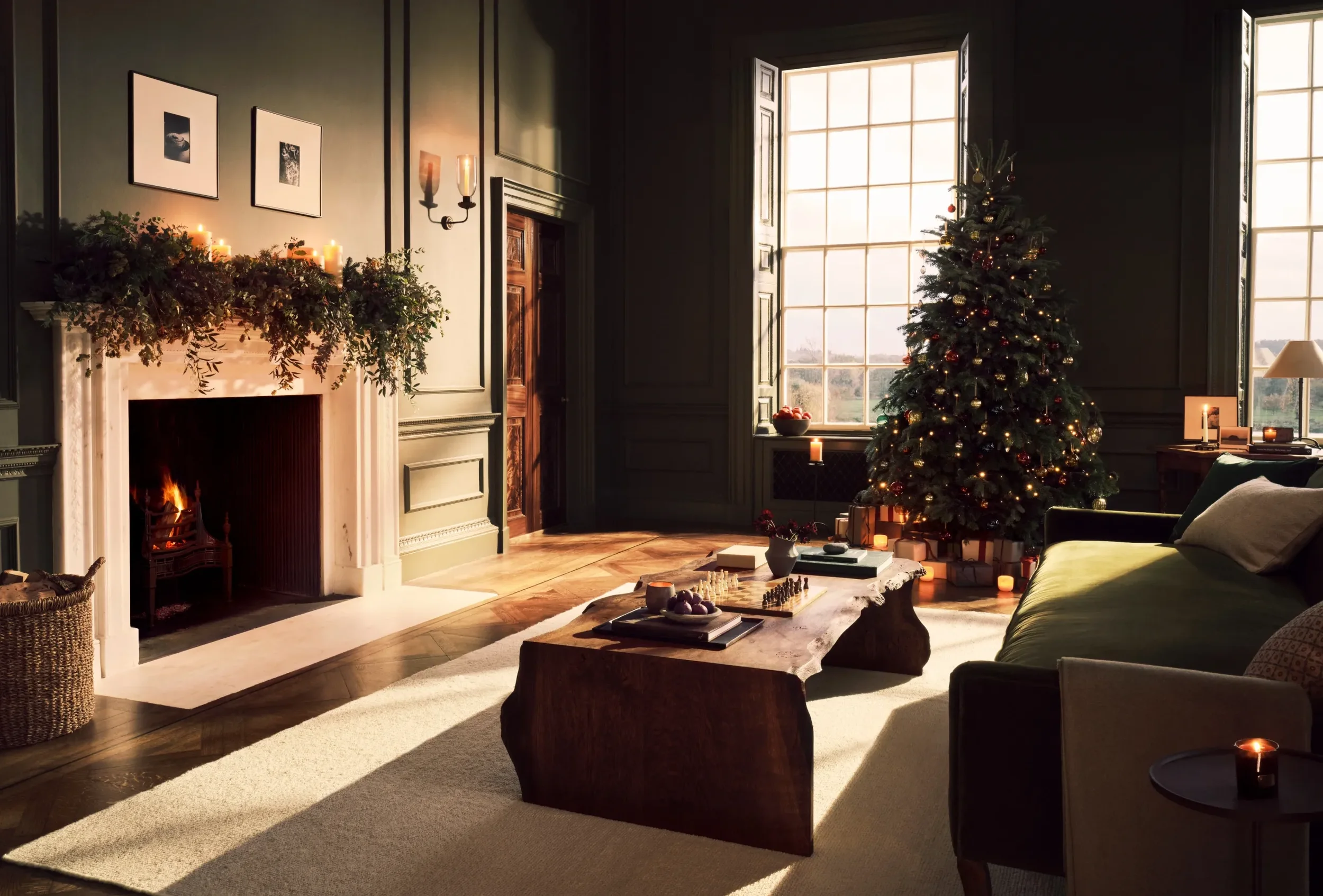
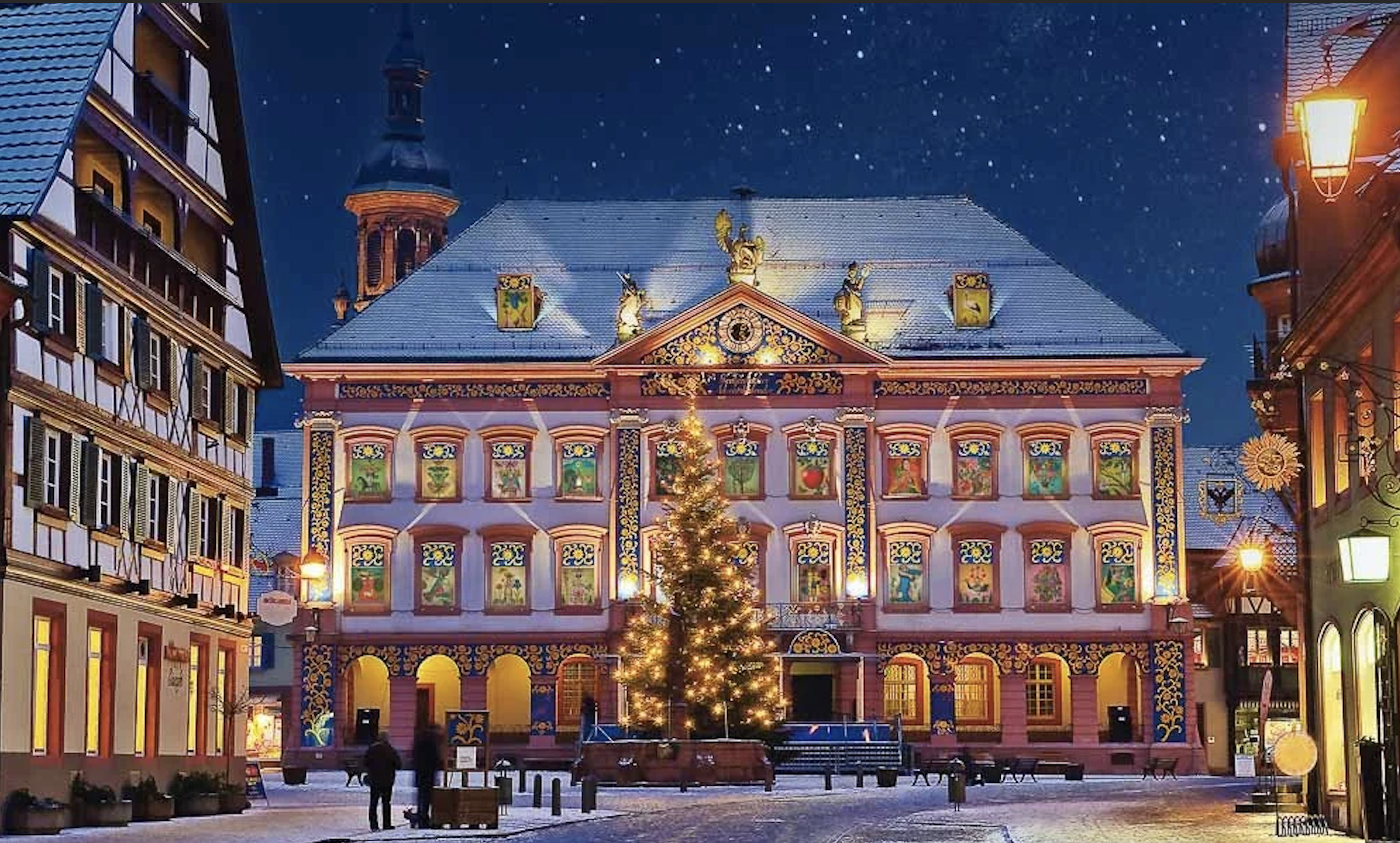
Winter brings an entirely different atmosphere, and few places are better equipped to embrace the festive season. Gengenbach transforms its historic town hall into an enormous Advent calendar, while the Ravenna Gorge Christmas market takes place beneath a towering illuminated railway viaduct, deep in a forested valley. Against a backdrop of dark fir trees, wooden stalls and twinkling lights, the setting could have come straight from the pages of a Brothers Grimm tale.
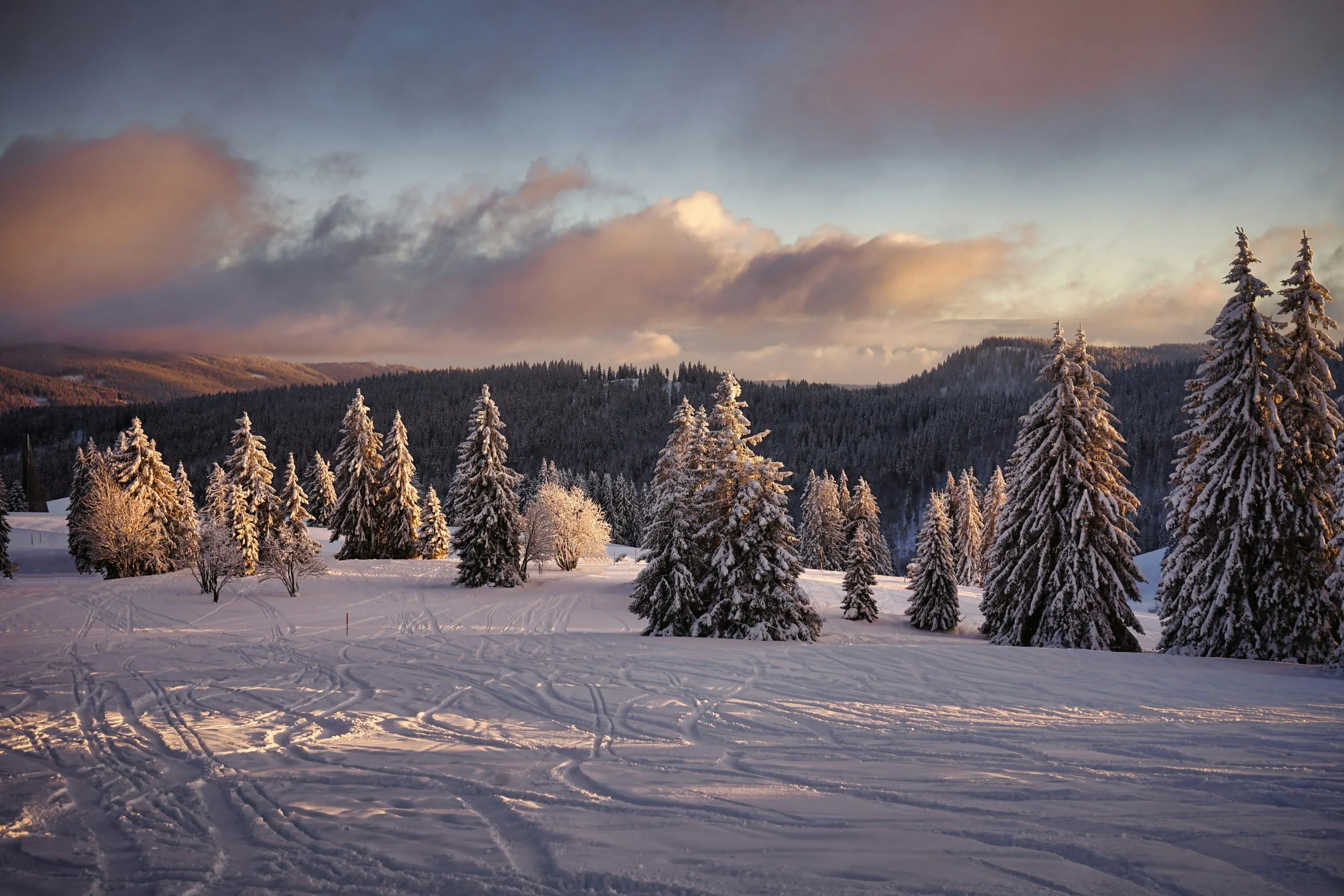
In the higher mountains, a good snowfall opens up another collection of adventures. Feldberg has the region's largest ski area, with around 30 kilometres of pistes, while cross-country skiing, sledging and snowshoeing are all part of the winter experience. Snow conditions vary, especially at lower elevations, and the skiing can't compete with the enormous interconnected resorts of the Alps. But there's plenty of pleasure to be found in a few days on the slopes, followed by a long evening in a mountain restaurant or an indulgent hotel spa.
As winter gives way to spring, waterfalls swell with meltwater, the forest comes back to life and the first warmer days bring walkers and cyclists back onto the trails. By summer, the lakes are filling with swimmers again and the mountains are ready for another season of adventure.
For travellers accustomed to booking the Alps for outdoor holidays or heading south in search of beautiful lakes and sunshine, the Black Forest makes a persuasive alternative. It has the scenery, the activities and the atmosphere, but also a character entirely its own. Its thermal spa heritage, exceptional gastronomy and growing collection of design-conscious hotels give it an appeal that reaches well beyond the traditional mountain holiday.
The rest of Europe is beginning to pay attention. The Black Forest recorded a strong tourism year in 2025, and interest from international markets is adding to a domestic holiday tradition that has flourished for generations. With travellers increasingly questioning the wisdom of spending August in Europe's hottest destinations, there's a growing appetite for somewhere that offers sunshine, scenery and plenty to do without necessarily requiring an afternoon spent hiding from the heat.
We'd originally crossed the border from France thinking Germany would make an interesting addition to our summer travels. Instead, it became one of the places we talked about most afterwards. Not because of any single spectacular attraction, although there were plenty to choose from, but because the whole experience was so unexpectedly lovely. The scenery, the atmosphere, the adventures and the simple pleasure of spending time somewhere that seemed to have everything we wanted from a holiday.
As for my mother's question about why we'd want to go to Germany? We now have rather a long list of reasons.