The Calm Era: Why Infra-Red Is the Smartest Skin Treatment Right Now
A quieter, barrier-first approach is changing the way we see results.

There’s a reason skin suddenly looks calmer on our feeds. Less shiny, less inflamed, less… worked on. Somewhere between the rise of barrier-first skincare and a quiet fatigue with aggressive treatments, aesthetics has softened its approach — not because results matter less, but because longevity matters more.
That shift hasn’t arrived with fanfare. It’s crept in gently. Creams became less confrontational. Actives more selective. LED masks slipped into bathroom routines without ceremony. And in clinics, treatments that support the skin rather than provoke it have started to lead the conversation. Not dramatic. Just considered.
“We’re no longer looking for treatments that force skin into a reaction — we’re choosing the ones that allow it to function properly again.”
Infra-red light sits neatly at the centre of this change — not because it’s new, but because it finally makes sense in context.
For decades, infra-red has been used in medical settings for what it does quietly beneath the surface. Near-infrared light supports cellular energy production, improves repair mechanisms and calms inflammatory pathways — the kind of background work that doesn’t announce itself immediately, but subtly changes how skin behaves over time. Red light works closer to the surface, encouraging collagen production and tissue renewal. Blue light helps control acne-causing bacteria without stripping or destabilising the barrier.
None of this relies on heat, injury or disruption. And that matters. We’re no longer chasing treatments that force skin into a reaction. We’re looking for ones that remove friction — inflammation, sensitivity, delayed healing — so skin can return to something closer to baseline. In that sense, infra-red isn’t corrective in the traditional sense. It’s corrective by subtraction.
It’s also why LED has moved so seamlessly between clinic and home. At-home LED masks reflect the same philosophy: consistency over intensity, support over shock. Used regularly, they can help maintain calm, reinforce the barrier and keep low-grade inflammation in check. They’re particularly useful as part of an ongoing routine — the skincare equivalent of keeping things ticking along.
But there is a ceiling.
Home devices are intentionally conservative. Lower power, fixed distances, preset programmes. Designed for safety and long-term use rather than intervention. When skin is reactive, post-procedure, inflamed or stuck in a cycle of sensitivity, clinic-grade LED operates on a different scale. Not louder — deeper. Higher output, broader coverage, and the ability to combine wavelengths intelligently make a tangible difference when the aim is to reset skin rather than simply maintain it.
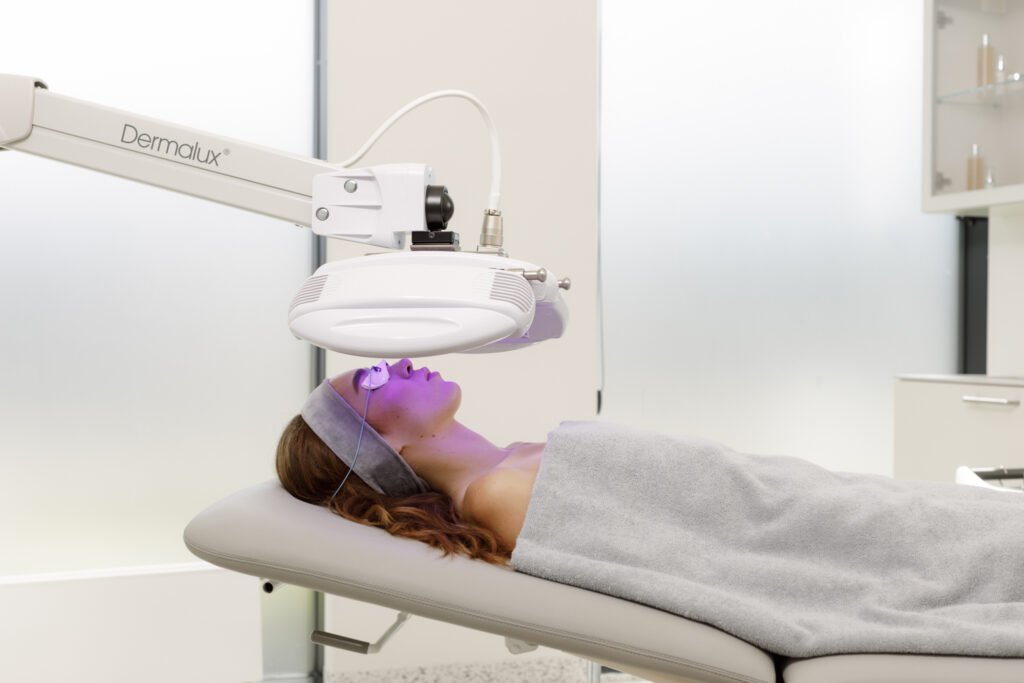
It’s within this clinical space that Dermalux tends to be mentioned. Long regarded as a pioneer of medical-grade LED, the brand has focused less on reinvention and more on refinement — improving how light is delivered so it supports the skin without provoking it. The Dermalux Tri-Wave MD combines red, blue and near-infrared wavelengths in a single session, allowing multiple concerns to be addressed without heat, trauma or downtime.
We experienced the Tri-Wave MD with Dr Ian Strawford at Skin Excellence Clinics.
The light itself is bright — even with goggles, there’s a brief moment of adjustment — but the treatment quickly settles into something unexpectedly calming. No heat. No discomfort. No sense of the skin being pushed into a response. You leave with an immediate glow, but it’s understated: clearer, more even, quietly rested-looking rather than overtly “done”.
That first session is a preview, not the point. Like most regenerative treatments, infra-red works cumulatively. Weekly sessions allow the deeper effects — reduced inflammation, improved repair, better barrier stability — to build properly. Once skin has settled, monthly maintenance keeps it there. One visit gives you glow; consistency changes behaviour.
And that’s really where infra-red belongs now. Not as a miracle, not as a moment, but as part of a calmer, more intelligent way of treating skin. Less force. Less fallout. Just enough support for skin to do what it was meant to do in the first place.